
ASME/ANSI B18.16.6 Nylon Insert Thin Locknuts
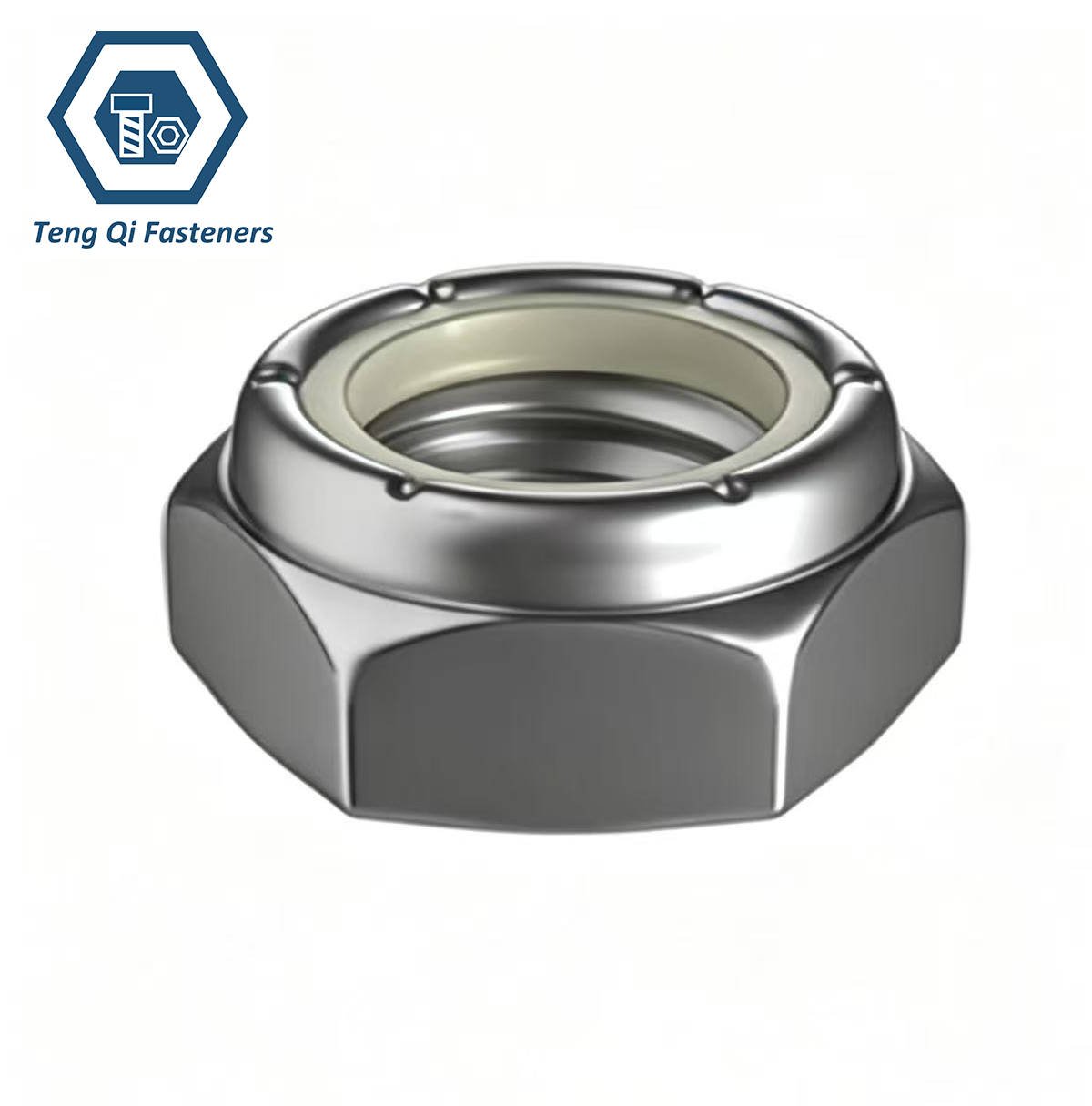
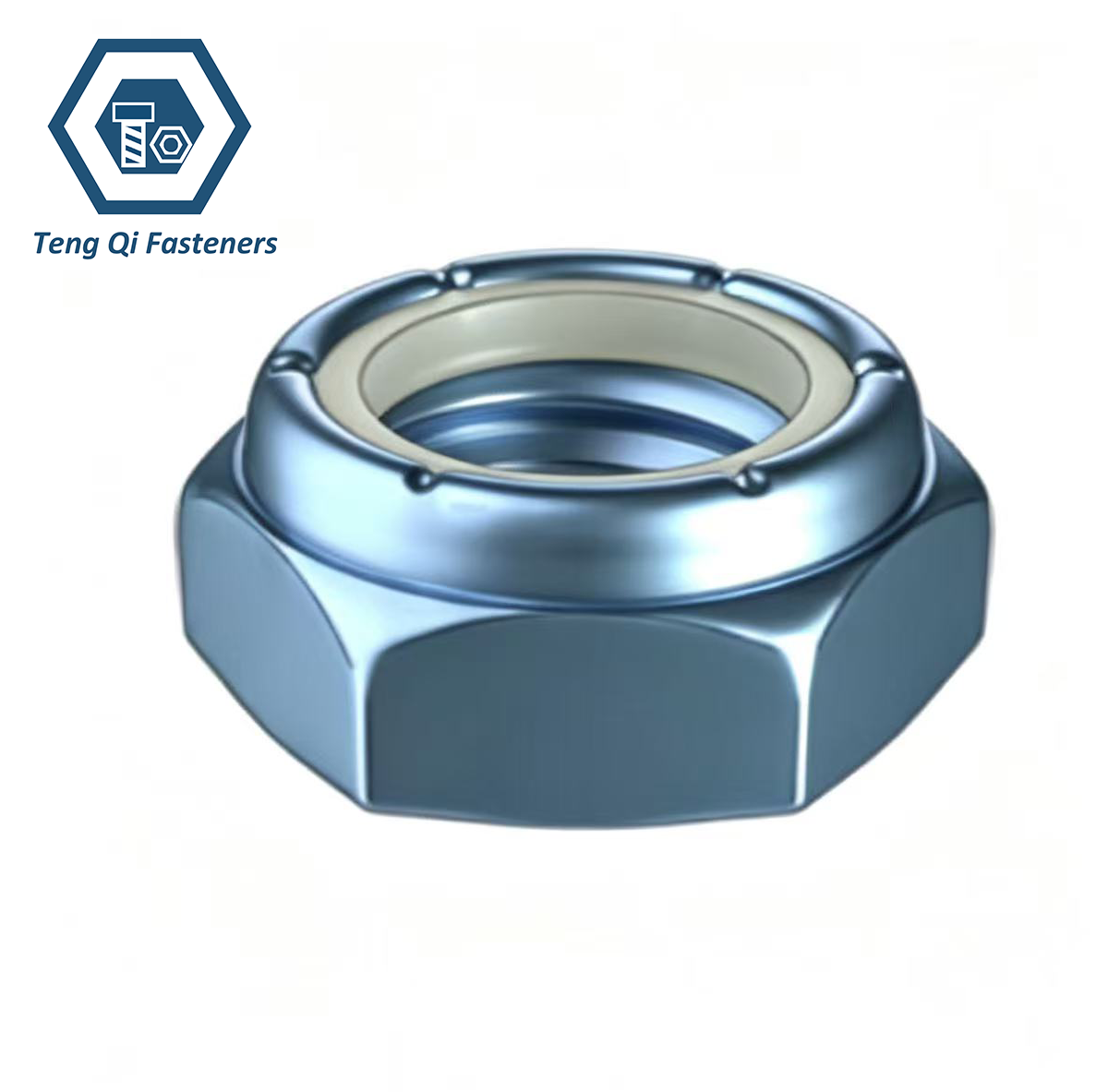
When a fastening joint has limited clearance around the nut, a conventional full-height locknut may add unnecessary height to the assembly. ASME/ANSI B18.16.6 Nylon Insert Thin Locknuts provide a more compact alternative, combining a reduced-profile hex body with a nylon locking element to retain the nut on the mating thread. During installation, the nylon insert interferes with the bolt thread and creates prevailing torque as the nut is tightened. This mechanical resistance helps maintain the nut’s position during service, while the thinner body reduces the amount of space occupied by the nut above the joint. The result is a locking fastener suited to assemblies where both thread retention and overall fastening height need to be considered.
This design can be useful when components are mounted close to one another, when the available space for a nut is limited, or when reducing the external profile of the fastening point is desirable. Depending on the service environment, the locknuts can be specified in suitable steel or stainless steel materials, thread sizes, and surface finishes to match the mating bolt and application requirements.
Specification:
ASME/ANSI B18.16.6 Nylon Insert Thin Locknuts combine a reduced-height hexagonal nut with a non-metallic insert that generates prevailing torque on the mating thread. The standard establishes requirements for the dimensions, proof load, prevailing torque, and torque-tension performance of applicable inch-series locknuts. These requirements allow the nut to be evaluated both as a load-bearing fastener and as a prevailing-torque locking component.
For specification and purchasing, the main parameters include nominal size, thread series, nut dimensions, material, locknut grade, proof-load requirements, and surface finish. The nylon insert provides the locking function, while the mechanical grade determines the applicable load-related requirements of the nut. Therefore, grade selection should be based on the requirements of the fastening assembly rather than assuming that a higher grade necessarily provides a higher prevailing torque.
| Item | Specification |
|---|---|
| Standard | ASME/ANSI B18.16.6 |
| Product Type | NTE — Nylon Insert Thin Elliptical Locknut |
| Nut Configuration | Thin Hexagonal |
| Thread System | Inch |
| Thread Series | UNC/UNF |
| Material | Carbon Steel/Stainless Steel |
| Locking Element | Non-metallic Nylon Insert |
| Locking Principle | Prevailing Torque |
| Mehcanical Grade | N2,N5,N8 |
| Thread Diameter | #4-1-1/2“ |
| Surface Treatment | Zinc Plated/Bright Finish/Passivation |
Dimension Chart of ASME/ANSI B18.16.6 Nylon Insert Locknuts:
The dimension chart of ASME/ANSI B18.16.6 Nylon Insert Locknuts provides detailed information on the standard sizes, thread specifications, width across flats, thickness, and nylon insert dimensions. These dimensional requirements ensure that the locknuts maintain proper compatibility with corresponding bolts and screws, while the nylon insert delivers reliable prevailing torque performance to prevent loosening caused by vibration or dynamic loads.
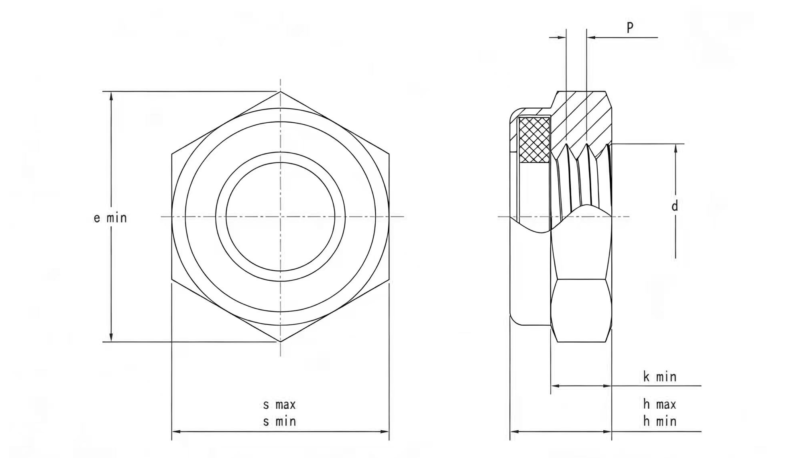
| Mon | #4 | #6 | #8 | #10 | 1/4 | 5/16 | 3/8 | 7/16 | 1/2 | 9/16 | 5/8 | 3/4 | 7/8 | 1 | 1-1/8 | 1-1/4 | 1-3/8 | 1-1/2 |
| P | 40 | 32 | 32 | 24 | 20 | 18 | 16 | 14 | 13 | 12 | 11 | 10 | 9 | 8 | 7 | 7 | 6 | 6 |
| s max | 0.251 | 0.313 | 0.345 | 0.376 | 0.439 | 0.502 | 0.564 | 0.627 | 0.752 | 0.877 | 0.94 | 1.064 | 1.252 | 1.44 | 1.627 | 1.815 | 2.008 | 2.197 |
| s min | 0.241 | 0.302 | 0.332 | 0.362 | 0.43 | 0.492 | 0.553 | 0.615 | 0.741 | 0.865 | 0.928 | 1.052 | 1.239 | 1.427 | 1.614 | 1.801 | 1.973 | 2.159 |
| e min | 0.268 | 0.399 | 0.374 | 0.41 | 0.482 | 0.552 | 0.622 | 0.698 | 0.837 | 0.978 | 1.051 | 1.191 | 1.403 | 1.615 | 1.826 | 2.038 | 2.249 | 2.416 |
| h max | 0.124 | 0.14 | 0.187 | 0.187 | 0.218 | 0.265 | 0.281 | 0.328 | 0.328 | 0.374 | 0.406 | 0.421 | 0.484 | 0.578 | 0.672 | 0.765 | 0.821 | 0.828 |
| h min | 0.094 | 0.11 | 0.157 | 0.157 | 0.188 | 0.235 | 0.251 | 0.298 | 0.298 | 0.344 | 0.376 | 0.391 | 0.454 | 0.516 | 0.61 | 0.703 | 0.759 | 0.766 |
| k min | 0.075 | 0.09 | 0.11 | 0.11 | 0.125 | 0.158 | 0.15 | 0.225 | 0.19 | 0.225 | 0.265 | 0.288 | 0.34 | 0.405 | 0.5 | 0.523 | 0.493 | 0.565 |
- RELATED NUT LISTS:
- DIN466 Knurled Nuts
- DIN6923 Hex Flange Nut
- DIN508 Nuts for T-slots
- DIN439 Chamfered Hexagon Thin Nuts
- DIN982 Nylon Lock Nuts
- DIN985 Nylon Thick Lock Nuts
- DIN986 Hex Domed Cap Nuts
- DIN980V Three-Point Locking Hexagon Nuts
- EN14399-3 High-strength Structural Hex Nut
- DIN6927 Prevailing Torque Three-Point Locking Flange Hexagon Nuts
- DIN7967 Self-Locking Counter Nuts
- DIN917 Low Type Hexagon Cap Nuts
- DIN928 Square Weld Nuts
- DIN935 Hexagon Slotted and Castle Nuts
- Single Leaf Spring T-Slot Sliding Nut
- Roll-in T Slot Nut for 20 Series
- ASME/ANSI B18.16.6 Nylon Insert Thin Locknuts
Proof Loads,Clamp Loads,Prevailing Torque:
| Nut Size | Thread Per Inch | Grade N2 | Grade N5 | Grade N8 | Prevailing Torque | |||||
|---|---|---|---|---|---|---|---|---|---|---|
| Proof Load | Clamp Load | Proof Load | Clamp Load | Proof Load | Clamp Load | First Install (lb) Max | First removal (lb) Min | Third removal (lb) Min | ||
| #4 | 40 | 540 | 250 | 720 | 380 | 910 | 550 | 4 | 1 | 0.2 |
| #6 | 32 | 820 | 370 | 1100 | 580 | 1350 | 810 | 8 | 1.5 | 0.5 |
| #8 | 32 | 1250 | 580 | 1700 | 900 | 2100 | 1250 | 12 | 2 | 0.5 |
| #10 | 24 | 1550 | 720 | 2100 | 1100 | 2600 | 1550 | 17 | 2.5 | 1 |
| #12 | 24 | 2200 | 1000 | 2900 | 1550 | 3650 | 2200 | 27 | 3.5 | 1 |
| 1/4″ | 20 | 2900 | 1300 | 3800 | 2000 | 4750 | 2850 | 40 | 5 | 1.5 |
| 5/16″ | 18 | 4700 | 2150 | 6300 | 3350 | 7850 | 4700 | 80 | 8 | 2.5 |
| 3/8″ | 16 | 7000 | 3200 | 9300 | 4950 | 11600 | 6950 | 110 | 12 | 4 |
| 7/16″ | 14 | 9550 | 4400 | 12800 | 6800 | 15900 | 9600 | 135 | 17 | 5 |
| 1/2″ | 13 | 12800 | 5850 | 17000 | 9050 | 21300 | 12800 | 204 | 22 | 7.5 |
| 9/16″ | 12 | 16400 | 7550 | 21800 | 11600 | 27300 | 16400 | 300 | 30 | 10 |
| 5/8″ | 11 | 20300 | 9300 | 27200 | 14500 | 33900 | 20300 | 420 | 39 | 12.5 |
| 3/4″ | 10 | 30000 | 13800 | 40100 | 21300 | 50100 | 30100 | 540 | 58 | 20 |
| 7/8″ | 9 | 41600 | 12400 | 55400 | 29500 | 69300 | 41600 | 840 | 88 | 30 |
| 1″ | 8 | 54500 | 15000 | 72700 | 38700 | 90900 | 54600 | 1080 | 120 | 40 |
| 1 1/8″ | 7 | 68700 | 18900 | 80100 | 42100 | 115000 | 69000 | 1200 | 150 | 50 |
| 1 1/4″ | 7 | 87200 | 24000 | 101700 | 53500 | 145000 | 87000 | 1320 | 188 | 60 |
| 1 3/8″ | 6 | 104000 | 28700 | 121300 | 63800 | 173000 | 104000 | 1620 | 220 | 70 |
| 1 1/2″ | 6 | 126000 | 34800 | 147500 | 77600 | 211000 | 127000 | 1800 | 260 | 90 |
Application of ASME/ANSI B18.16.6 Nylon Insert Locknuts:
Compact Assemblies with Limited Clearance
NTE Nylon Insert Thin Locknuts are particularly suitable where nut height and available clearance are important design considerations. The reduced-profile configuration can help prevent interference with nearby covers, brackets, housings, panels, or moving components. Typical applications include sheet-metal assemblies, electrical enclosures, machine components, mounting brackets, fixtures, and compact equipment where a standard-height locknut may occupy too much space.
Mechanical and Transportation Components
The nylon insert generates prevailing torque against the mating bolt thread, helping the nut resist unwanted rotation during normal vibration and service movement. This makes NTE locknuts suitable for machinery mechanisms, equipment frames, machine guards, automotive components, trailers, transportation equipment, and fabricated assemblies where a compact locking connection is preferred.
Material Selection for Different Environments
Carbon steel NTE locknuts are suitable for general mechanical assemblies and can be supplied with an appropriate protective finish where corrosion resistance is required. Stainless steel versions are better suited to moisture-exposed or corrosion-sensitive environments, including outdoor equipment, electrical installations, food-processing machinery, and selected marine-related applications. In every case, the locknut material and finish should be considered together with the mating bolt and the service environment.