
DIN7976 Hexagon Head Tapping Screws
For assemblies where components need to be secured directly to a pre-drilled hole, DIN 7976 Hexagon Head Tapping Screws offer a simple alternative to a conventional bolt-and-nut connection. The screw is installed directly into the prepared hole, with its tapping thread engaging the material as it advances. This avoids the need to position a separate nut behind the component and can simplify fastening where only one side of the assembly is accessible.
The external hexagon head is particularly practical for production work because it can be tightened with commonly available wrenches, sockets, or power tools. The head remains easy to access even when higher installation torque is required, while the tapping thread provides direct engagement with suitable sheet metal, profiles, and other substrates. DIN 7976 screws can therefore be selected for applications ranging from thin fabricated panels and enclosures to heavier metal components, with the screw diameter, length, material, and surface finish matched to the joint design and working environment.
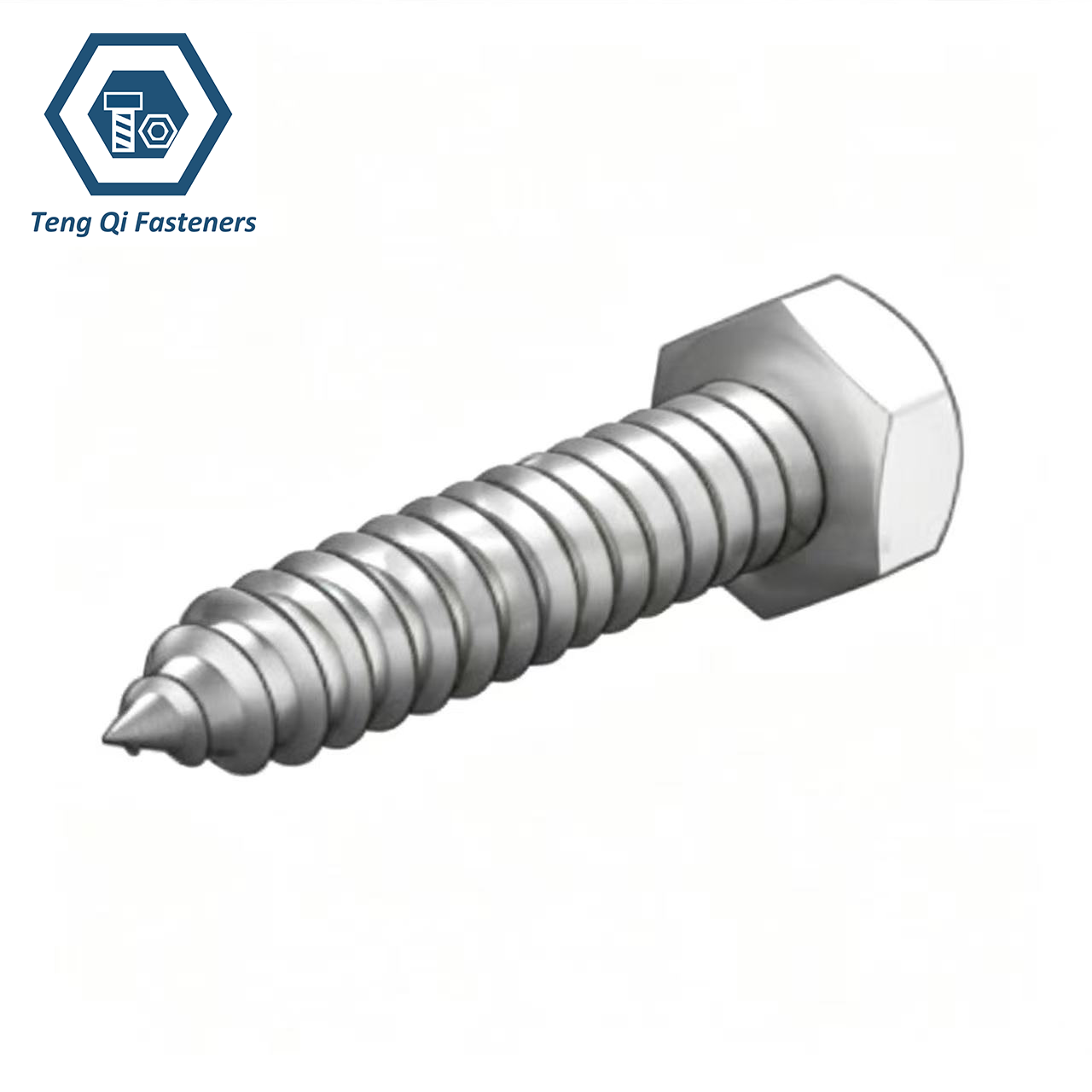
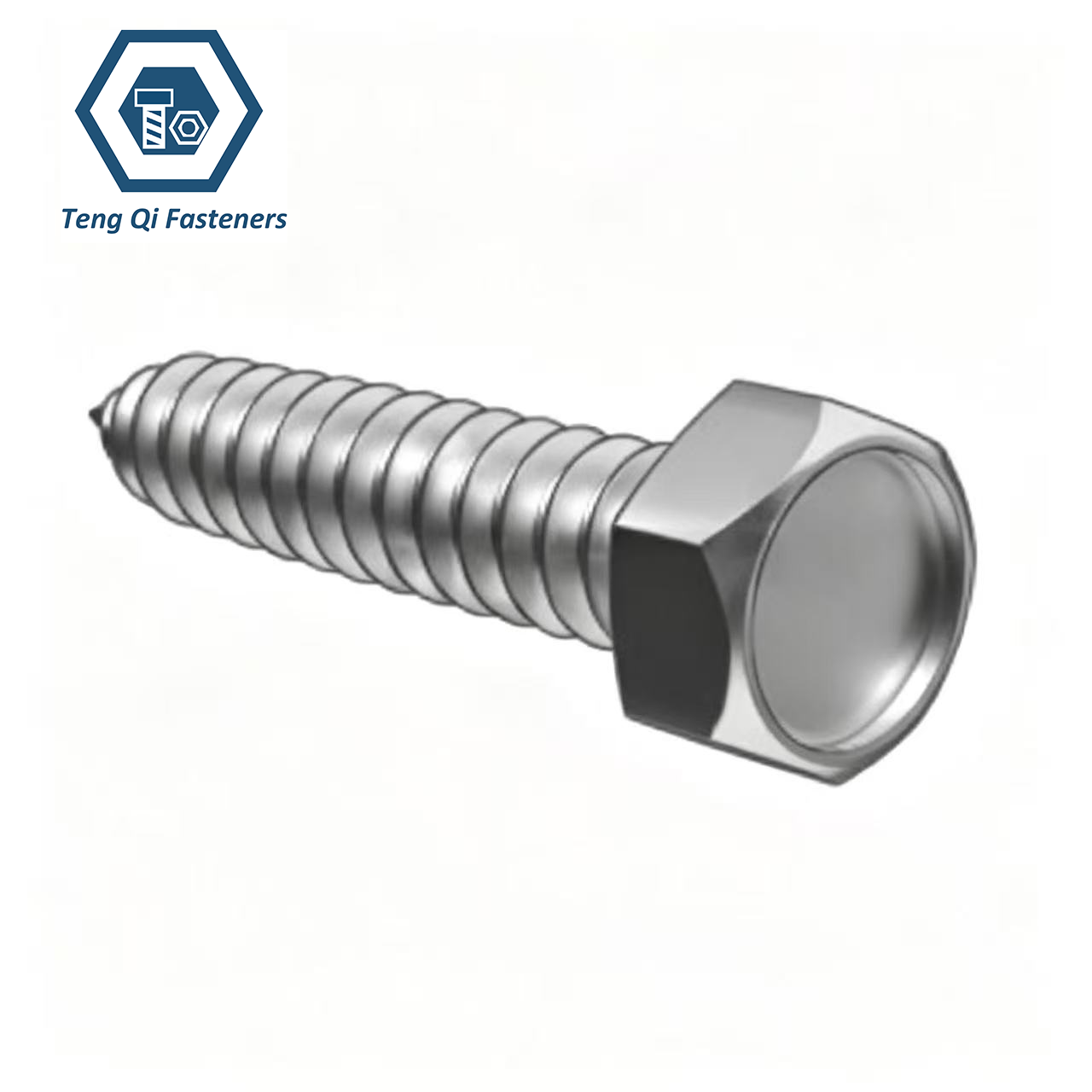
Specification:
DIN 7976 Hexagon Head Tapping Screws are available with standardized proportions for the hexagon head, shank, tapping thread, and screw point. These dimensions determine the compatibility of the screw with the mating component and the available tool clearance. The hexagon head provides a defined across-flats dimension for socket selection, while the screw point and thread geometry are selected according to the intended tapping application.
For production requirements, DIN 7976 screws can be supplied in carbon steel or stainless steel, with material selection based on the required strength, corrosion resistance, and service conditions. Protective finishes such as zinc plating, zinc flake, black oxide, or other specified coatings can be applied to steel versions. Diameter, overall length, head dimensions, thread pitch, and point configuration can be controlled according to the applicable standard, production drawing, or customer specification.
| Item | Specification |
|---|---|
| Standard | DIN7976 |
| Product Type | Hexagon Head Tapping Screw |
| Head Type | Hexagon Head |
| Drive | External Hexagon |
| Thread Type | Tapping Thread |
| Thread Diameter: | ST2.2-ST8 |
| Material: | Carbon Steel,Stainless Steel |
| Surface Treatment | Zinc Plated,Black Oxidation,Dacromet,Bright Finish,Passivation |
| Installation | Wrench/Socket |
| Point | Tapping Point |
Dimension Chart of DIN7976 Hexagon Head Tapping Screws:
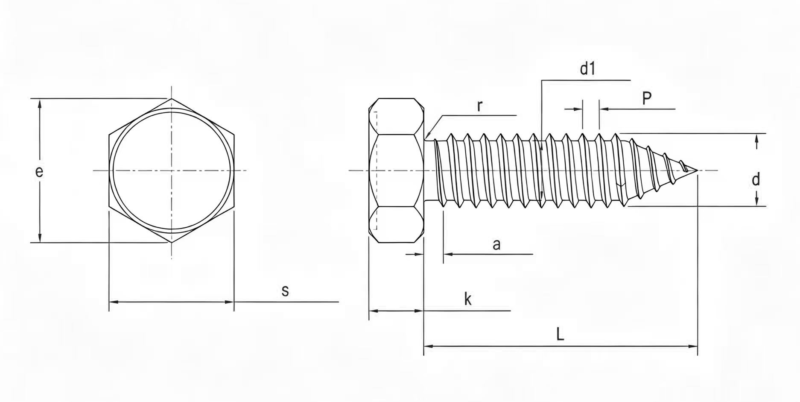
The DIN 7976 dimension chart brings together the measurements required to match the tapping screw with the joint and installation tool. The nominal screw diameter and length determine how much material can be engaged, while the hexagon head dimensions determine the appropriate wrench or socket size. For sheet-metal assemblies, the relationship between screw length and component thickness is particularly important to provide sufficient thread engagement without excessive penetration through the workpiece.
Key dimensions include the nominal diameter (d), screw length (l), width across flats (s), head height (k), and point length or configuration where applicable. The chart can be used to compare different DIN 7976 sizes and select a screw that provides suitable thread engagement, adequate head bearing, and sufficient tool clearance for the intended assembly.
| Mon | ST2.2 | ST2.9 | ST3.5 | ST3.9 | ST4.2 | ST4.8 | ST5.5 | ST6.3 | ST8 |
| P | 0.8 | 1.1 | 1.3 | 1.3 | 1.4 | 1.6 | 1.8 | 1.8 | 2.1 |
| a max | 0.8 | 1.1 | 1.3 | 1.3 | 1.4 | 1.6 | 1.8 | 1.8 | 2.1 |
| e min | 3.38 | 5.4 | 5.96 | 7.59 | 7.59 | 8.71 | 8.71 | 10.95 | 14.26 |
| k min | 1.18 | 1.38 | 2.18 | 2.18 | 2.68 | 2.88 | 3.85 | 4.65 | 5.65 |
| k max | 1.42 | 1.62 | 2.42 | 2.42 | 2.92 | 3.12 | 4.15 | 4.95 | 5.95 |
| r max | 0.3 | 0.4 | 0.5 | 0.5 | 0.6 | 0.7 | 0.8 | 0.9 | 1.1 |
| s max | 3.2 | 5 | 5.5 | 7 | 7 | 8 | 8 | 10 | 13 |
| s min | 3.02 | 4.82 | 5.32 | 6.78 | 6.78 | 7.78 | 7.78 | 9.78 | 12.73 |
| d max | 2.24 | 2.9 | 3.53 | 3.91 | 4.22 | 4.8 | 5.46 | 6.25 | 8 |
| d min | 2.1 | 2.76 | 3.35 | 3.73 | 4.04 | 4.62 | 5.28 | 6.03 | 7.78 |
| d1 max | 1.63 | 2.18 | 2.64 | 2.92 | 3.1 | 3.58 | 4.17 | 4.88 | 6.2 |
| d1 min | 1.52 | 2.08 | 2.51 | 2.77 | 2.95 | 3.43 | 3.99 | 4.7 | 5.99 |
- RELATED SCREWS LISTS:
- Stainless Steel DIN7976 Hexagon Head Tapping Screws
- Stainless Steel DIN7982 Cross Recessed Countersunk Head Tapping Screws
- Stainless Steel DIN7983 Cross Recessed Raised Countersunk Head Tapping Screws
- Stainless Steel DIN7985 Cross Recessed Raised Cheese Head Screws
- DIN7964E Stainless Steel Socket Head Cap Captive Screw
- Stainless Steel DIN964 Slotted Raised Countersunk Head Screws
- Stainless Steel DIN966 Cross Recessed Raised Countersunk Head Screws
- Stainless Steel DIN967 Cross Recessed Pan Head Screws with Collar
- Stainless Steel DIN968 Cross Recessed Pan Head Tapping Screws with Collar
- GB830 Stainless Steel Slotted Cheese Head Screws with Shoulder
- Stainless Steel GB831 Slotted Shoulder Screws
- Stainless Steel GB834 Knurled Thumb Screws
- Stainless Steel GB835 Knurled Screws
- Stainless Steel GB836Knurled Screws with Small Head
- Stainless Steel GB837 Slotted Pan Head Screws with Waisted Shank
- Stainless Steel GB839 Knurled Thumb Captive Screws with Waisted Shank
- Nickel Plated Smooth Shank Single Shoulder Shelf Support Screw
- Nickel Plated Furniture Shelf Peg with Matching Knurled Nut
Application of DIN7976 Hexagon Head Tapping Screws:
DIN 7976 Hexagon Head Tapping Screws are particularly useful for assemblies in which the fastening point is accessible from only one side. They can be installed directly into suitable pre-drilled holes, making them practical for joining sheet-metal covers, mounting brackets, protective panels, steel profiles, and fabricated enclosures without requiring access to the rear side for a separate nut. The external hexagon head is also convenient when the joint requires a firm tightening torque during production or maintenance.
In electrical and control equipment, DIN 7976 screws can be used to secure cabinet panels, cable-management components, terminal-box covers, and mounting rails. In HVAC and building equipment, they are suitable for ductwork components, ventilation housings, air-handling equipment panels, and metal support brackets. For industrial machinery, applications can include removable machine covers, inspection panels, guards, sensor brackets, and fabricated steel frames where direct fastening into a prepared hole is practical. Smaller screws are generally better suited to thin sheet-metal and lightweight enclosures, while larger diameters can be selected for thicker profiles, brackets, and structural equipment panels when the substrate provides sufficient thread engagement. Carbon steel versions are commonly used for general indoor equipment and fabricated metal assemblies, whereas stainless steel versions are preferable for refrigeration equipment, outdoor enclosures, food-service machinery, and other installations where moisture or corrosion exposure is a concern.