
DIN982 Nylon Nuts
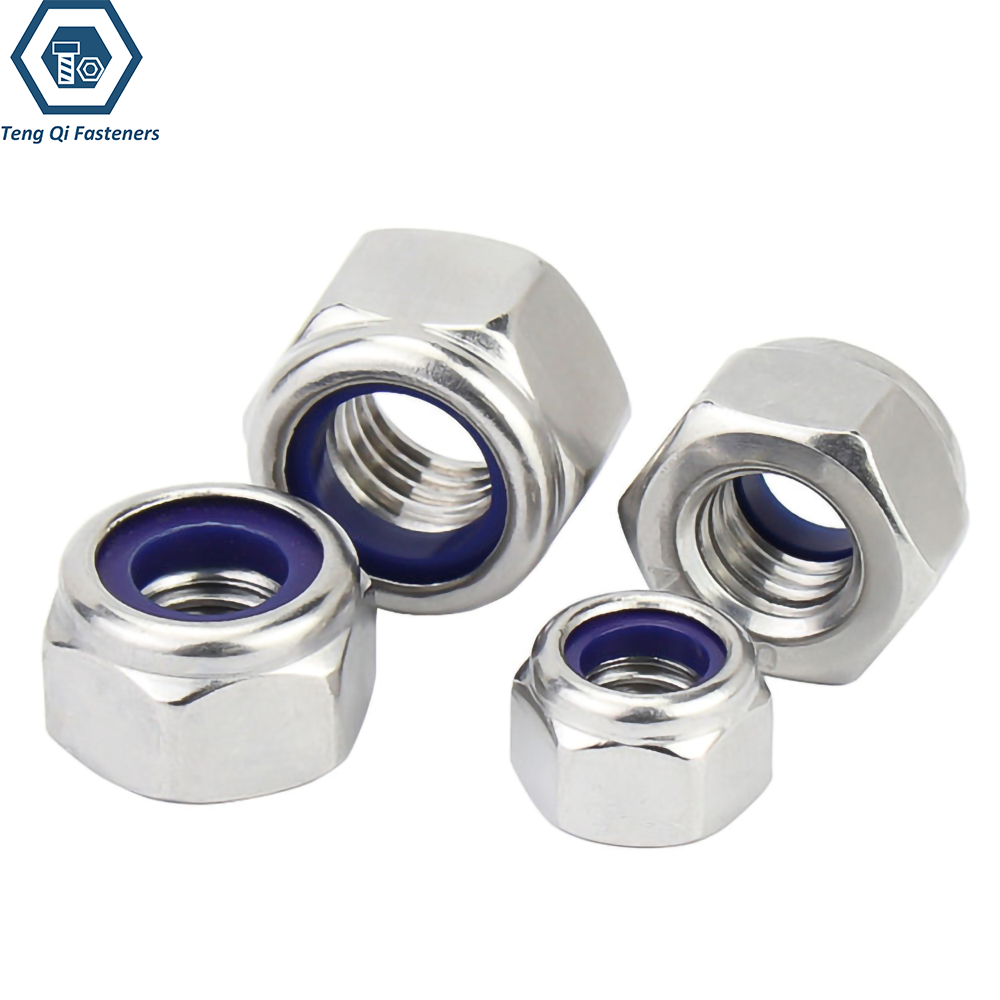
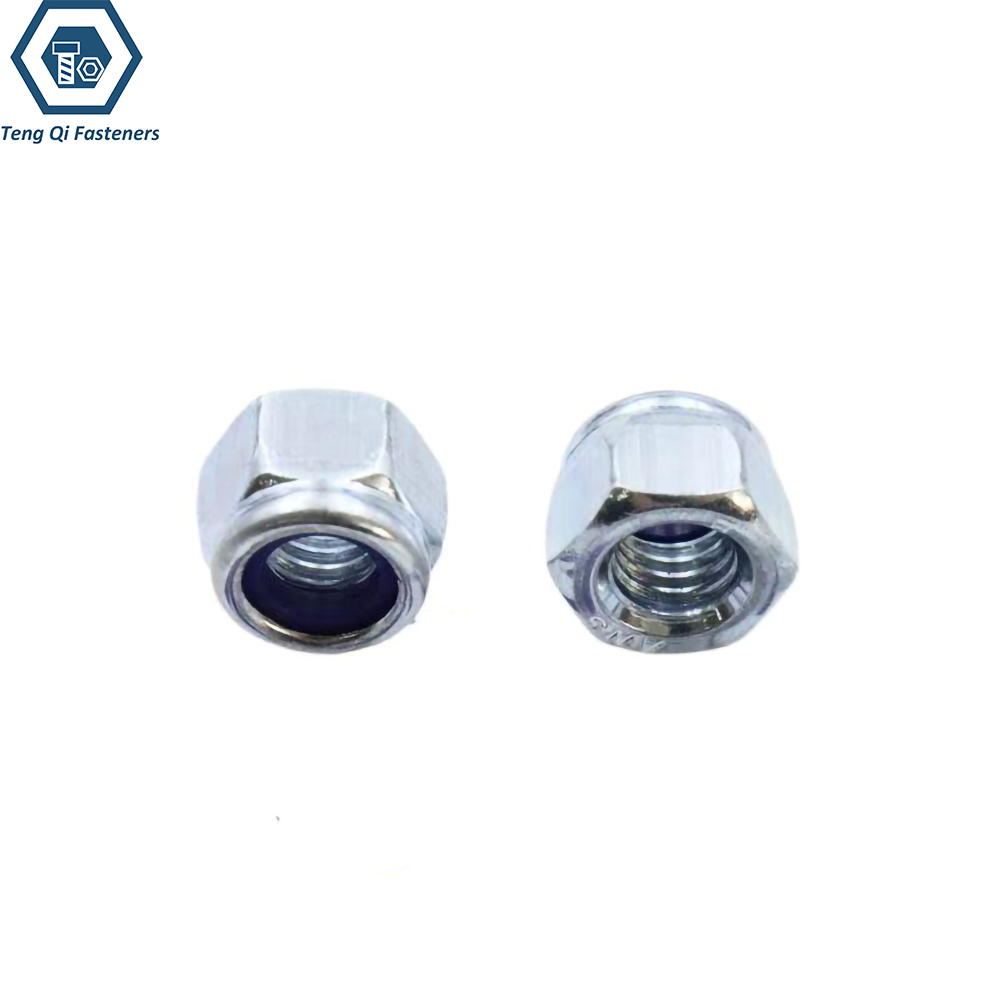
The high-type construction of DIN 982 Nylon Insert Lock Nuts provides a full-height hexagonal body with an integrated nylon insert for prevailing torque locking. Compared with low-type locknuts, the increased nut height provides greater available thread engagement while retaining the familiar hexagonal profile for wrench installation. As the nut is tightened onto the mating bolt, the nylon insert creates interference with the thread and generates resistance to rotation.
This combination of full-height geometry and nylon locking makes DIN 982 a practical choice for mechanical connections where a conventional-height locknut is preferred. The higher profile also provides more space within the nut body for thread engagement, which can be relevant when selecting fasteners for loaded or repeatedly serviced assemblies. The actual nut grade, size, and thread should be matched to the requirements of the mating bolt and joint. Our regular DIN 982 range includes carbon steel and stainless steel versions. Carbon steel nuts are commonly used for general machinery, equipment, fabricated structures, and industrial fastening, while stainless steel versions are suitable when greater resistance to moisture and corrosion is required. Material selection should also take into account the bolt material, operating environment, and required mechanical performance.
Specification:
The specification of DIN 982 Nylon Insert Lock Nuts covers the nut geometry, metric thread, material, and prevailing torque function required for this high-type locknut. The standard defines the dimensional relationship between the nut height, width across flats, and threaded portion, while the nylon insert provides the prevailing torque that helps resist rotation on the mating bolt.
For purchasing, the key details are nominal diameter, thread pitch, nut height, width across flats, material, and surface finish. Our regular supply includes carbon steel and stainless steel DIN 982 lock nuts, allowing the material to be selected according to the mechanical requirements and service environment. The selected nut should match the bolt in thread and size, with sufficient thread engagement and compatible material properties for the complete fastening assembly.
| Item | Specification |
|---|---|
| Standard | DIN982 |
| Product Type | Nylon Insert Lock Nut |
| Nut Shape | Hexagon |
| Thread System | Metric |
| Thread Diameter | M5-M24 |
| Mechanical Property | ISO898-2:Class5,8,10 ISO3506-2:A2-70 A2-80 A4-70 A4-80 |
| Material | Carbon Steel/Stainless steel |
| Locking Element | Nylon Insert |
| Locking Principle | Prevailing Torque |
| Surface Finish | Bright Finish,Passivation,Zinc Plated, |
| Prevailing Torque/Clamp Force | ISO2320:2016 Standard |
- RELATED NUT LISTS:
- DIN466 Knurled Nuts
- DIN6923 Hex Flange Nut
- DIN508 Nuts for T-slots
- DIN439 Chamfered Hexagon Thin Nuts
- DIN985 Nylon Thick Lock Nuts
- DIN986 Hex Domed Cap Nuts
- DIN980V Three-Point Locking Hexagon Nuts
- EN14399-3 High-strength Structural Hex Nut
- DIN6927 Prevailing Torque Three-Point Locking Flange Hexagon Nuts
- DIN7967 Self-Locking Counter Nuts
- DIN917 Low Type Hexagon Cap Nuts
- DIN928 Square Weld Nuts
- DIN935 Hexagon Slotted and Castle Nuts
- Single Leaf Spring T-Slot Sliding Nut
- Roll-in T Slot Nut for 20 Series
- ASME/ANSI B18.16.6 Nylon Insert Thin Locknuts
Dimension Chart of DIN982 Nylon Lock Nuts:
The DIN 982 dimension chart provides the measurements needed to select the correct high-type nylon insert lock nut for a metric threaded assembly. The nominal thread size identifies the mating bolt, while the nut height and hex dimensions determine the available thread engagement and the wrench or socket clearance required during installation.
Key dimensions include the nominal thread diameter (d), pitch (P), width across flats (s), width across corners (e), and nut height (m). The high-type configuration gives DIN 982 a greater overall height than the corresponding low-type nylon insert locknut, making the nut height an important consideration when checking thread engagement and the space available around the fastening point.

| Thread Diameter | M5 | M6 | M7 | M8 | M10 | M12 | M14 | M16 | M18 | M20 | M22 | M24 |
| P | 0.8 | 1 | 1 | 1|1.25 | 1|1.25|1.5 | 1.25|1.5|1.75 | 1.5|2 | 1.5|2 | 1.5|2|2.5 | 1.5|2|2.5 | 1.5|2|2.5 | 2|3 |
| e min | 8.79 | 11.05 | 12.12 | 14.38 | 18.9 | 21.1 | 24.49 | 26.75 | 29.56 | 32.95 | 35.03 | 39.55 |
| h max | 6.3 | 8 | 8.5 | 9.5 | 11.5 | 14 | 16 | 18 | 20 | 22 | 25 | 28 |
| h min | 6 | 7.7 | 8.2 | 9.14 | 11.14 | 13.64 | 15.3 | 17.3 | 19.16 | 20.7 | 23.7 | 26.7 |
| k min | 4.4 | 4.9 | 6.14 | 6.44 | 8.04 | 10.37 | 12.1 | 14.1 | 15.1 | 16.9 | 18.1 | 20.2 |
| s max | 8 | 10 | 11 | 13 | 17 | 19 | 22 | 24 | 27 | 30 | 32 | 36 |
| s min | 7.78 | 9.78 | 10.73 | 12.73 | 16.73 | 18.67 | 21.67 | 23.67 | 26.16 | 29.16 | 31 | 35 |
Application of DIN982 Nylon Nuts:
Full-Height Design for Machinery and Equipment
The high-type body of DIN 982 provides a greater nut height and a substantial threaded section compared with low-type nylon insert locknuts. This configuration is useful in equipment where sufficient space is available around the fastening point and where a full-height locknut is preferred. Typical applications include industrial machinery frames, conveyor systems, pumps, compressors, gearboxes, machine tools, agricultural machinery, and equipment mounting structures. The nylon insert generates prevailing torque on the mating thread, helping maintain the nut position on components exposed to normal vibration and movement.
Secure Fastening of Brackets, Housings and Moving Components
The combination of a full-height hexagonal body and nylon insert also suits fastening points on motor mounts, equipment covers, machine guards, support brackets, linkages, hinges, shafts, fabricated frames, and mechanical adjustment mechanisms. For example, DIN 982 can be used to secure a bracket to a machine frame, retain a cover or guard, or fasten components that experience repeated movement during equipment operation. Carbon steel versions are suitable for general industrial machinery and equipment, while stainless steel versions can be selected for outdoor machinery, food-processing equipment, water-related equipment, and other moisture-exposed applications where corrosion resistance is important.