
DIN7967 Self-Locking Counter Nuts
DIN 7967 Self-Locking Counter Nuts are designed to secure threaded connections by adding a compact locking element to an existing nut-and-bolt assembly. Unlike a conventional hex nut used as the primary fastening component, the counter nut is tightened against the main nut to create additional resistance against loosening. This makes the design useful when a joint is exposed to vibration, repeated movement, or changes in clamping conditions.
The compact nut profile also allows it to be installed where space around the threaded connection is limited. DIN 7967 counter nuts can be used with suitable hexagon nuts, bolts, studs, and threaded components in mechanical assemblies where maintaining the position of the primary nut is important. Their simple all-metal locking principle makes them suitable for applications requiring a reusable mechanical locking solution without relying on nylon inserts or chemical thread-locking compounds.
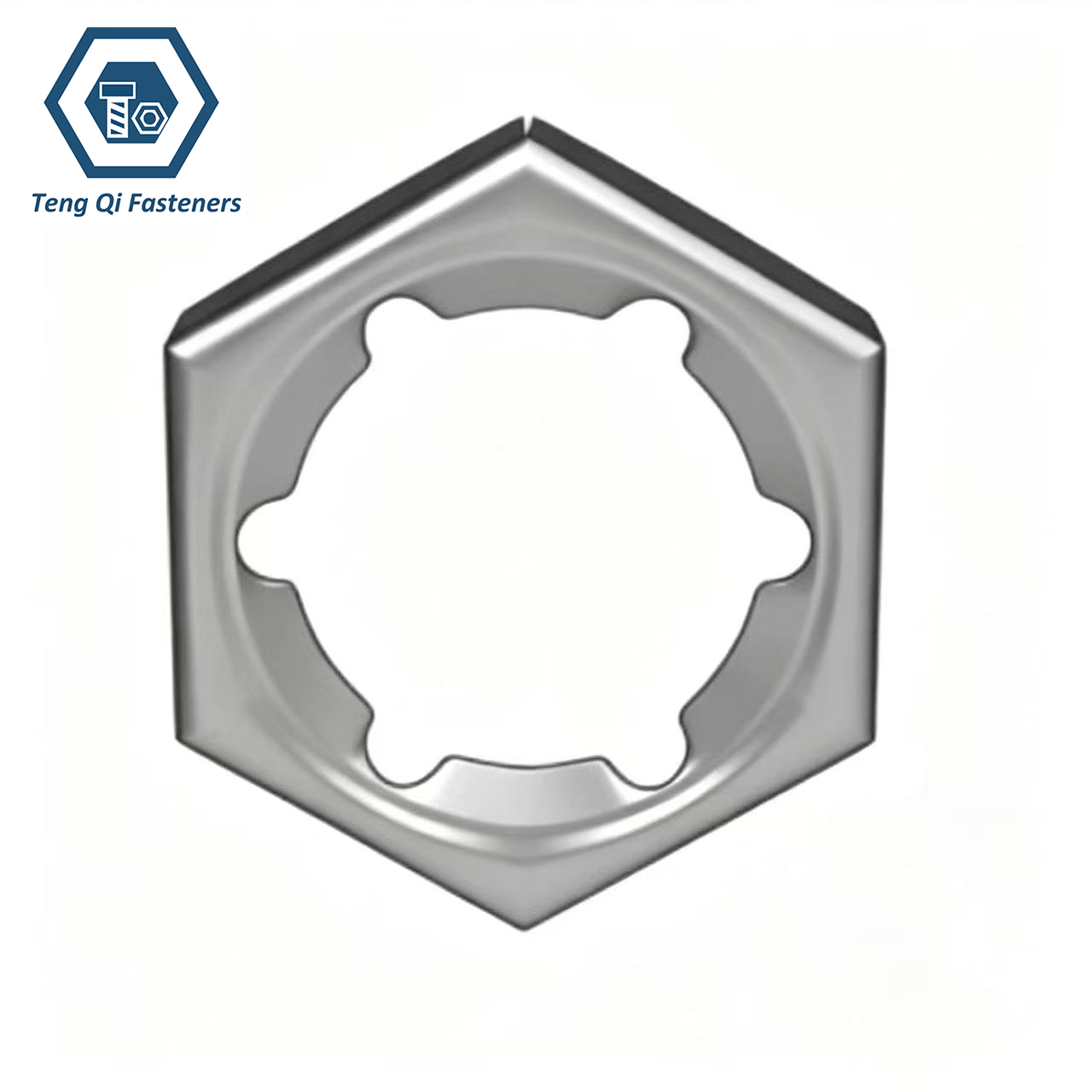
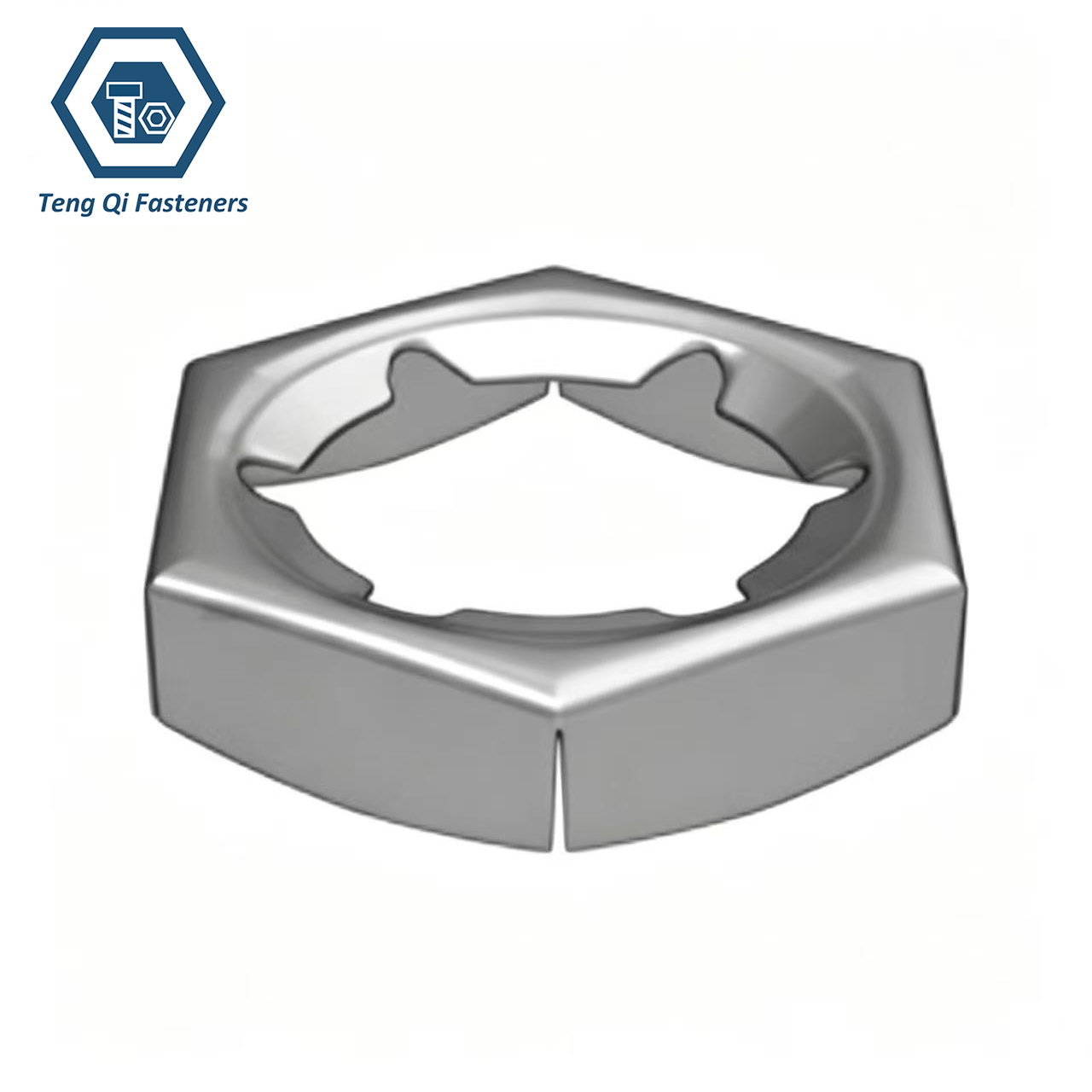
Specification:
DIN 7967 Self-Locking Counter Nuts are specified by their compact counter-nut design and mechanical locking function. Unlike a conventional nut that provides the primary clamping force, the counter nut is installed against the main nut to create a locking effect within the threaded assembly. Its compact form allows the locking function to be added without significantly increasing the space required around the joint.
The counter nut is available in metric thread sizes and can be matched with compatible bolts, studs, and hexagon nuts according to the thread specification. Depending on the required mechanical performance and service environment, DIN 7967 counter nuts can be supplied in carbon steel, alloy steel, or stainless steel, with surface treatments such as plain, zinc plated, or other protective coatings. Thread accuracy, material grade, hardness, and dimensional tolerances can be controlled according to the applicable standard and customer requirements.
| Item | Specification |
|---|---|
| Standard | DIN7969 |
| Product Type | Self-Locking Counter Nut |
| Locking Method | Mehcanical Counter-Nut Locking |
| Thread | Metric |
| Thread Diameter | M4-M52 |
| Material | Alloy Steel,Stainless Steel |
| Surface Treatment | Bright Finish,Zinc Plated,Hot Dip Galvanized |
Dimension Chart of Stainless Steel DIN7967 Self-Locking Counter Nuts:
The dimension chart of Stainless Steel DIN7967 Self-Locking Counter Nuts provides detailed specifications of the key dimensions, including thread size, outer diameter, height, across flats (S), and other critical parameters. Manufactured according to the DIN7967 standard, these dimensions ensure accurate compatibility with corresponding bolts and screws, providing reliable installation and consistent locking performance.
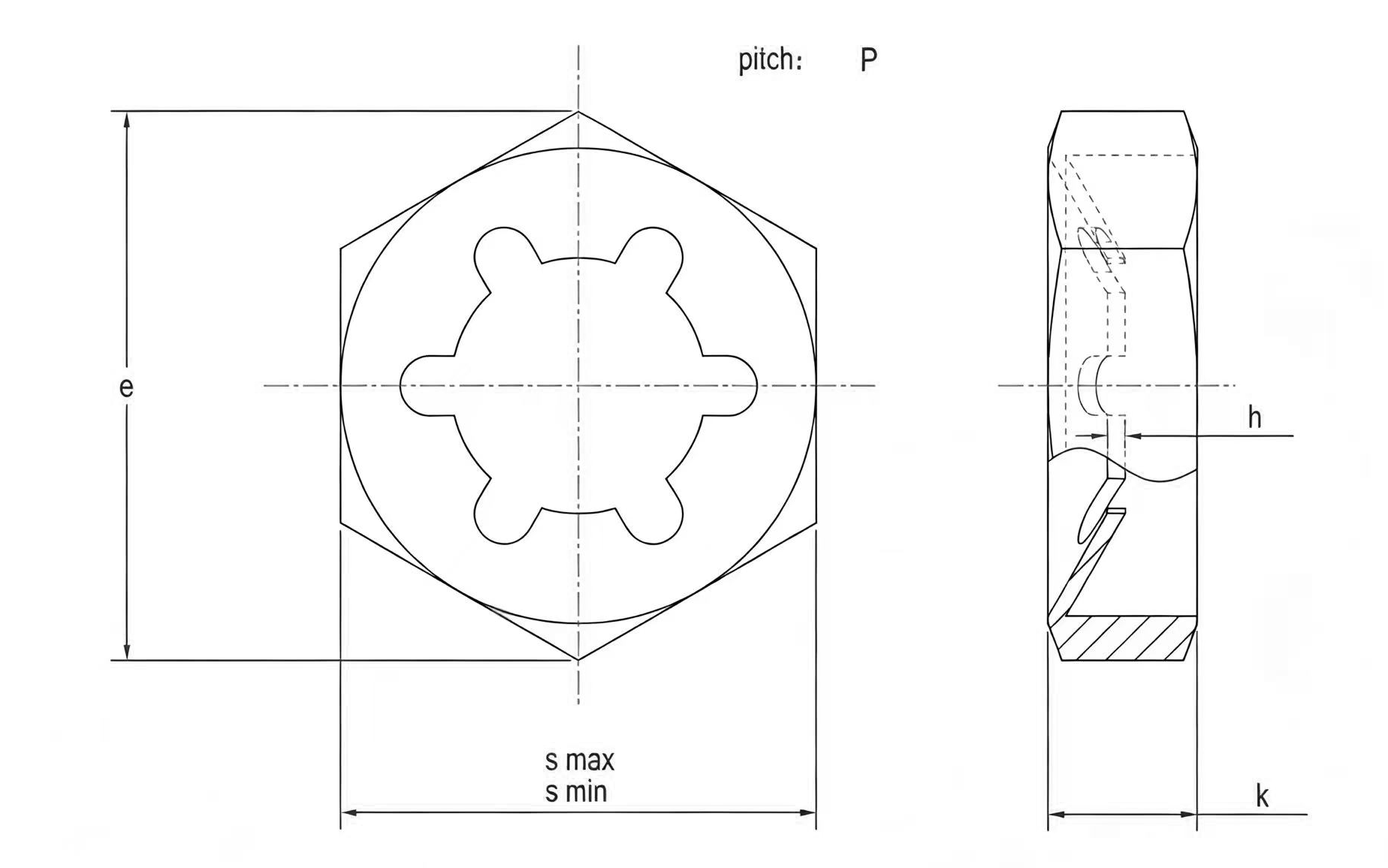
| Mon | M4 | M5 | M6 | M8 | M10 | M12 | M14 | M16 | M18 | M20 | M22 | M24 | M27 | M30 |
| P | 0.7 | 0.8 | 1 | 1.25 | 1.5 | 1.75 | 2 | 2 | 2.5 | 2.5 | 2.5 | 3 | 3 | 3.5 |
| e | 8.1 | 9.2 | 11.5 | 15 | 19.6 | 21.9 | 25.4 | 27.7 | 31.2 | 34.6 | 36.9 | 41.6 | 47.3 | 53.1 |
| k | 2.5 | 2.5 | 3 | 3.5 | 4 | 4.5 | 5 | 5 | 5.5 | 6 | 6 | 7 | 7 | 8 |
| s max | 7 | 8 | 10 | 13 | 17 | 19 | 22 | 24 | 27 | 30 | 32 | 36 | 41 | 46 |
| s min | 6.78 | 7.78 | 9.78 | 12.73 | 16.73 | 18.67 | 21.67 | 23.67 | 26.67 | 29.67 | 31.61 | 35.61 | 40.61 | 45.61 |
| h | 0.3 | 0.4 | 0.4 | 0.5 | 0.5 | 0.6 | 0.6 | 0.7 | 0.7 | 0.8 | 0.8 | 0.9 | 1 | 1.1 |
- RELATED NUT LISTS:
- Stainless Steel DIN466 Knurled Nuts
- DIN6923 Hex Flange Nut
- DIN508 Nuts for T-slots
- DIN439 Chamfered Hexagon Thin Nuts
- DIN981 Locknuts
- DIN986 Hex Domed Cap Nuts
- DIN980V Three-Point Locking Hexagon Nuts
- EN14399-3 High-strength Structural Hex Nut
- DIN6927 Prevailing Torque Three-Point Locking Flange Hexagon Nuts
- Stainless Steel DIN917 Low Type Hexagon Cap Nuts
- DIN928 Square Weld Nuts
- DIN935 Hexagon Slotted and Castle Nuts
- Stainless Steel Single Leaf Spring T-Slot Sliding Nut
- Stainless Steel Roll-in T Slot Nut for 20 Series
Application of DIN7967 Self-Locking Counter Nuts:
DIN 7967 Self-Locking Counter Nuts are used where an existing nut-and-bolt connection requires additional mechanical locking without changing the main fastening arrangement. They are particularly useful on threaded joints where access to the connection is available for tightening a second nut, such as adjustable linkages, threaded rods, machine guards, clamping mechanisms, and mechanical adjustment assemblies. The counter nut is tightened against the primary nut to secure its position and help maintain the desired setting during service.
In precision and adjustment applications, smaller counter nuts can be used on instrument mounts, actuator linkages, valve adjustment mechanisms, and positioning devices where the setting of the threaded component must remain stable. Medium and larger sizes can be applied to conveyor adjustment systems, agricultural implements, lifting mechanisms, industrial fixtures, and fabricated machinery where vibration or repeated movement may disturb the main nut. Carbon and alloy steel versions are suitable for general mechanical assemblies, while stainless steel versions can be selected for outdoor equipment, food-processing machinery, marine installations, and other environments where corrosion resistance is required.