
AS1252 High Strength Steel Hex Nuts
AS 1252 High Strength Steel Hex Nuts are designed for structural bolting systems where the nut forms part of a controlled high-strength connection. Rather than serving simply as a threaded counterpart to a bolt, the nut is selected as part of a matched fastening assembly in which the thread, bearing surface, material properties, and tightening requirements all contribute to the performance of the joint. The hexagonal configuration provides six accessible faces for tightening with a suitable wrench or socket.
The AS 1252 specification provides a standardized basis for structural hex nuts used with compatible high-strength bolts and washers. Their robust geometry and controlled mechanical properties make them suitable for connections where consistent clamping force and reliable load transfer are important. The nut is normally specified together with the corresponding structural bolt system rather than treated as an interchangeable general-purpose hex nut.
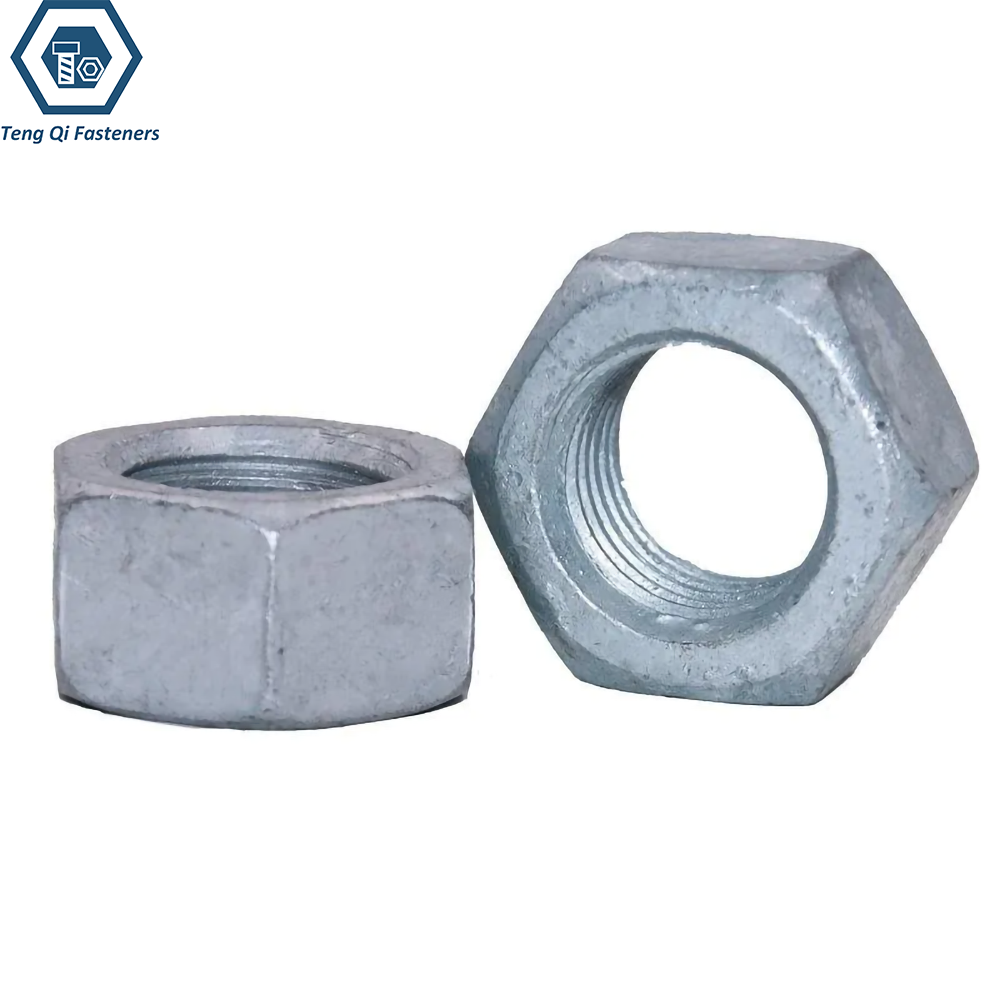
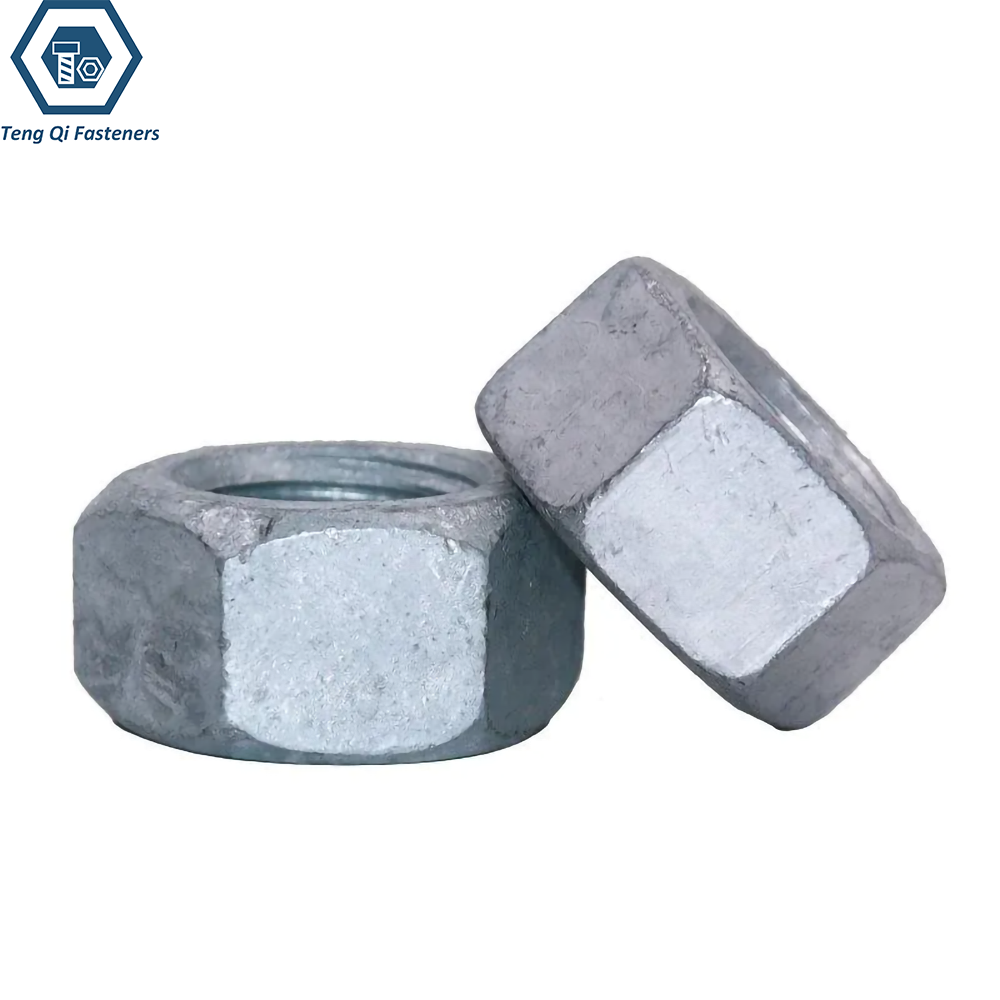
Specification:
AS 1252 High Strength Steel Hex Nuts are specified for use within structural bolting systems covered by the Australian Standard. The specification covers the nut’s dimensional configuration and mechanical requirements, allowing it to be selected as a compatible component of a high-strength structural fastening assembly. The hexagonal body provides the wrenching surfaces required for controlled installation, while the internal thread is matched to the corresponding structural bolt.
For structural bolting, compatibility extends beyond nominal thread diameter. The nut should correspond to the specified structural bolt system in terms of thread, dimensions, mechanical requirements, and surface condition. This is particularly important for high-strength assemblies where the nut, bolt, and washer work together during tightening. Using a general-purpose nut simply because it has the same thread size does not necessarily provide an equivalent structural connection.
| Item | Specification |
|---|---|
| Standard | AS1252 |
| Product Type | High Strength Steel Hex Nut |
| Application Standard | Structural Bolting |
| Material | Medium Carbon Steel C45 |
| Thread Standard | ISO 68-1,ISO 965 |
| Thread Tolerance | 6g |
| Nominal Diameter | M12-M36 |
| Mechanical Class | Class 8 |
| Manufacturing Process | wire drawing, cold heading/hot forging, thread rolling, heat treatment, surface treatment |
| Surface treatment | Hot Dip Galvanized |
Hardness:
| Thread Diameter | AS1252 Hex Nuts |
|---|---|
| M5 ≤ D ≤ M16 | 200-302 HV |
| M16 < D ≤ M39 | 233-353 HV |
| M5 ≤ D ≤ M16 | 30(max) HRC |
| M16 < D ≤ M39 | 36(max) HRC |
Chemical Composition:
| Item | Material | C (max) | Mn (min) | P (max) | S (max) |
|---|---|---|---|---|---|
| AS1252 Hex Nut D ≤ M16 | Carbon steel | 0.58 | 0.25 | 0.06 | 0.15 |
| AS1252 Hex Nut D > M16 | Carbon steel (quenched and tempered) | 0.58 | 0.30 | 0.048 | 0.058 |
Dimension Chart of AS1252 Hex Nut:
The AS 1252 Hex Nut dimension chart provides the key measurements required to select the correct nut for a high-strength structural bolting assembly. Because the nut works together with a compatible structural bolt and washer, the nominal thread size is the starting point for selection, while the nut’s external dimensions determine how it fits the assembled joint and the wrench or socket used for tightening.
The principal dimensions include the nominal thread diameter, width across flats, nut thickness, and width across corners. The width across flats determines the required wrench or socket size, while the nut thickness establishes the available threaded engagement with the mating bolt. The width across corners can also be useful when checking clearance around the nut in confined structural connections.
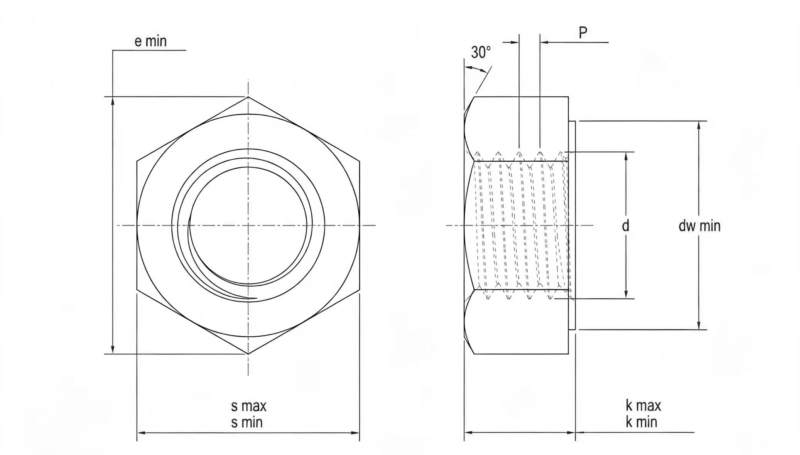
| Mon | M12 | M16 | M20 | M22 | M24 | M27 | M30 | M36 |
| P | 1.75 | 2 | 2.5 | 2.5 | 3 | 3 | 3.5 | 4 |
| dw min | 19.2 | 24.9 | 31.4 | 33.3 | 38 | 42.8 | 46.5 | 55.9 |
| e min | 22.78 | 29.56 | 37.29 | 39.55 | 45.2 | 50.85 | 55.37 | 66.44 |
| k max | 13.1 | 17.1 | 20.7 | 23.6 | 24.2 | 27.6 | 30.7 | 36.6 |
| k min | 12 | 16.4 | 19.4 | 22.3 | 22.9 | 26.3 | 29.1 | 35 |
| s max | 21 | 27 | 34 | 36 | 41 | 46 | 50 | 60 |
| s min | 20.16 | 26.16 | 33 | 35 | 40 | 45 | 49 | 58.8 |
- RELATED NUTS LIST:
- ISO4032 Hex Nut
- ANSI B18.2.2 Hex Nut
- AS1252 Hex Nut
- DIN6915 Hex Nut
- A194 Heavy Hex Nut
- A563 Heavy Hex Nut
- JIS1186 Hex Nut
- UNI5587 Hex Nut
- DIN6923 Flange Nut
- DIN985 Nylon Nut
- DIN982 Nylon Nut
- DIN1587 Dome Cap Nut
- DIN6334 Coupling Nut
- ASME B 18.16.6 Nylon Nuts
- GOST 5915 Hex Nut
- AS1112.1 Hex Nuts
- DIN6330 Hex Thick Nuts
Application of AS1252 Hex Nuts:
AS 1252 High Strength Steel Hex Nuts are intended for structural bolting connections where the nut forms part of a specified high-strength fastening system. Their applications are best determined by the type of structural joint, the loads involved, and the corresponding bolt and washer assembly rather than simply by the physical size of the nut.
Structural Steel Connections
AS 1252 nuts can be used in bolted connections between steel columns, beams, braces, base plates, connection plates, and structural brackets. They are suitable where structural members are assembled using high-strength bolting rather than welded permanently, allowing the connection to be installed, inspected, and maintained on site.
Steel Bridges and Infrastructure
High-strength structural nuts are used with compatible bolts in bridge steelwork, pedestrian bridges, gantries, steel platforms, and other infrastructure assemblies. These applications require consistent fastening components that can be specified as part of an engineered structural bolting system.
Industrial Steel Structures
Applications also include factory steel frames, equipment-support structures, warehouse structures, steel access platforms, pipe-support frames, and heavy fabricated structures. The nut is selected together with the corresponding structural bolt and washer to suit the specified connection.
Crane, Handling and Support Structures
AS 1252 nuts may be incorporated into bolted joints in crane supporting structures, lifting equipment frames, conveyor support structures, material-handling installations, and heavy-duty access systems, where structural members are assembled through bolted connections. The actual bolt and nut grade should be selected according to the engineered joint requirements.
Connections Requiring Site Assembly
One advantage of structural bolting is that large steel components can be transported separately and assembled at the project site. AS 1252 nuts can therefore be used in modular steel frames, prefabricated structural sections, site-installed brackets, and field-assembled steel connections, where access for tightening and later inspection needs to be considered during design.