
DIN 980V All Metal Lock Nuts
DIN 980V All Metal Lock Nuts are designed to maintain a secure threaded connection without relying on a nylon insert or other non-metallic locking element. The all-metal construction creates prevailing torque on the mating thread, helping the nut resist unwanted rotation once installed. This makes DIN 980V particularly useful for assemblies exposed to vibration, repeated movement, temperature changes, or mechanical loads where a conventional hex nut may gradually lose its clamping effect. The locking function is integrated into the metal nut itself, making it suitable for applications where an all-metal fastening solution is preferred.
Compared with nylon insert lock nuts such as DIN 985, DIN 980V does not depend on a polymer insert for its locking action. This can make an all-metal design more appropriate for applications where higher temperatures, certain chemicals, or a fully metallic fastening system need to be considered. DIN 980V lock nuts are available in carbon steel, alloy steel, and stainless steel, with different finishes and property classes depending on the application. When selecting the nut, the thread size, mating bolt, required prevailing torque, material compatibility, and service temperature should be considered together.
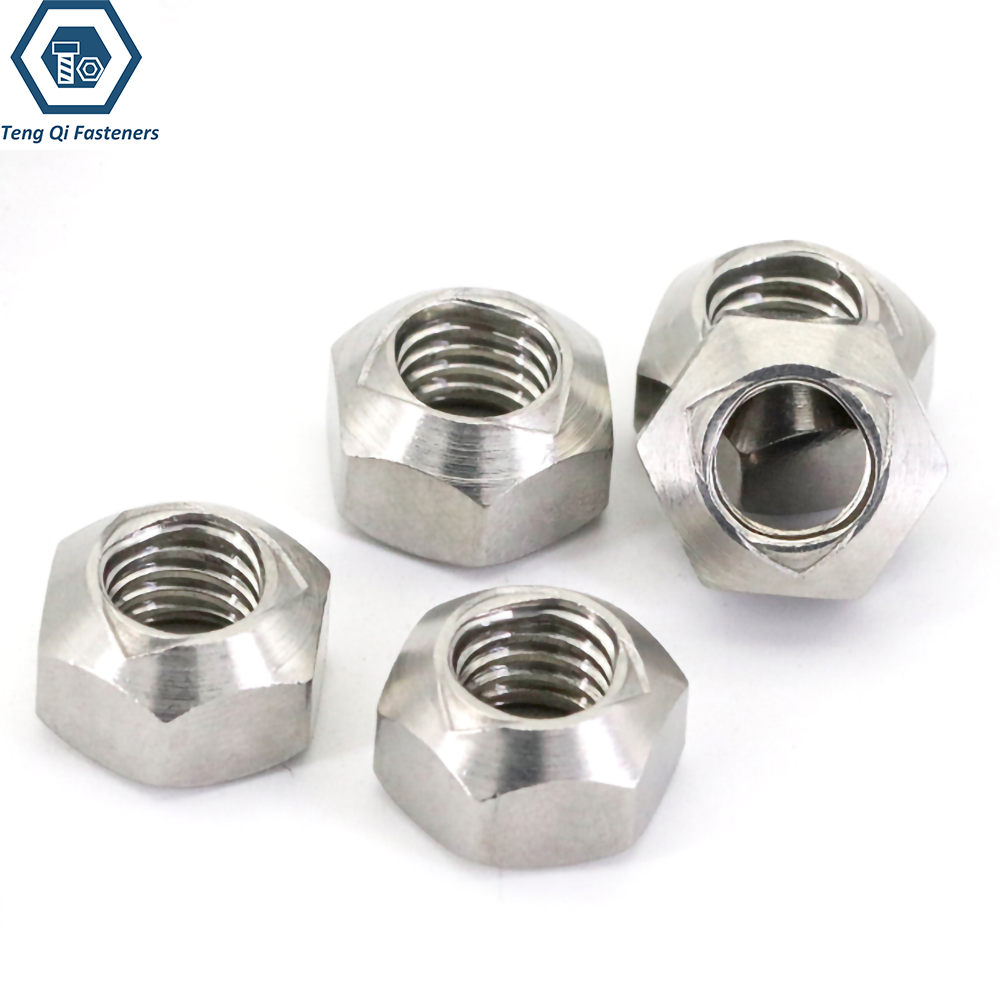
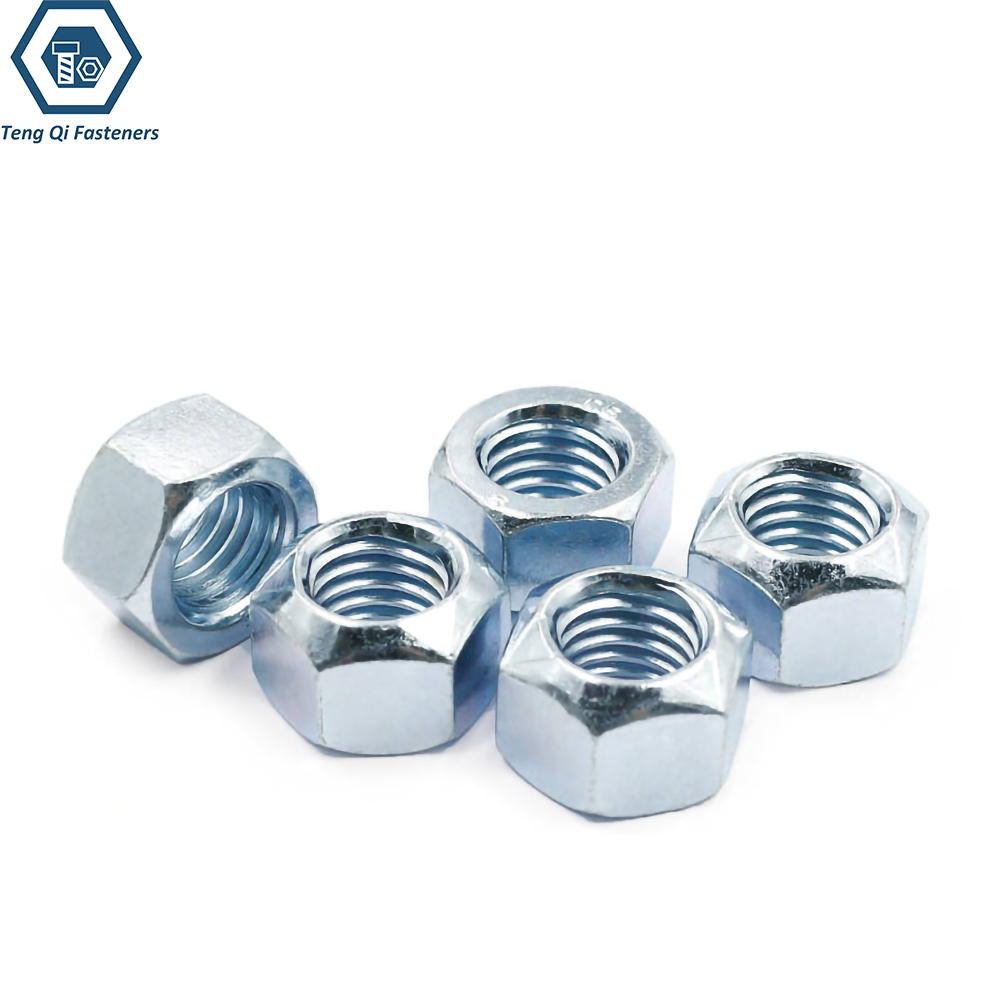
Specification:
| Item | Specification |
|---|---|
| Standard | DIN980V |
| Nut Type | Hexagon Prevailing Torque Nut |
| Thread Pitch | Metric Coarse/Fine Thread |
| Thread Standard | ISO965 |
| Property Class | 8,10,12 A2-70/80 A4-70/80 |
| Size Range | M3-M39 |
| Mechanical Properties | ISO898-2,ISO3506-2 |
| Prevailing Torque/Locking Performance | ISO2320 |
| Material | Carbon Steel,Alloy Steel, Stainless Steel |
| Surface Treatment | Black Oxidation,Zinc Plated,Bright Finish,Passivation |
| Inspection | Dimensions,Thread,Locking Function,Material,Coating |
Dimension Chart:
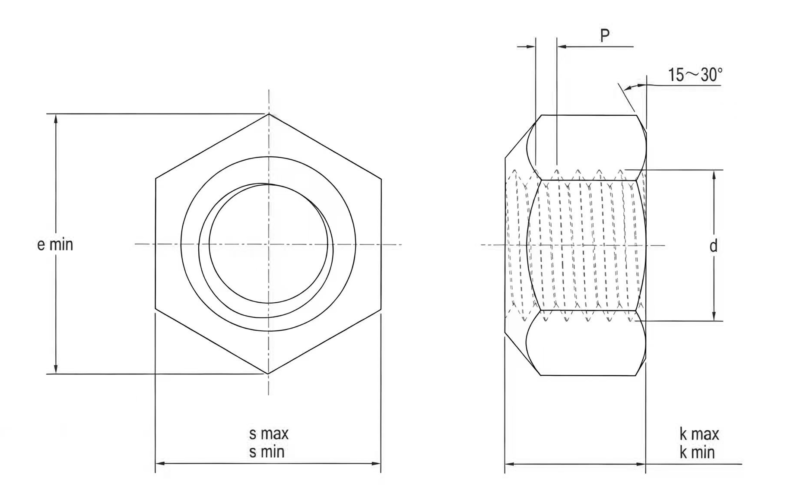
| Mon | M3 | M4 | M5 | M6 | M7 | M8 | M10 | M12 | M14 | M16 | M18 | M20 | M22 | M24 | M27 | M30 | M33 | M36 | M39 |
| P | 0.5 | 0.7 | 0.8 | 1 | 1 | 1|1.25 | 1|1.25|1.5 | 1.25|1.5|1.75 | 1.5|2 | 1.5|2 | 1.5|2|2.5 | 1.5|2|2.5 | 1.5|2|2.5 | 2|3 | 2|3 | 2|3.5 | 2|3.5 | 3|4 | 3|4 |
| e min | 6.01 | 7.66 | 8.79 | 11.05 | 12.12 | 14.38 | 18.9 | 21.1 | 24.49 | 26.75 | 29.56 | 32.95 | 35.03 | 39.55 | 45.2 | 50.85 | 55.37 | 60.79 | 66.44 |
| k max | 3.7 | 4.2 | 5.1 | 6 | 7 | 8 | 10 | 12 | 14 | 16 | 18 | 20 | 22 | 24 | 27 | 30 | 33 | 36 | 39 |
| k min | 3.4 | 3.9 | 4.8 | 5.7 | 6.5 | 7.5 | 9 | 11 | 12 | 14 | 16 | 18 | 20 | 22 | 25 | 28 | 31 | 34 | 37 |
| s max | 5.5 | 7 | 8 | 10 | 11 | 13 | 17 | 19 | 22 | 24 | 27 | 30 | 32 | 36 | 41 | 46 | 50 | 55 | 60 |
| s min | 5.32 | 6.78 | 7.78 | 9.78 | 10.73 | 12.73 | 16.73 | 18.67 | 21.67 | 23.67 | 26.16 | 29.16 | 31 | 35 | 40 | 45 | 49 | 53.8 | 58.8 |
- RELATED NUT LISTS:
- Stainless Steel DIN466 Knurled Nuts
- DIN6923 Hex Flange Nut
- DIN508 Nuts for T-slots
- DIN439 Chamfered Hexagon Thin Nuts
- DIN981 Locknuts
- DIN986 Hex Domed Cap Nuts
- EN14399-3 High-strength Structural Hex Nut
- DIN6927 Prevailing Torque Three-Point Locking Flange Hexagon Nuts
- Stainless Steel DIN7967 Self-Locking Counter Nuts
- Stainless Steel DIN917 Low Type Hexagon Cap Nuts
- DIN928 Square Weld Nuts
- DIN935 Hexagon Slotted and Castle Nuts
- Stainless Steel Single Leaf Spring T-Slot Sliding Nut
- Stainless Steel Roll-in T Slot Nut for 20 Series
Application of DIN 980V All Metal Lock Nuts:
Machinery & Industrial Equipment
DIN 980V All Metal Lock Nuts are suitable for industrial machinery, equipment frames, mechanical assemblies, brackets, and moving components where vibration or repeated loading may cause conventional nuts to loosen.
Automotive & Transportation Components
The all-metal locking design can be used in automotive components, trailers, agricultural equipment, and transportation machinery where secure threaded connections are required and a nylon insert may not be preferred because of the operating environment.
High-Temperature Assemblies
Unlike nylon insert lock nuts, DIN 980V does not rely on a polymer locking element. This makes the all-metal design suitable for applications where elevated temperatures or exposure to certain operating conditions need to be considered, subject to the selected material, coating, and service temperature.
Vibration-Prone Connections
DIN 980V is particularly useful for fans, pumps, motors, machinery, equipment supports, and other assemblies exposed to vibration or repeated movement. The prevailing torque generated by the deformed metal section helps resist unwanted rotation of the nut during service.
Stainless Steel Assemblies
Stainless steel DIN 980V nuts can be selected for industrial equipment, outdoor machinery, marine-related equipment, and corrosion-sensitive assemblies where both corrosion resistance and an all-metal locking design are required.
Selection Tip
For critical connections, select the DIN 980V nut together with the correct bolt or stud material, thread size, property class, and installation torque. Where locking performance is essential, the required prevailing-torque requirements should also be confirmed according to the applicable specification.