
316 & 316L Stainless Steel Threaded Rods
316 and 316L stainless steel threaded rods are a practical choice when a threaded fastening system needs to withstand moisture, chlorides and other corrosive conditions. Both grades belong to the molybdenum-alloyed 300-series stainless steels, giving them better resistance to localized corrosion than 304 stainless steel in many environments. The lower carbon content of 316L also makes it better suited to applications where the material may be welded or exposed to heat during fabrication.
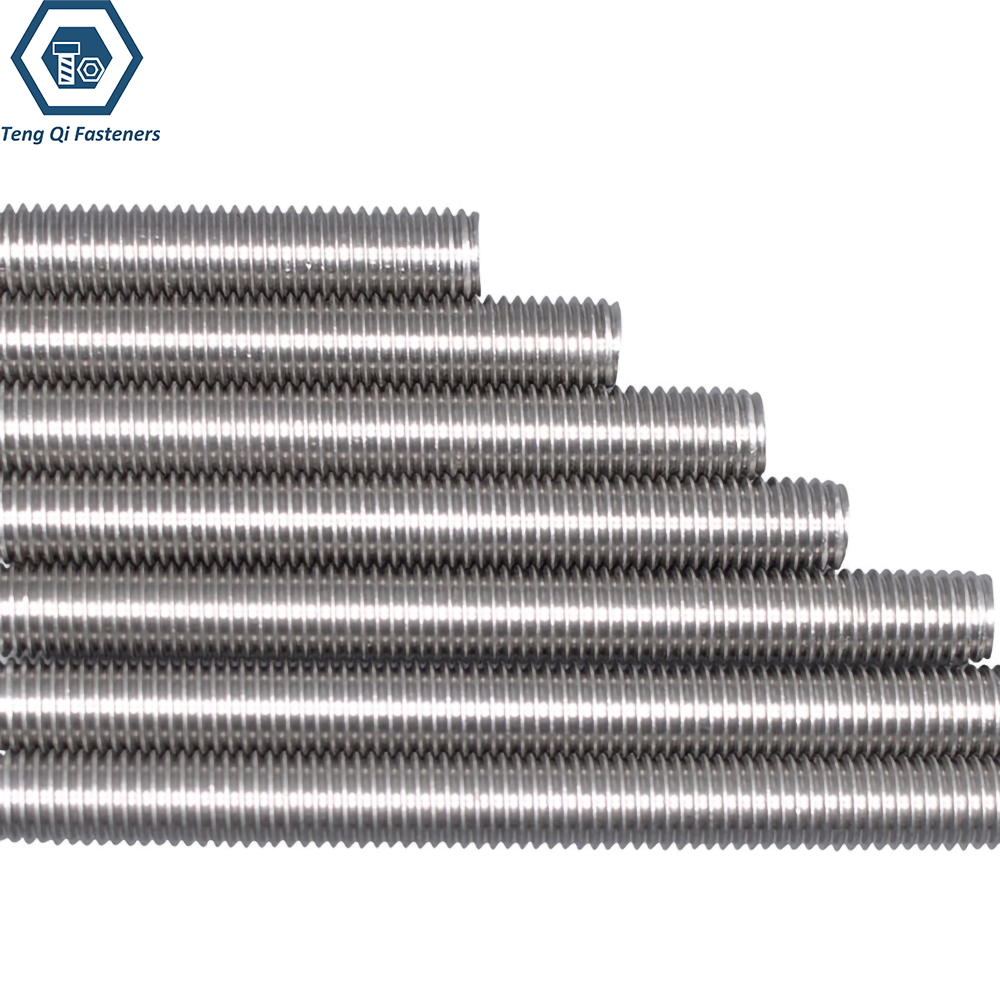
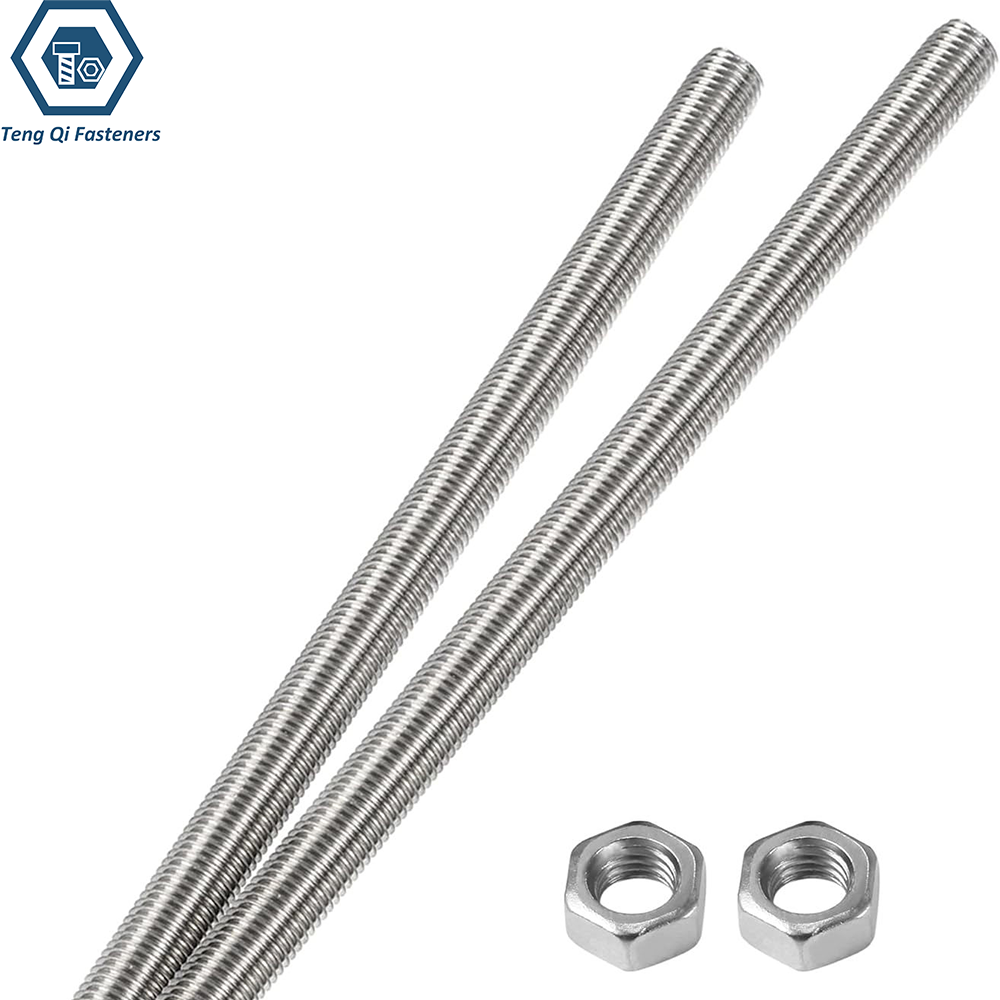
With threads extending along the rod, these fasteners can be cut to the required length and combined with nuts, washers, couplers or other threaded components. They are commonly used for equipment assembly, pipe supports, mechanical installations and structural fastening where the required connection length is not fixed. We supply 316 and 316L threaded rods in metric and inch sizes, with thread and length options selected according to the application and applicable dimensional requirements.
Dimension Standard:
316 and 316L threaded rods are available in several dimensional configurations depending on the standard used and the requirements of the assembly. Although these products share the same stainless steel grades, DIN and ASME standards use different approaches to dimensions, thread designation and length specifications. Choosing the appropriate standard helps ensure that the threaded rod fits the corresponding nuts, couplers and other mating components.
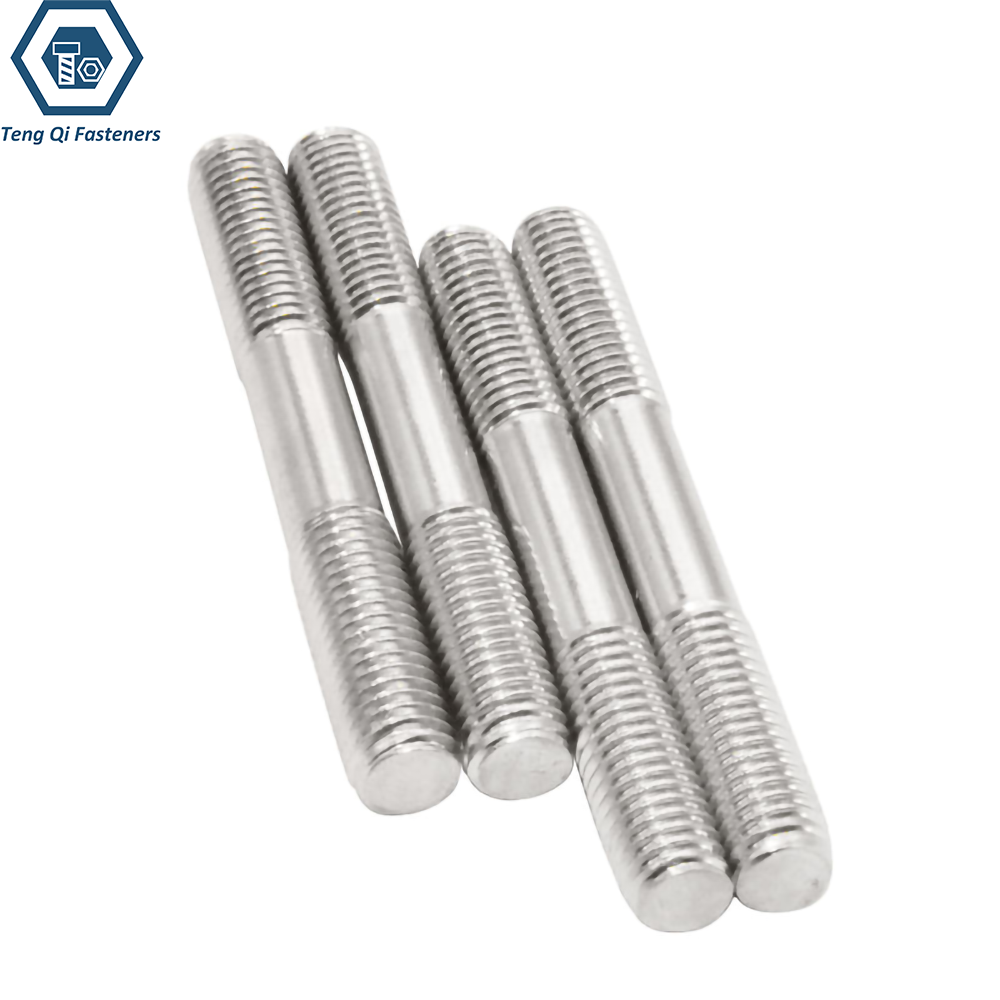
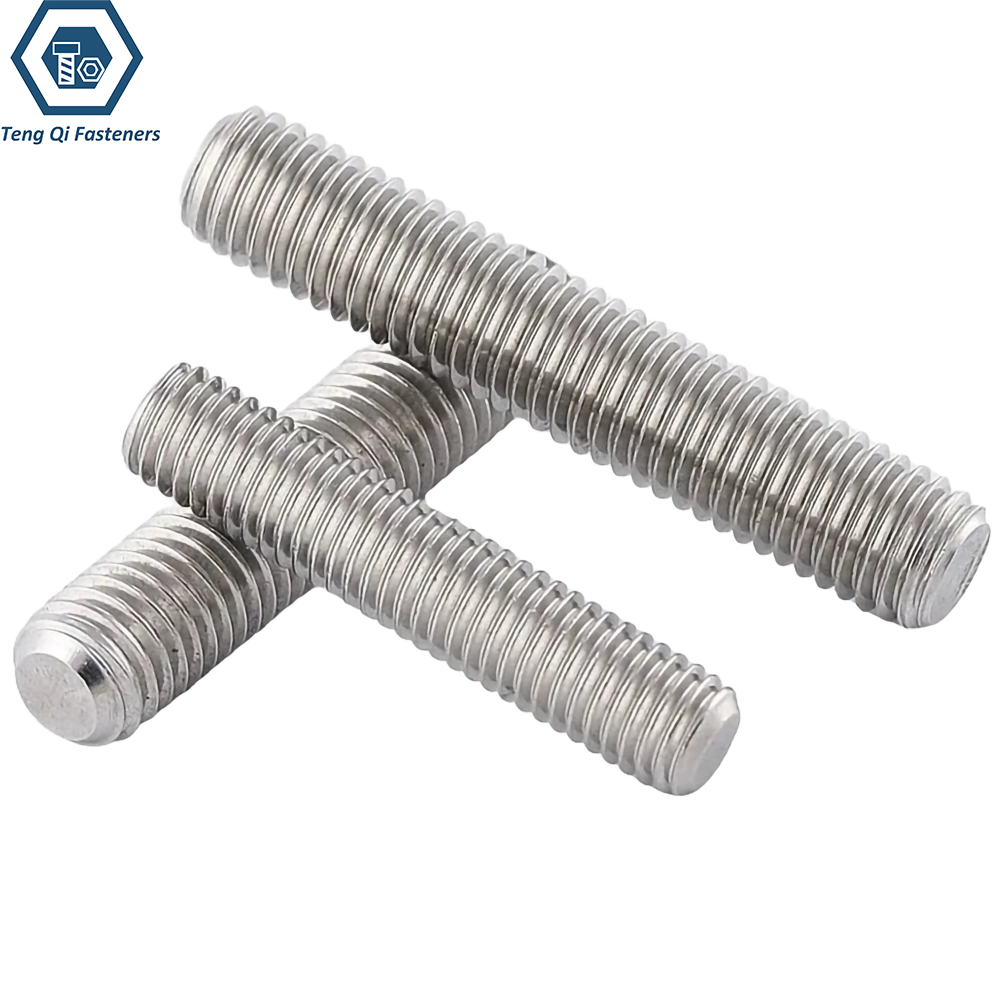
For metric applications, DIN 975 and DIN 976 provide commonly used dimensional references for fully threaded rods, while ASME B18.31.3 covers inch and metric thread rods within the ASME fastener system. The following standards represent the main dimensional options we supply for 316 and 316L stainless steel threaded rods.
Chemical Composition:
The chemical composition of 316 and 316L stainless steel threaded rods determines how the material responds to corrosion, heat and fabrication conditions. Chromium and nickel form the main stainless steel base, while molybdenum is particularly important for improving resistance to pitting and crevice corrosion in chloride-containing environments. The main compositional difference between the two grades is carbon: 316L threaded rods have a lower carbon limit, making the grade more suitable for applications involving welding or prolonged heat exposure.
| Material | Carbon(C) | Chromum(Cr) | Manganesse(Mn) | Nickel(Ni) | Silicon(Si) | Phosphorus(P) | Sulfur(S) | Nitrogen(N) |
| 316 Stainless Steel | ≤0.08% | 16-18% | ≤2% | 10-14% | ≤1% | ≤0.045% | ≤0.03% | ≤0.01% |
| 316L Stainless Steel | ≤0.03% | 16-18% | ≤2% | 10-14% | ≤1% | ≤0.045% | ≤0.03% | ≤0.01% |
Mechanical Property:
The mechanical performance of 316 and 316L stainless steel threaded rods depends on the fastener standard and property class specified for the product. Unlike carbon steel fasteners, stainless steel threaded rods are commonly identified by their stainless steel grade together with a mechanical property designation, such as A4-70 or A4-80. Tensile strength, yield or proof strength and elongation are therefore best evaluated against the requirements of the applicable fastener standard rather than from the material grade alone.
For 316 and 316L threaded rods, ISO 3506-1, ASTM F593 and ASTM A193 B8M provide different routes for specifying mechanical requirements according to the intended application and fastener type. The following sections outline the relevant requirements under each standard, helping to match the threaded rod with the required strength level and service conditions.
Mechanical Property of 316 & 316L Metric Threaded Rod according to ISO3506-1
| Item | Property Class | Tension Strength(min)MPA | Stress at 0.2% non-proprotional elongation(min)MPA | Elongation after fracture(min)mm |
| 316 & 316L Stainless Steel Metric Bolts | A4-50 | 500 | 210 | 0.6d |
| A4-70 | 700 | 450 | 0.4d | |
| A4-80 | 800 | 600 | 0.3d |
Mechanical Property of 316 & 316L Inch Threaded Rod according to ASTM F593
| Item | Mechanical Property | Diameter,in | Full-Size Tests | Machine Specimen Test | ||||
| Tensile Strength (ksi) | Yield Strength (ksi) | Rockwell Hardness | Tensile Strength (ksi) | Yield Strength (ksi) | Elongation in 4D,% | |||
| 316&316L Stainlesss Steel Bolts | F593E | 1/4"-1-1/2" | 65-85 | 20 | B85 max | 60 | 20 | 40 |
| F593F | 1/4"-1-1/2" | 75-100 | 30 | B65-95 | 70 | 30 | 30 | |
| F593G | 1/4"-5/8" | 100-150 | 65 | B95-C32 | 95 | 60 | 20 | |
| F593H | 3/4"-1"-1/2" | 85-140 | 45 | B80-C32 | 80 | 40 | 25 | |
| F593E | 1/4"-5/8" | 120-160 | 95 | C24-C36 | 115 | 90 | 12 | |
| F593F | 3/4"-1" | 110-150 | 75 | C20-C32 | 105 | 70 | 15 | |
| F593G | 1-1/8"-1-1/4" | 100-140 | 60 | B95-C30 | 95 | 55 | 20 | |
| F593H | 1-1/8"-1-1/2" | 95-130 | 45 | B90-C28 | 90 | 40 | 28 | |
Mechanical Property of 316 & 316L Threaded Rod according to A193 B8M
| Mechanical Requirements, Inch Products | |||||||
|---|---|---|---|---|---|---|---|
| Class | Diameter | Tensile Strength, min, ksi | Yield Strength, min, ksi | Elongation in 4D min, % | Reduction of Area, min, % | Hardness, max | |
| B8M class 1 | All Diameters | 75 | 30 | 30 | 50 | 223 HBW | 96 HRB |
| B8M class 2 | 3/4 and under | 110 | 95 | 15 | 45 | 321 HBW | 35 HRC |
| Over ¾ to 1, incl. | 100 | 80 | 20 | 45 | |||
| Over 1 to 1-1/4, incl. | 95 | 65 | 25 | 45 | |||
| Over 1-1/4 to 1-1/2, incl. | 90 | 50 | 30 | 45 | |||