
Slotted Pan Head Captive Screws
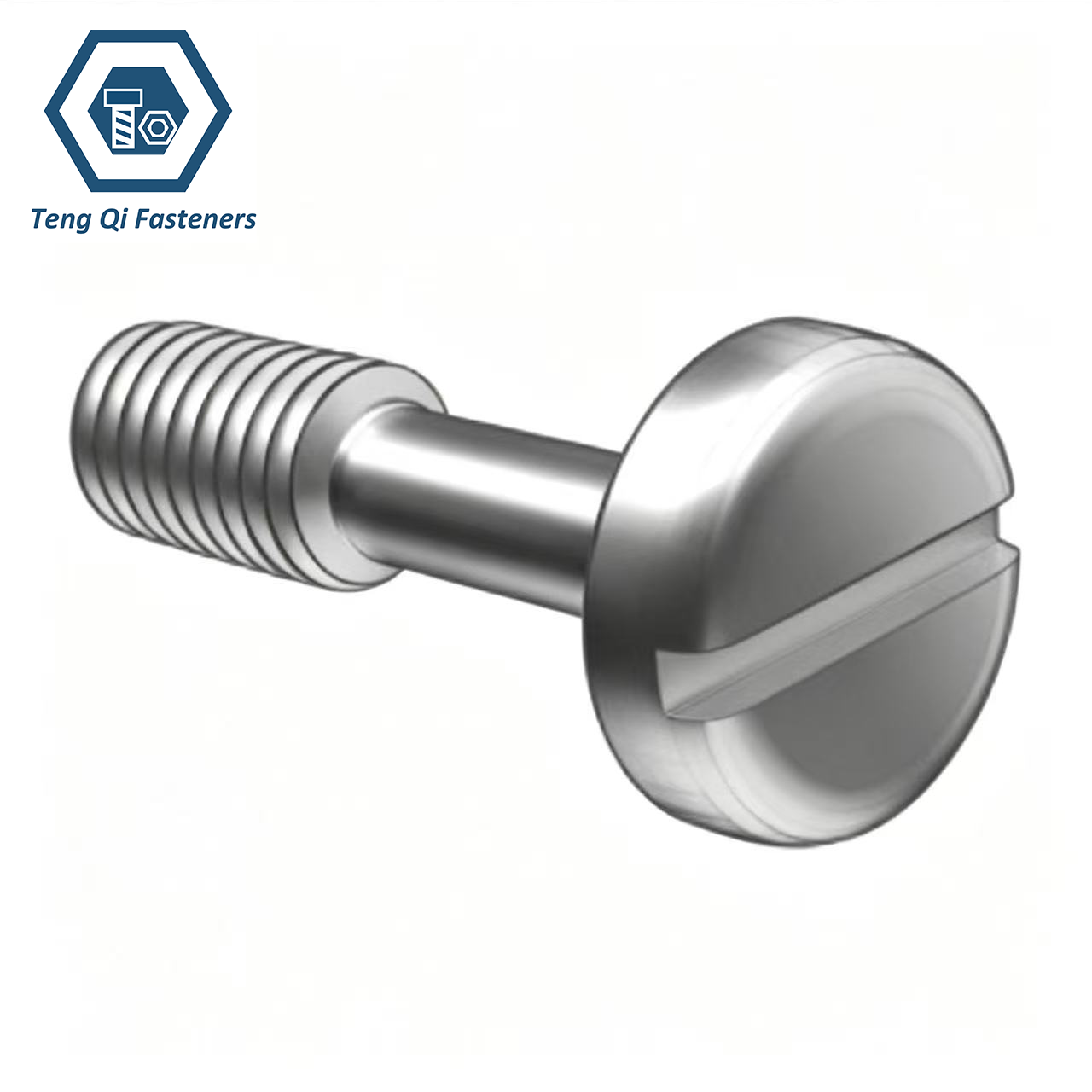
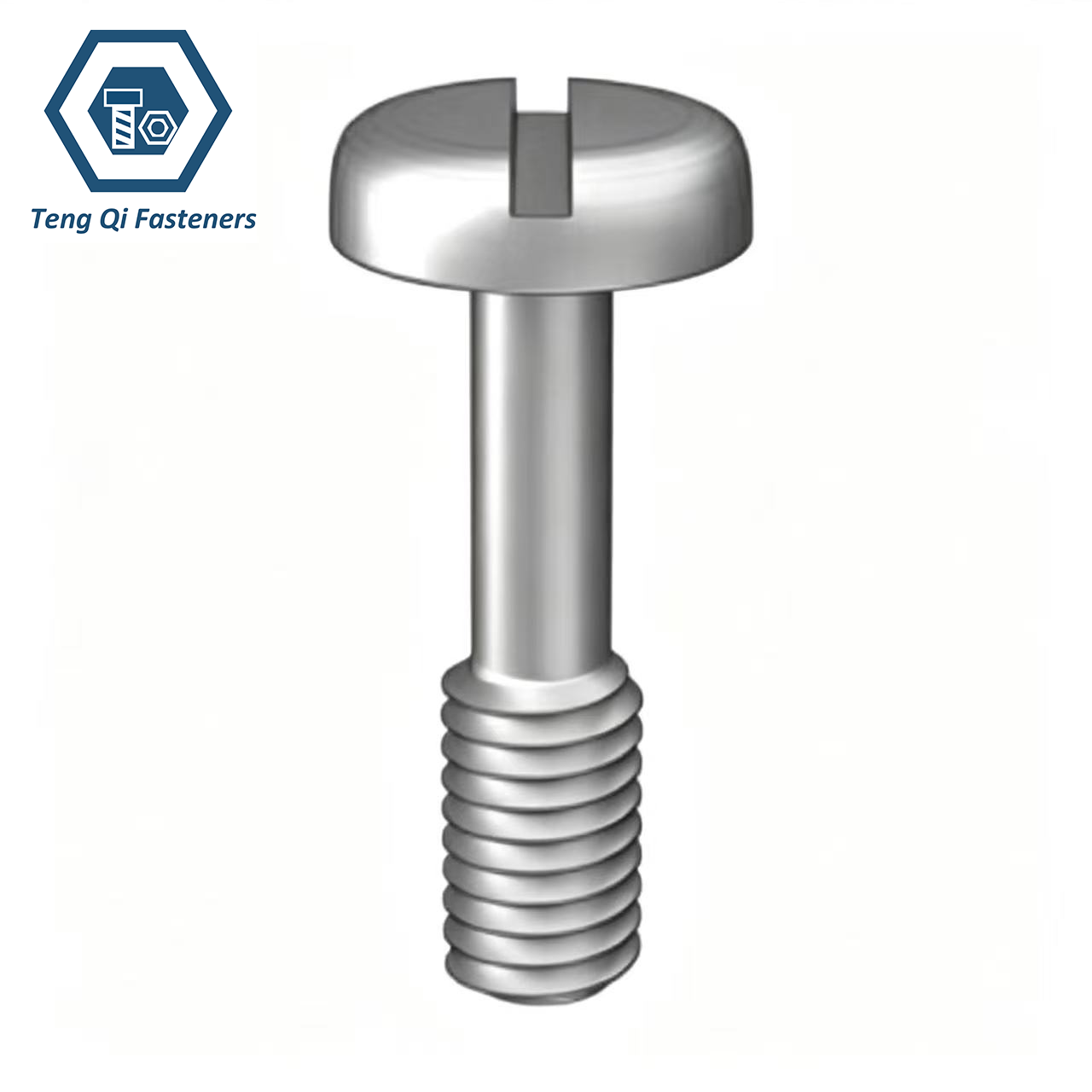
Slotted Pan Head Captive Screws are designed for assemblies where the screw needs to stay with the component after being loosened. Their waisted shank allows the screw to remain retained in the panel or assembly, helping prevent loose fasteners from being lost during maintenance, transportation, or component removal.
The slotted pan head provides a familiar screwdriver drive, while the captive design makes these screws particularly practical for removable panels, covers, access doors, equipment housings, and serviceable components. The screw can be loosened when access is needed and then tightened again without having to completely remove or store the fastener separately.
We manufacture these captive screws according to GB/T 837-1988, with metric sizes and configurations available for different assembly requirements. Carbon steel and stainless steel options can be supplied, with customized lengths, materials, and surface finishes available according to customer drawings and specifications.
Specification:
Our Slotted Pan Head Captive Screws are designed with a waisted shank that allows the screw to remain retained in the mating panel or component after loosening. The slotted pan head provides a simple and familiar drive style, while the captive section is dimensioned to maintain retention without preventing normal fastening and removal. The standard GB 837 design covers metric sizes from M3 to M10, with the head, shank, thread, and overall dimensions defined for each size. We can supply the screws in carbon steel and stainless steel, including A1, A2, and A4 stainless steel options, depending on the required environment and performance.
| Item | Specification |
|---|---|
| Standard | GB837 |
| Product Type | Slotted Pan Head Captive Screw |
| Size Range | M3-M10 |
| Thread | Metric |
| Thread Standard | ISO261,ISO965 |
| Head Type | Pan Head |
| Drive Type | Slotted |
| Shank Design | Waisted/Captive Shank |
| Material | Carbon Steel,Stainless Steel |
| Property Class | 4.8,8.8 A2-70,A4-70 |
| Mechanical Property Standard | ISO898-1,ISO3506-1 |
| Surface Treatment | Black Oxidation,Zinc Plated,Bright Finish,Passivation |
Dimension Chart of Slotted Pan Head Captive Screws:
The dimensions of a captive screw are important not only for fastening, but also for ensuring that the screw remains securely retained in the panel after loosening. The head diameter, head height, thread diameter, overall length, and waisted shank dimensions work together to provide the required clearance and retention. GB 837 covers metric sizes from M3 to M10. When selecting a captive screw, the panel thickness, mounting hole, thread engagement, and available space around the fastening point should be considered together to ensure proper installation and retention.
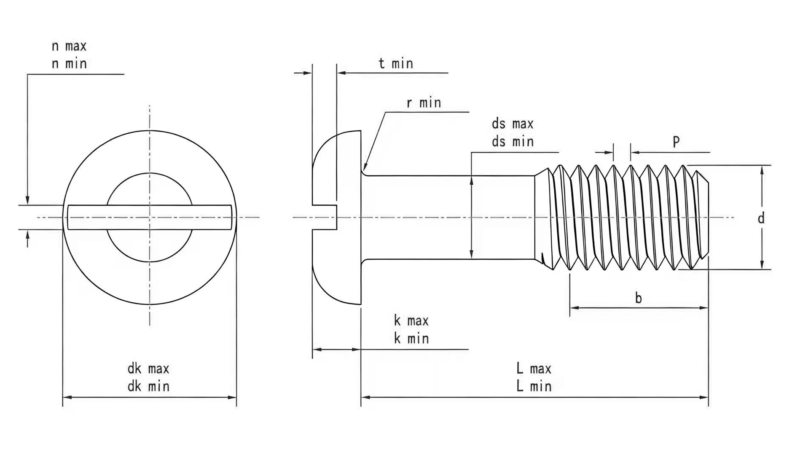
| Mon | ST2.2 | ST2.9 | ST3.5 | ST3.9 | ST4.2 | ST4.8 | ST5.5 | ST6.3 |
| P | 0.8 | 1.1 | 1.3 | 1.3 | 1.4 | 1.6 | 1.8 | 1.8 |
| a max | 0.8 | 1.1 | 1.3 | 1.3 | 1.4 | 1.6 | 1.8 | 1.8 |
| dk max | 4.3 | 5.5 | 6.8 | 7.5 | 8.1 | 9.5 | 10.8 | 11.97 |
| dk min | 4 | 5.2 | 6.44 | 7.14 | 7.74 | 9.14 | 10.37 | 2 |
| f | 0.7 | 0.9 | 1.2 | 1.3 | 1.4 | 1.5 | 1.7 | 3.8 |
| k | 1.3 | 1.7 | 2.1 | 2.3 | 2.5 | 3 | 3.4 | 3 |
| No. | 1 | 1 | 2 | 2 | 2 | 2 | 3 | 3.46 |
| M | 2.8 | 3.4 | 4.6 | 4.7 | 4.9 | 5.4 | 7 | 7.4 |
| t min | 1.17 | 1.81 | 1.89 | 2.04 | 2.24 | 2.7 | 3.02 | 4.35 |
| t max | 1.57 | 2.21 | 2.39 | 2.54 | 2.74 | 3.2 | 3.53 | 3.96 |
- RELATED SCREWS LISTS:
- Stainless Steel DIN7976 Hexagon Head Tapping Screws
- Stainless Steel DIN7982 Cross Recessed Countersunk Head Tapping Screws
- Stainless Steel DIN7983 Cross Recessed Raised Countersunk Head Tapping Screws
- Stainless Steel DIN7985 Cross Recessed Raised Cheese Head Screws
- DIN7964E Stainless Steel Socket Head Cap Captive Screw
- Stainless Steel DIN964 Slotted Raised Countersunk Head Screws
- Stainless Steel DIN966 Cross Recessed Raised Countersunk Head Screws
- Stainless Steel DIN967 Cross Recessed Pan Head Screws with Collar
- Stainless Steel DIN968 Cross Recessed Pan Head Tapping Screws with Collar
- GB830 Stainless Steel Slotted Cheese Head Screws with Shoulder
- Stainless Steel GB831 Slotted Shoulder Screws
- Stainless Steel GB834 Knurled Thumb Screws
- Stainless Steel GB835 Knurled Screws
- Stainless Steel GB836Knurled Screws with Small Head
- Stainless Steel GB839 Knurled Thumb Captive Screws with Waisted Shank
- Nickel Plated Smooth Shank Single Shoulder Shelf Support Screw
- Nickel Plated Furniture Shelf Peg with Matching Knurled Nut
Application of Slotted Pan Head Captive Screws:
Removable Panels and Access Covers
Captive screws are particularly useful for removable panels, access covers, inspection plates, and equipment housings. When the panel is opened, the screw stays with the assembly instead of becoming a loose part.
Equipment Requiring Frequent Maintenance
For equipment that needs regular servicing, inspection, or adjustment, captive screws can reduce the number of loose components handled during maintenance. The operator can loosen the panel, carry out the required work, and retighten the same screws afterward.
Enclosures and Control Cabinets
The captive design works well for electrical enclosures, control cabinets, instrument housings, and protective covers, where losing a small screw during servicing can be inconvenient or delay reassembly.