
DIN 935 Slotted Hex Nuts
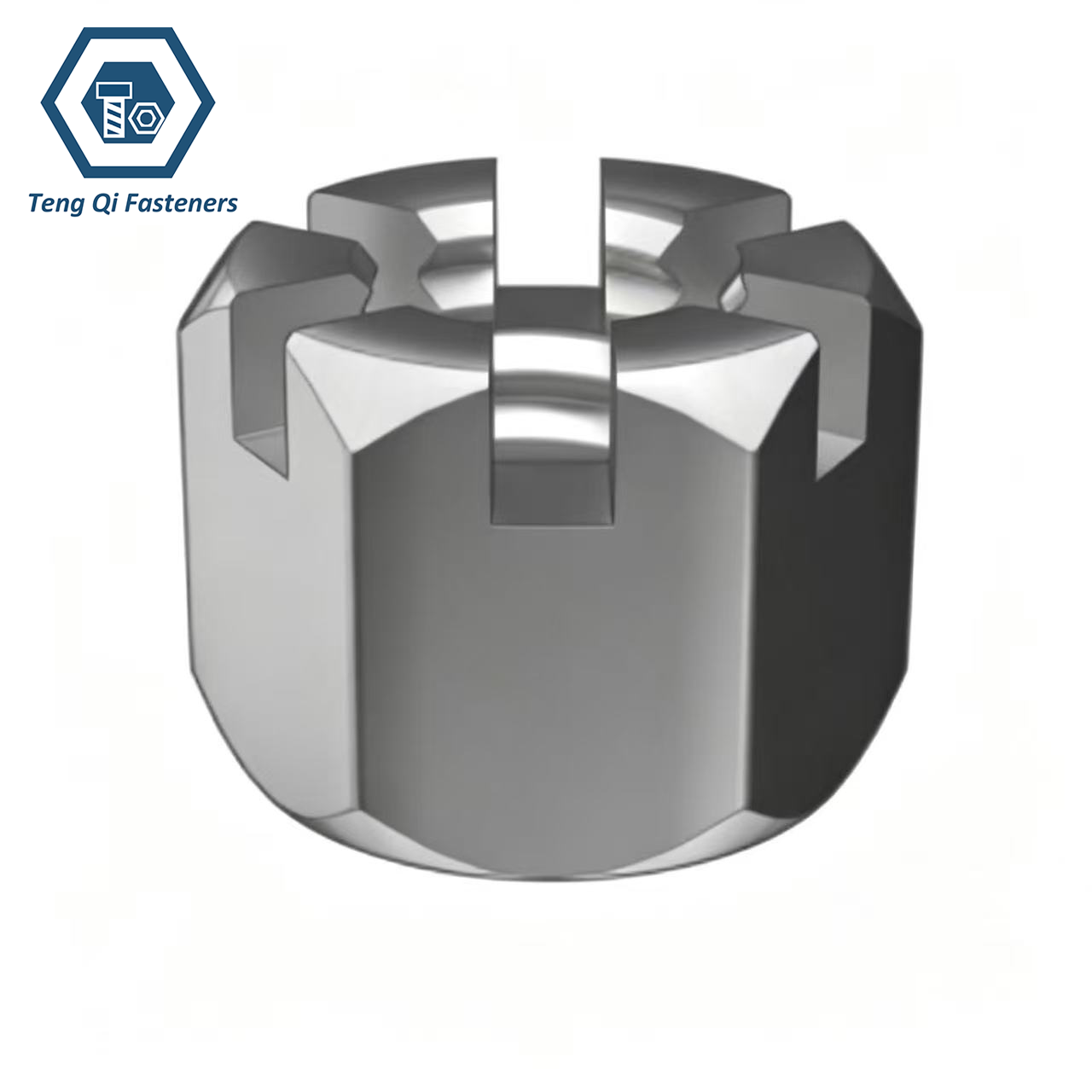
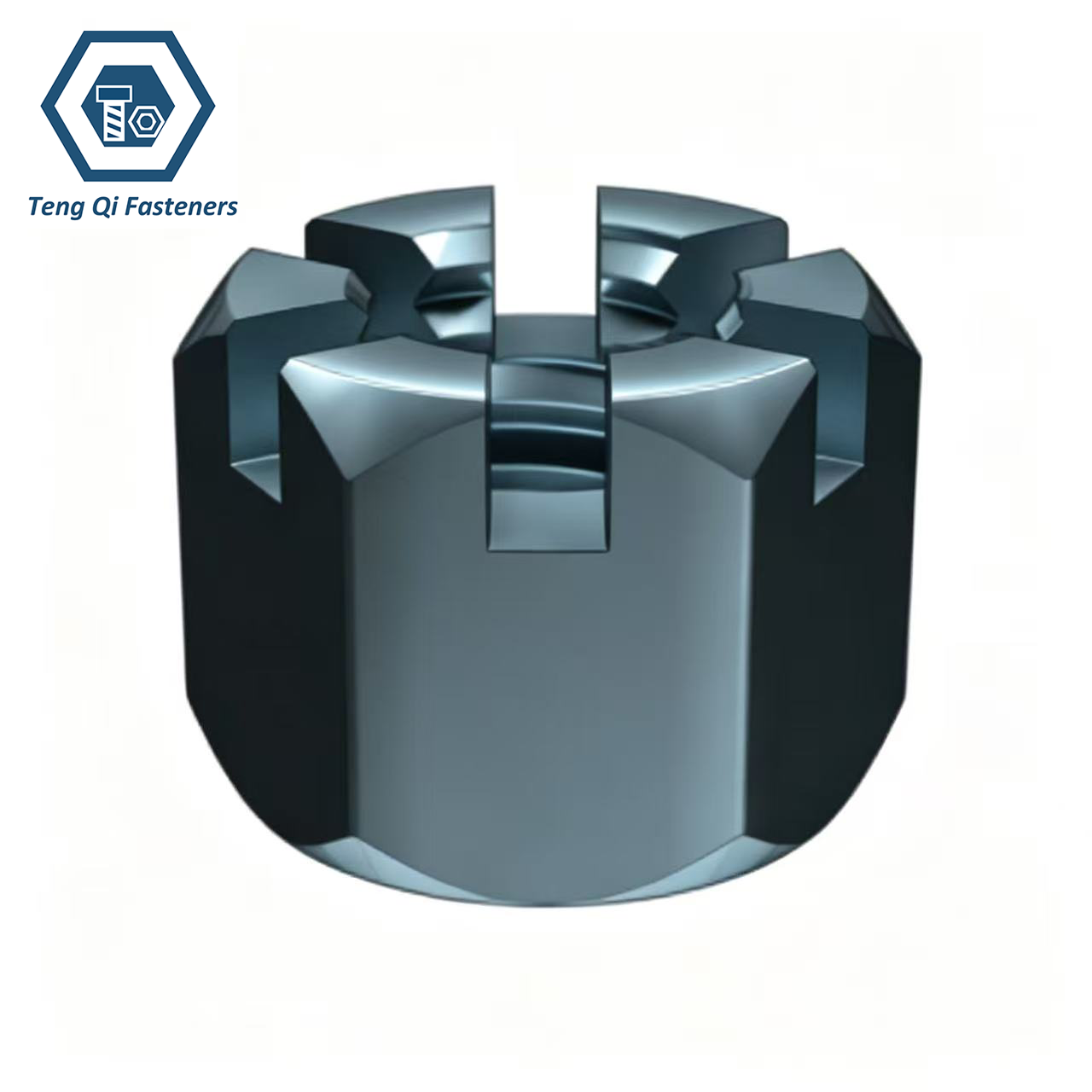
DIN 935 Slotted Hex Nuts are designed for bolted connections where the nut needs to be mechanically secured against loosening. Unlike a standard hex nut, the slotted design provides openings through which a cotter pin can be installed after the nut has been tightened, creating a positive mechanical locking arrangement. This locking method is particularly useful in assemblies exposed to vibration, repeated movement, or changing loads, where relying on friction alone may not provide the required level of security. The nut can be tightened to the required position and then secured with a cotter pin through a suitably drilled bolt, stud, or shaft.
DIN 935 nuts retain the familiar six-sided body, allowing installation with standard wrenches or sockets. They can be supplied in carbon steel, alloy steel, and stainless steel, with material and finish selected according to the mechanical and environmental requirements of the assembly. When specifying a DIN 935 nut, the thread size, nut dimensions, slot position, and matching hole location in the mating bolt or shaft should be considered together. The slots need to align with the hole sufficiently for the cotter pin to pass through after tightening, so the nut and mating component should be specified as a complete locking system.
Specification:
DIN935 Hexagon Slotted and Castle Nuts are manufactured according to DIN935 standards and feature specially designed slots on the top of the nut, allowing the use of cotter pins or locking wires for additional security. This locking structure prevents the nut from loosening under vibration, shock, or dynamic loads, making it suitable for safety-critical fastening applications. The hexagonal shape provides easy installation and removal with standard tools while ensuring reliable torque transmission.
| Item | Specification |
|---|---|
| Standard | DIN935 |
| Product Type | Slotted Hex Nut/Castle Nut |
| Thread Pitch | Metric Coarse |
| Thread Tolerance | 6H |
| Size Range | M4-M100 |
| Locking Method | Cotter Pin/Split Pin |
| Material | Carbon Steel, Alloy Steel, Stainless Steel |
| Property Class | 5,8,10,12 A2-70 A4-70 |
| Mechanical Property Standard | ISO898-2, ISO3506-2 |
| Surface Treatment | Zinc Plated,Black Oxidation,Dacromet,Bright Finish,Passivation |
| Inspection | Dimensions,Thread,Slot,Mechanical Property,Coating |
Dimension Chart of DIN935 Slotted Hex Nuts:
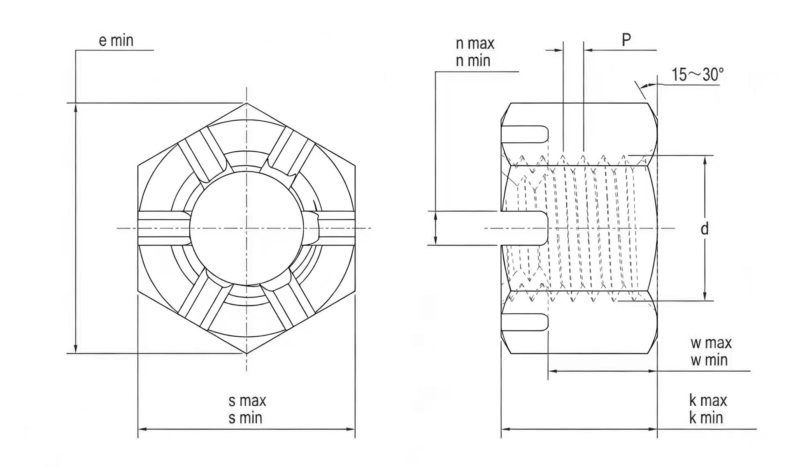
The DIN 935 dimension chart covers the key dimensions required to select a slotted hex nut, including thread diameter, nut height, across-flats width, and slot dimensions. Unlike a standard hex nut, the slot geometry is also important because it must provide sufficient clearance for a cotter pin to pass through the mating bolt or shaft. When selecting the nut, check the thread size and pitch first, then confirm the available space for the nut and the dimensions of the cross-hole in the mating component. The final tightening position should allow one of the slots to align with the hole without compromising the required assembly position.
| Mon | M4 | M5 | M6 | M8 | M10 | M12 | M16 | M20 | M24 | M27 | M30 | M33 |
| P | 0.7 | 0.8 | 1 | 1|1.25 | 1|1.25|1.5 | 1.75 | 2 | 2.5 | 3 | 3 | 3.5 | 3.5 |
| e min | 7.66 | 8.79 | 11.05 | 14.38 | 17.77 | 19.85 | 26.17 | 32.95 | 39.55 | 45.2 | 50.85 | 55.37 |
| k max | 5 | 6 | 7.5 | 9.5 | 12 | 15 | 19 | 22 | 27 | 30 | 33 | 35 |
| k min | 4.7 | 5.7 | 7.14 | 9.14 | 11.57 | 13.2 | 16.9 | 19.9 | 24.9 | 27.9 | 30.5 | 32.5 |
| n min | 1.2 | 1.4 | 1.2 | 2 | 2 | 3.5 | 4.5 | 4.5 | 5.5 | 5.5 | 7 | 7 |
| n max | 1.45 | 1.65 | 2.25 | 2.75 | 3.05 | 3.98 | 4.98 | 4.98 | 5.98 | 5.98 | 7.58 | 7.58 |
| s max | 7 | 8 | 10 | 13 | 16 | 18 | 24 | 30 | 36 | 41 | 46 | 50 |
| s min | 6.78 | 7.78 | 9.78 | 12.73 | 15.73 | 17.57 | 23.16 | 29.16 | 35 | 40 | 45 | 49 |
| w min | 2.9 | 3.7 | 4.7 | 6.14 | 7.64 | 9.46 | 12.3 | 15.3 | 18.16 | 21.16 | 23.16 | 25.16 |
| w max | 3.2 | 4 | 5 | 6.5 | 8 | 10 | 13 | 16 | 19 | 22 | 24 | 26 |
Application of DIN935 Slotted Hex Nuts:
Axles, Shafts & Rotating Assemblies
DIN 935 slotted nuts are particularly suitable for shaft and axle assemblies where a drilled shaft, stud, or bolt can accommodate a cotter pin. Typical examples include wheel-related components, linkage assemblies, and mechanical joints where preventing unintended nut rotation is important.
Steering & Linkage Components
The mechanical locking arrangement makes slotted nuts useful for steering linkages, control linkages, clevis-type joints, and articulated mechanical connections where movement and vibration may occur during operation.
Agricultural & Mobile Equipment
DIN 935 nuts can be used in tractors, agricultural machinery, trailers, mobile equipment, and other mechanically loaded assemblies where bolted connections may experience vibration or changing loads and a positive mechanical locking method is preferred.
Selection Tip
DIN 935 is most appropriate when the assembly has a cross-drilled bolt, stud, or shaft that can accept a cotter pin. If there is no suitable hole, a standard hex nut or another locking-nut design may provide a more practical solution.