
ASME B18.6.3 Slotted Oval Countersunk Self Tapping Screw
ASME B18.6.3 Slotted oval Countersunk Self Tapping Screws feature a raised oval head and a slotted drive, providing a smooth, rounded appearance after installation. Their self-tapping threads are designed to form mating threads in suitable materials, making them a practical choice for sheet metal assemblies, equipment housings, and other applications where both secure fastening and an attractive head profile are required.
As an ISO 9001-certified company, we work with specialized production facilities equipped with cold heading and thread rolling machines for manufacturing self-tapping screws. Incoming materials are checked against specified grades, while heat treatment is controlled to achieve the required hardness and mechanical properties. During production, head dimensions, thread profiles, and finished dimensions are inspected to ensure compliance with applicable specifications. Surface treatments are also checked against order requirements before shipment.
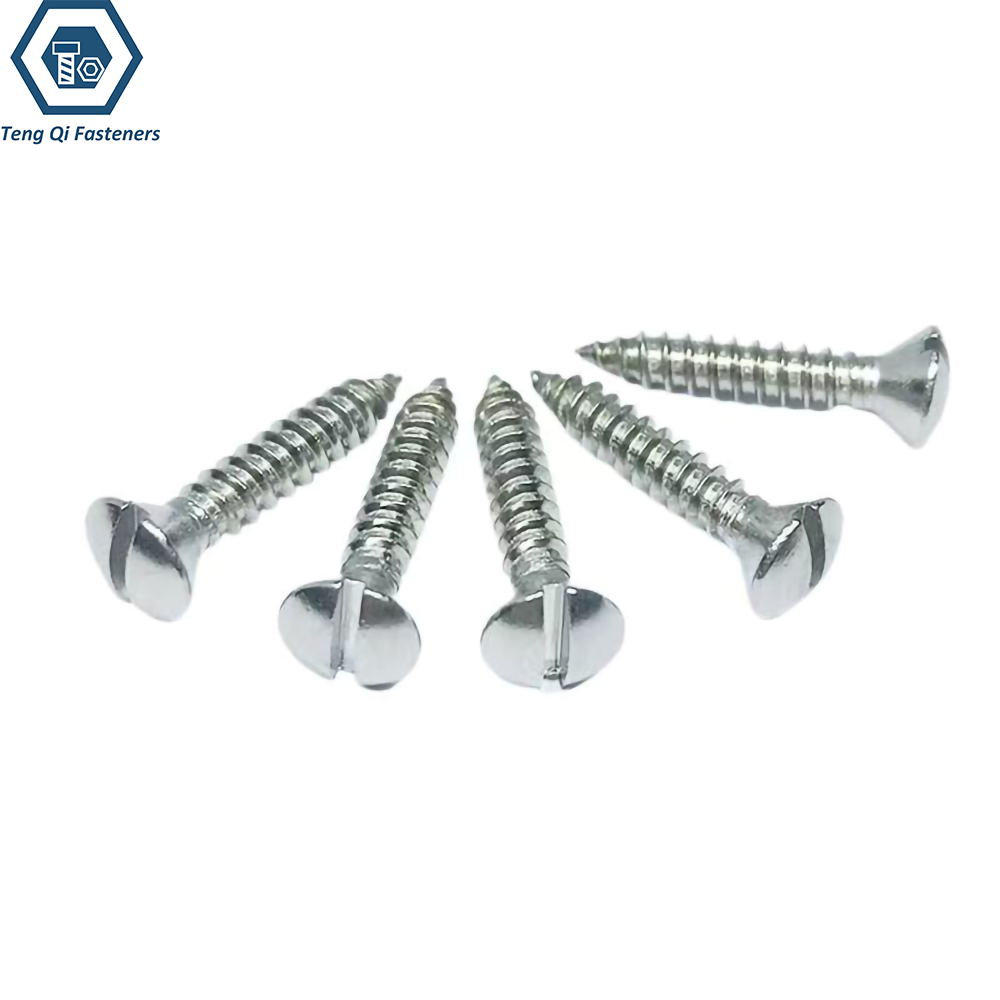
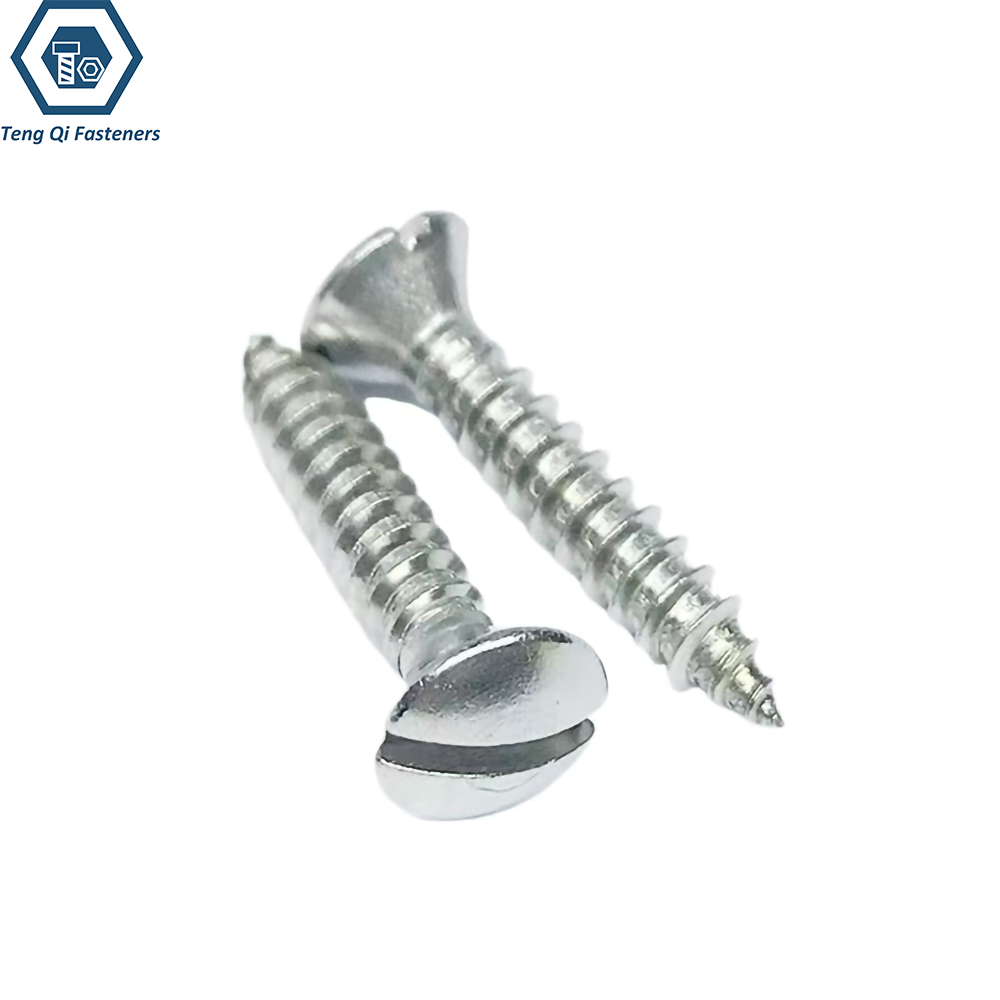
Specification:
| Item | Specification |
|---|---|
| Standard | ASME B18.6.3 |
| Product Type | Slotted Oval Countersunk Self Tapping Screw |
| Thread Diameter | #0-5/16" |
| Point Type | Type AB Pointed Tip |
| Material | Carbon Steel, Stainless Steel |
| Steel Property | SAE J933 |
| Stainless Steel Property | ISO 3506-4 |
| Surface Treatment | Black Oxidation,Zinc Plated,Bright Finish |
| Inspection | Dimensions,Thread,Hardness,Coating |
Dimension Chart:
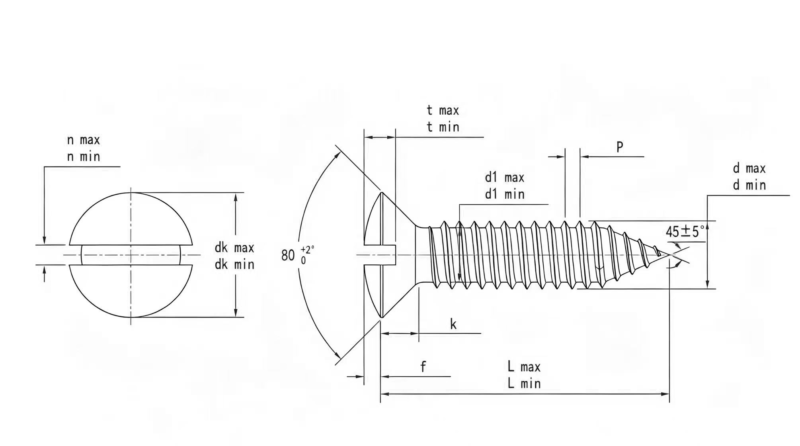
| P | #0 | #1 | #2 | #3 | #4 | #5 | #6 | #7 | #8 | #10 | #12 | 1/4 | 5/16 |
| dk max | 48 | 42 | 32 | 28 | 24 | 20 | 20 | 19 | 18 | 16 | 14 | 14 | 12 |
| dk min | 0.112 | 0.137 | 0.162 | 0.187 | 0.212 | 0.237 | 0.262 | 0.287 | 0.312 | 0.362 | 0.412 | 0.477 | 0.597 |
| k | 0.096 | 0.12 | 0.144 | 0.167 | 0.191 | 0.215 | 0.238 | 0.262 | 0.285 | 0.333 | 0.38 | 0.442 | 0.556 |
| f | 0.035 | 0.043 | 0.051 | 0.059 | 0.067 | 0.075 | 0.083 | 0.091 | 0.1 | 0.116 | 0.132 | 0.153 | 0.191 |
| n max | 0.021 | 0.025 | 0.029 | 0.033 | 0.037 | 0.041 | 0.045 | 0.049 | 0.052 | 0.06 | 0.068 | 0.079 | 0.099 |
| n min | 0.023 | 0.026 | 0.031 | 0.035 | 0.039 | 0.043 | 0.048 | 0.048 | 0.054 | 0.06 | 0.067 | 0.075 | 0.084 |
| t max | 0.016 | 0.019 | 0.023 | 0.027 | 0.031 | 0.035 | 0.039 | 0.039 | 0.045 | 0.05 | 0.056 | 0.064 | 0.072 |
| t min | 0.03 | 0.038 | 0.045 | 0.052 | 0.059 | 0.067 | 0.074 | 0.081 | 0.088 | 0.103 | 0.117 | 0.136 | 0.171 |
| d max | 0.025 | 0.031 | 0.037 | 0.043 | 0.049 | 0.055 | 0.06 | 0.066 | 0.072 | 0.084 | 0.096 | 0.112 | 0.141 |
| d min | 0.06 | 0.075 | 0.088 | 0.101 | 0.114 | 0.13 | 0.139 | 0.154 | 0.166 | 0.189 | 0.215 | 0.246 | 0.315 |
| d1 max | 0.054 | 0.069 | 0.082 | 0.095 | 0.108 | 0.123 | 0.132 | 0.147 | 0.159 | 0.182 | 0.208 | 0.237 | 0.306 |
| d1 min | 0.036 | 0.049 | 0.064 | 0.075 | 0.086 | 0.094 | 0.104 | 0.115 | 0.122 | 0.141 | 0.164 | 0.192 | 0.244 |
| 0.033 | 0.046 | 0.06 | 0.071 | 0.082 | 0.09 | 0.099 | 0.109 | 0.116 | 0.135 | 0.157 | 0.185 | 0.236 |
Mechanical Property:
The mechanical performance of ASME B18.6.3 Slotted Oval Countersunk Self Tapping Screws affects their ability to form mating threads and withstand driving forces during installation. Hardness, torsional strength, and head integrity are important considerations for reliable fastening. The following specifications address the mechanical requirements for carbon steel and stainless steel versions.
SAE J933 – Carbon Steel Self-Tapping Screws
Carbon steel ASME B18.6.3 slotted oval countersunk self-tapping screws require suitable hardness and torsional strength to form threads without breaking during installation. Proper material selection and heat treatment help the screws withstand driving torque while maintaining the integrity of the oval head and slotted drive. Mechanical requirements should be verified against the applicable SAE J933 specification.
ISO 3506-4 – Stainless Steel Self-Tapping Screws
For stainless steel ASME B18.6.3 slotted oval countersunk self-tapping screws, mechanical performance must be considered alongside corrosion resistance. The stainless steel grade influences the screws’ strength and installation behavior, while the specified mechanical requirements help assess their resistance to torsional stress during thread formation and tightening.