
DIN 6927 All-Metal Flange Lock Nuts
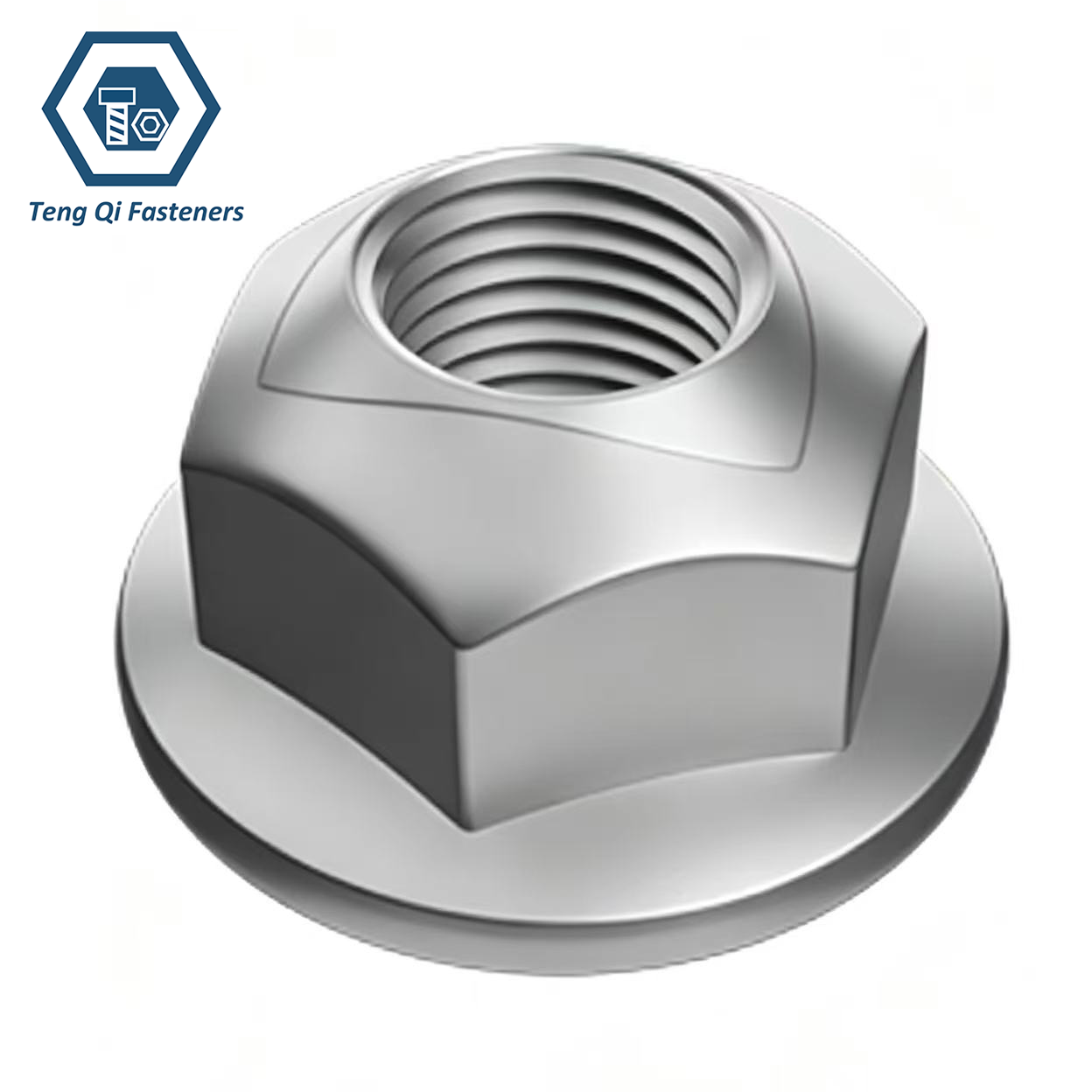
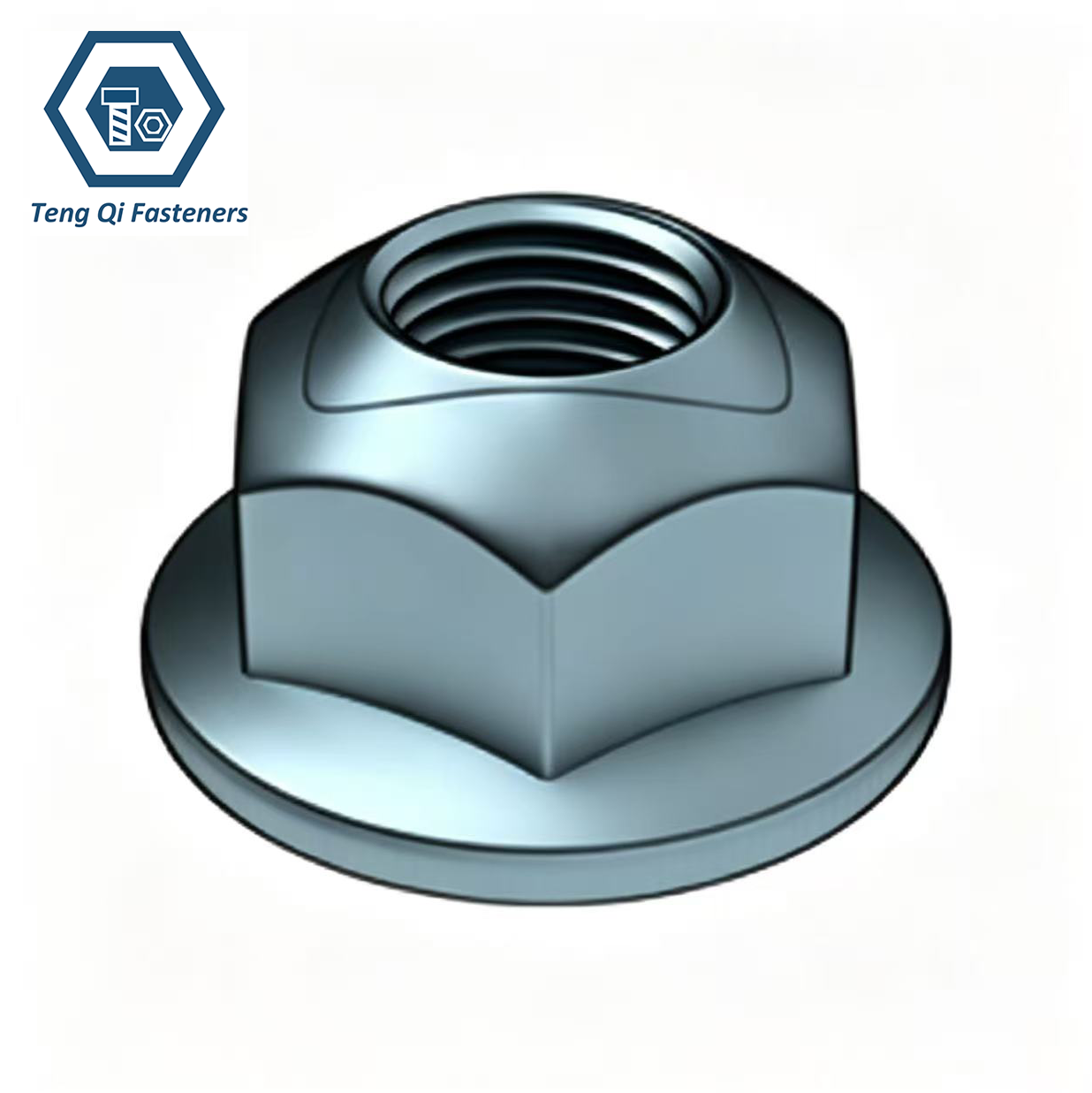
DIN 6927 All-Metal Flange Lock Nuts combine a hexagonal nut, an integrated flange, and a three-point locking design in one fastening component. The deformed locking section creates prevailing torque on the mating bolt, helping resist loosening caused by vibration while the flange provides a larger bearing surface beneath the nut.Unlike a standard DIN 6923 flange nut, DIN 6927 incorporates a prevailing-torque locking feature rather than relying only on the increased bearing area of the flange. The all-metal construction contains no nylon insert, making the nut suitable for applications where a metal locking element is preferred.
The three-point locking design is formed in the nut body and engages with the mating thread during installation. DIN 6927 All-Metal Flange Lock Nuts are commonly used in machinery, equipment assemblies, metal fabrication, automotive components, brackets, and vibration-prone mechanical connections where additional resistance to nut rotation is required.
Specification:
DIN 6927 nuts combine a hexagonal body, integrated flange, and prevailing-torque locking section. The locking section is formed by controlled deformation of the nut body and creates resistance against rotation on the mating thread. Unlike nylon-insert lock nuts, the locking function is provided entirely by the metal construction. The nut is specified by its metric thread size, thread pitch, across-flats dimension, nut height, flange diameter, and prevailing torque performance. The three-point locking configuration should be matched with the mating bolt or threaded rod to achieve the intended locking effect.
| Item | Specification |
|---|---|
| Standard | DIN6927 |
| Product Type | All-Metal Flange Lock Nut |
| Locking Type | Prevailing Torque |
| Locking Design | Three Point Locking |
| Thread | Metric Internal Thread |
| Thread Pitch | Metric Coarse |
| Thread Size | M5-M20 |
| Property Class | 5,8,10 A2-70/80 A4-70/80 |
| Material | Carbon Steel,Alloy Steel,Stainless Steel |
| Surface Treatment | Bright Pickling/Zinc Plated/Dacromet |
| Flange | Integrated |
Dimension Chart of DIN6927 All-Metal Flange Lock Nuts:
The DIN 6927 dimension chart shows the key dimensions required to select the correct all-metal flange lock nut for a metric fastening assembly. In addition to the nominal thread diameter and pitch, the chart covers the nut height, width across flats, and integrated flange diameter. For DIN 6927, dimensional selection is important not only for thread compatibility but also for the available bearing area and tool access around the fastening point. The flange diameter determines the contact area beneath the nut, while the hex size determines the wrench or socket required for installation.
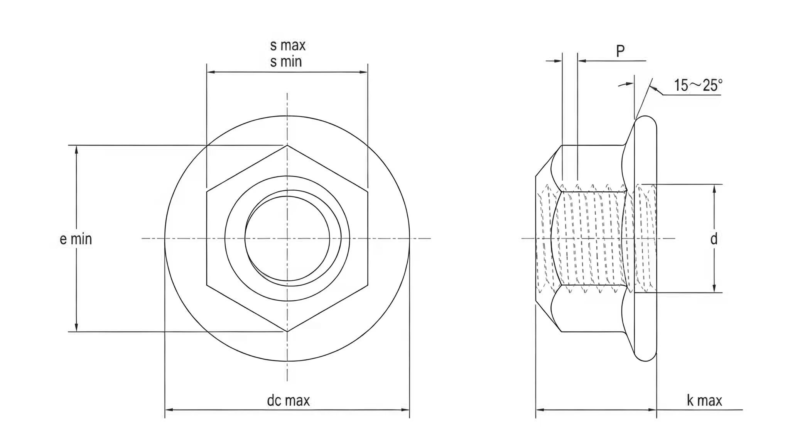
| Mon | M5 | M6 | M8 | M10 | M12 | M14 | M16 | M20 |
| P | 0.8 | 1 | 1|1.25 | 1|1.25|1.5 | 1.25|1.5|1.75 | 1.5|2 | 1.5|2 | 1.5|2.5 |
| dc max | 11.8 | 14.2 | 17.9 | 21.8 | 26 | 29.9 | 34.5 | 42.8 |
| e min | 8.79 | 11.05 | 14.38 | 16.64 | 20.03 | 23.36 | 26.75 | 32.95 |
| k max | 6.2 | 7.3 | 9.4 | 11.4 | 13.8 | 15.9 | 18.3 | 22.4 |
| s max | 8 | 10 | 13 | 15 | 18 | 21 | 24 | 30 |
| s min | 7.78 | 9.78 | 12.73 | 14.73 | 17.73 | 20.67 | 23.67 | 29.16 |
- RELATED NUT LISTS:
- Stainless Steel DIN466 Knurled Nuts
- DIN6923 Hex Flange Nut
- DIN508 Nuts for T-slots
- DIN439 Chamfered Hexagon Thin Nuts
- DIN981 Locknuts
- DIN986 Hex Domed Cap Nuts
- DIN980V Three-Point Locking Hexagon Nuts
- EN14399-3 High-strength Structural Hex Nut
- Stainless Steel DIN7967 Self-Locking Counter Nuts
- Stainless Steel DIN917 Low Type Hexagon Cap Nuts
- DIN928 Square Weld Nuts
- DIN935 Hexagon Slotted and Castle Nuts
- Stainless Steel Single Leaf Spring T-Slot Sliding Nut
- Stainless Steel Roll-in T Slot Nut for 20 Series
Application of DIN6927 All-Metal Flange Lock Nuts:
DIN 6927 Flange Lock Nuts are particularly useful where a fastening joint needs both increased bearing area and resistance to rotational loosening. The integrated flange distributes the clamping force, while the three-point all-metal locking section generates prevailing torque on the mating thread.
Vibration-Prone Machinery
DIN 6927 nuts are suitable for machinery, industrial equipment, motors, pumps, gearboxes, and mechanical assemblies exposed to vibration or repeated movement. The prevailing-torque feature helps maintain resistance to nut rotation after installation.
Metal Fabrication and Equipment Frames
The integrated flange makes DIN 6927 suitable for metal brackets, equipment frames, sheet-metal assemblies, guards, supports, and fabricated components where a wider bearing surface is beneficial and a separate washer may be inconvenient.
Automotive and Mechanical Components
They can also be used for automotive components, mechanical brackets, mounting points, chassis-related assemblies, and other vibration-prone fastening locations, provided the nut’s mechanical and prevailing-torque requirements are appropriate for the application.