
Countersunk Head Rivets
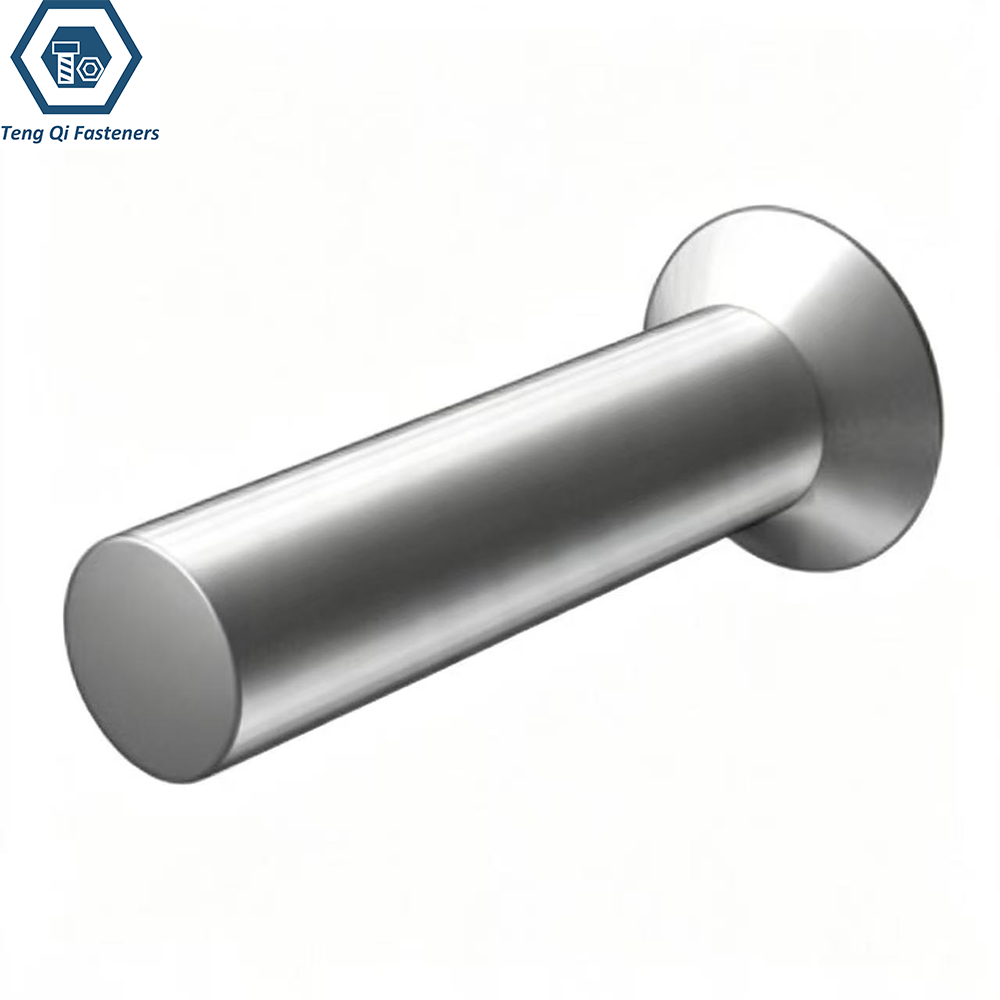
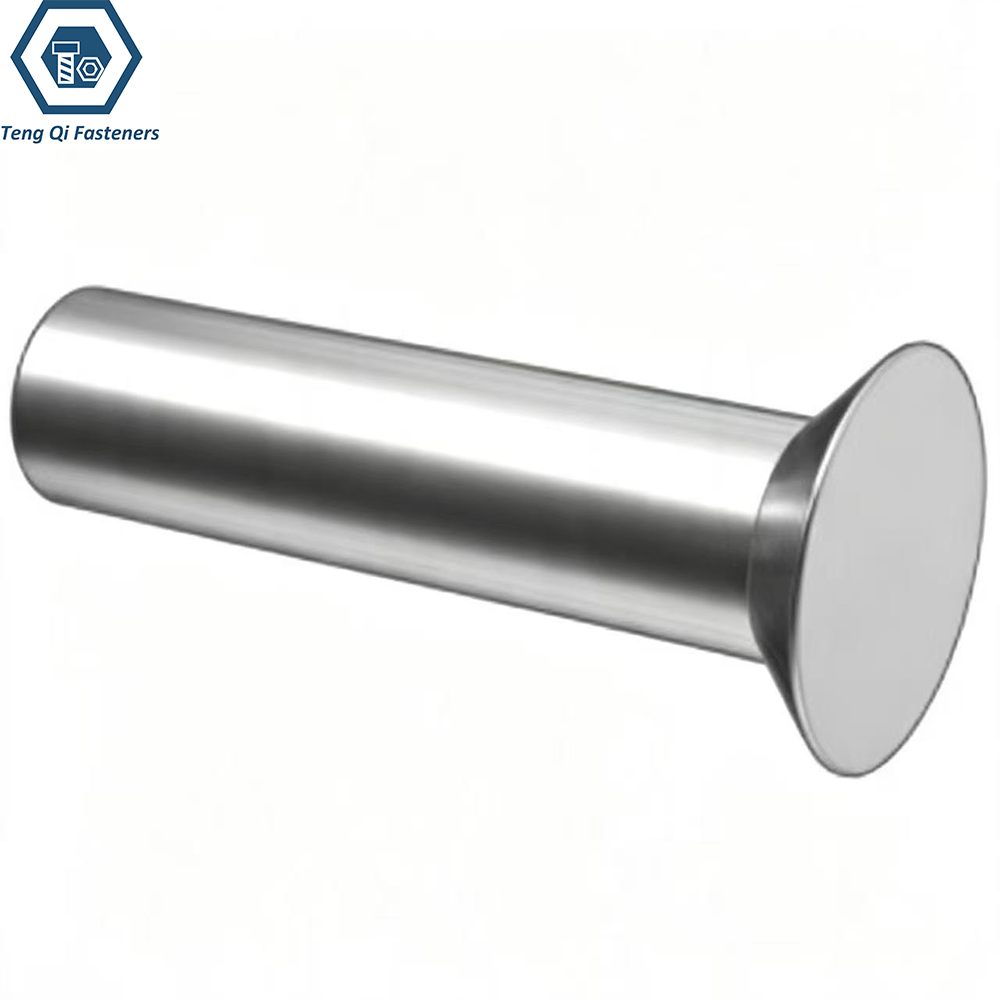
When a finished surface needs to remain smooth, the shape of the fastener head becomes an important part of the joint design. Countersunk Head Rivets are made for this purpose, with a tapered head that fits into a countersunk hole and leaves the joined surface substantially flush after installation. This design is particularly useful when clearance, appearance, or contact with surrounding parts matters. Instead of leaving a raised rivet head above the material, the countersunk head sits within the prepared hole, helping create a cleaner and less obstructed surface.
The rivets are suitable for permanent joining of sheet metal, panels, brackets, covers, and fabricated components. We manufacture standard products according to GB/T 869-1986 and can also produce different diameters, lengths, materials, and finishes according to customer drawings and application requirements. Depending on the working environment, material options can include carbon steel, stainless steel, aluminum, and other specified materials. This allows the rivet to be selected not only for its head design, but also for the strength, corrosion resistance, and weight requirements of the finished assembly.
Specification:
Countersunk Head Rivets are designed with a tapered head that sits within a prepared countersunk hole after installation. The head diameter and angle are matched to the corresponding countersink, helping maintain a clean joint profile without leaving a large raised head above the material. Standard GB/T 869-1986 covers the basic dimensions of countersunk head rivets, with different nominal diameters and lengths available for various material thicknesses. Rivet diameter and length should be selected according to the thickness and hole requirements of the parts being joined.
| Item | Specification |
|---|---|
| Standard | GB869 |
| Head Type | Countersunk Head Rivet |
| Head Design | Tapered/Flush Head |
| Material | Carbon Steel,Stainless Steel,Aluminum,Brass |
| Size Range | Φ1-Φ16 |
| Surface Treatment | Zinc Plated,Bright Pickling,Passivation |
| Rivet Method | Permanent Mechanical Fastening |
| Rivet Fit | Proper Fit with Prepared Hole |
| Suface after Riveting | No harmful cracks or splits |
Dimension Chart of Countersunk Head Rivets:
The dimensions of a countersunk rivet directly affect both the finished surface and the quality of the riveted joint. The main dimensions include rivet diameter, rivet length, head diameter, head height, and shank dimensions. GB/T 869-1986 covers countersunk head rivets with nominal diameters from 1 mm to 16 mm. When selecting the correct size, the rivet diameter should match the prepared hole, while the rivet length should provide sufficient material for forming the closing head after the components are assembled.
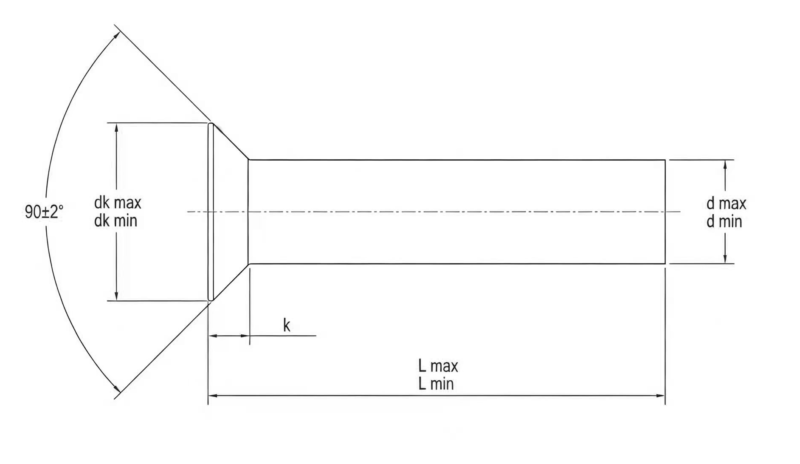
Drawing of GB869 90° Countersunk Head Rivets
| Mon | Φ1 | Φ1.2 | Φ1.4 | Φ1.6 | Φ2 | Φ2.5 | Φ3 | Φ3.5 | Φ4 | Φ5 | Φ6 | Φ8 | Φ10 | Φ12 | Φ14 | Φ16 |
| d max | 1.06 | 1.26 | 1.46 | 1.66 | 2.06 | 2.56 | 3.06 | 3.58 | 4.08 | 5.08 | 6.08 | 8.1 | 10.1 | 12.12 | 14.12 | 16.12 |
| d min | 0.94 | 1.14 | 1.34 | 1.54 | 1.94 | 2.44 | 2.94 | 3.42 | 3.92 | 4.92 | 5.92 | 7.9 | 9.9 | 11.88 | 13.88 | 15.88 |
| dk max | 2.03 | 2.23 | 2.83 | 3.03 | 4.05 | 4.75 | 5.35 | 6.28 | 7.18 | 8.98 | 10.62 | 14.22 | 17.82 | 18.86 | 21.76 | 24.96 |
| dk min | 1.77 | 1.97 | 2.57 | 2.77 | 3.75 | 4.45 | 5.05 | 5.92 | 6.82 | 8.62 | 10.18 | 13.78 | 17.38 | 18.34 | 21.24 | 24.44 |
| k | 0.5 | 0.5 | 0.7 | 0.7 | 1 | 1.1 | 1.2 | 1.4 | 1.6 | 2 | 2.4 | 3.2 | 4 | 6 | 7 | 8 |
Riveting Requirements
Countersunk Head Rivets are designed for permanent fastening by riveting. During installation, the rivet shank is deformed to form the closing head and secure the joined components together. The rivet should be selected according to the material thickness, hole diameter, rivet diameter, and required finished head dimensions.After riveting, the formed head should be properly seated and free from cracks, splits, or other defects that could affect the integrity of the joint. Proper alignment between the rivet and the prepared hole is also important to achieve consistent forming and a secure connection.
Riveting conditions may vary depending on the rivet material, diameter, length, and installation method. For critical applications, riveting parameters can be evaluated according to the customer’s assembly process and technical requirements.
Application of Countersunk Head Rivets:
Flush-Surface Assemblies
Countersunk Head Rivets are used where the finished joint needs a smooth and low-profile surface. The countersunk head sits inside a prepared recess instead of remaining fully above the material, making the fastener less intrusive after riveting.
Sheet Metal and Fabricated Parts
These rivets are suitable for joining sheet metal, metal panels, brackets, covers, frames, and fabricated components where a permanent mechanical connection is required. The solid rivet construction provides a simple and durable joining method.
Areas with Clearance Requirements
A countersunk rivet is useful when a raised fastener head could interfere with adjacent components, moving parts, sliding surfaces, or equipment installation. The recessed head helps maintain clearance around the joint.