
DIN913 Flat Point Set Screws
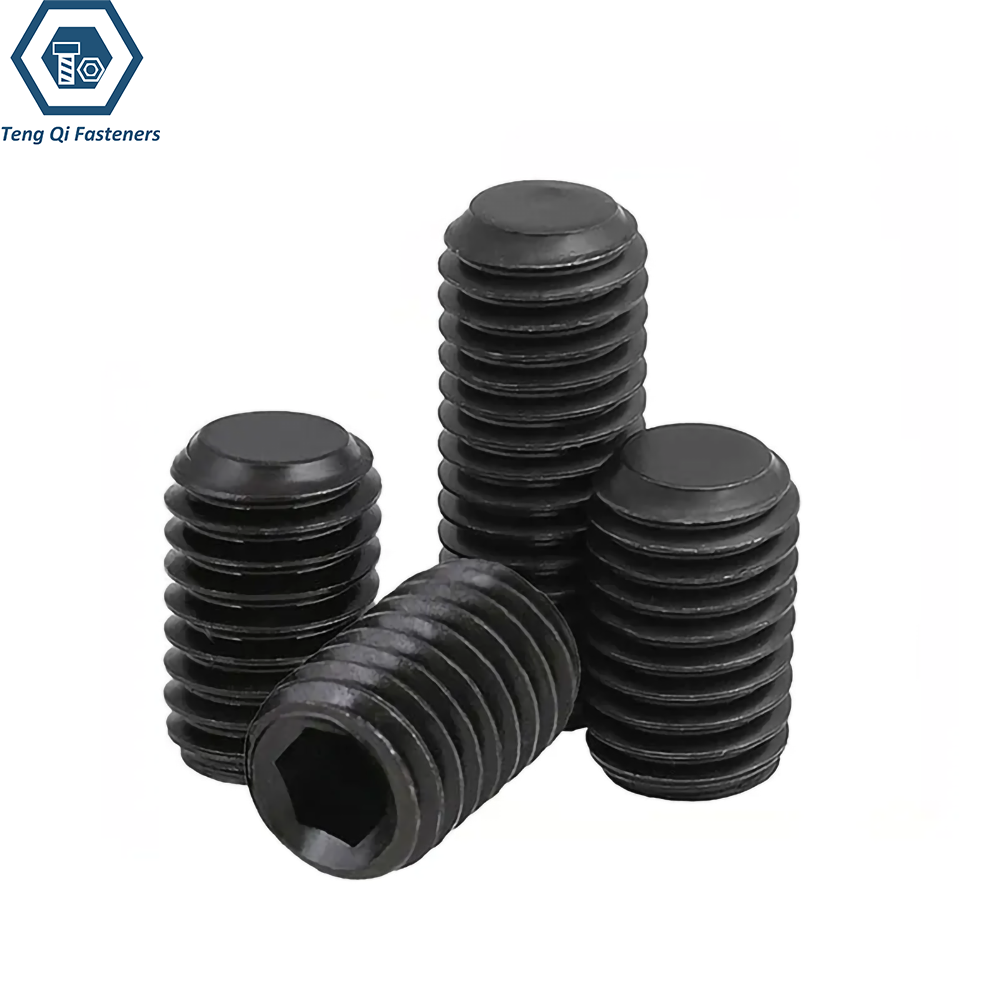
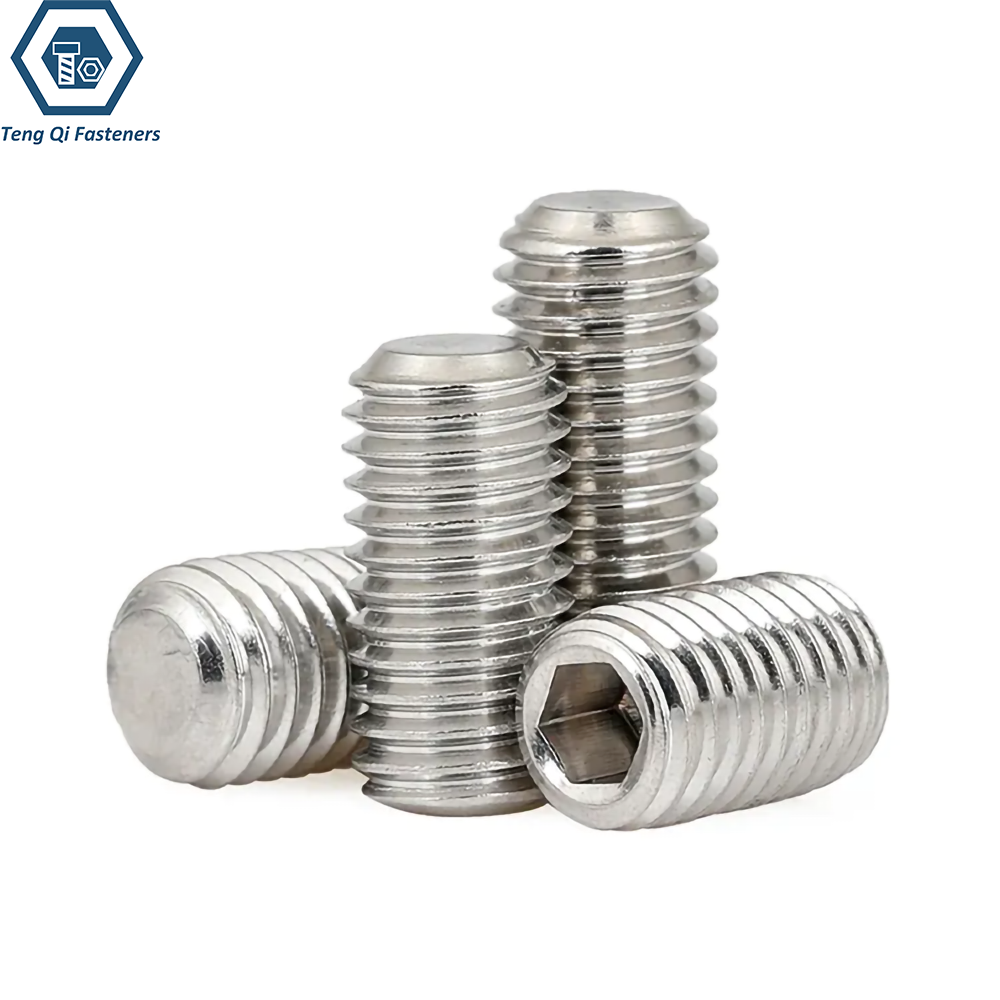
DIN 913 is a practical choice when a set screw needs to hold a component while keeping the contact with its surface relatively gentle. Its flat-ended tip creates a wider contact area than pointed set screws, allowing the clamping force to be spread over the mating surface rather than concentrated at a single point. This makes the design useful for adjustable parts, guides, fixtures, collars, machine components, and positioning mechanisms that may need to be loosened, repositioned, and secured again during assembly or maintenance. The flat point is particularly useful when repeated adjustment is expected and visible damage to the mating surface should be minimized.
An internal hexagon drive keeps the fastener compact and allows tightening with a hex key even when the surrounding installation space is limited. Depending on the working environment, DIN 913 can be supplied in carbon steel, alloy steel, or stainless steel, with suitable surface finishes and material conditions. The choice of point style should follow the way the screw contacts the mating part. DIN 913 is suited to broad surface contact; DIN 914 is intended for concentrated cone-point engagement; DIN 915 is designed to enter a locating hole or groove; and DIN 916 provides a cup-shaped contact for gripping the mating surface.
Specification:
DIN 913 Flat Point Set Screws are specified by their thread size, length, flat point geometry, internal hexagon drive, material, and surface finish. Steel and stainless-steel versions can be selected according to the required mechanical performance, corrosion resistance, and service environment. The current international reference is ISO 4026:2026, which covers flat-point hexagon socket set screws. For steel fasteners, mechanical properties can be specified according to ISO 898-5, while stainless-steel versions follow the applicable requirements of ISO 3506-3.
Selection Note: DIN 913 is intended primarily for positioning and clamping rather than tensile loading. Where the mating surface must remain largely undamaged, the flat point offers a broader contact area than cone- or dog-point designs.
| Item | Specification |
| Standard | DIN913 |
| Product Type | Hexgaon Socket Set Screw with Flat Point |
| Thread | Metric Coarse |
| Thread Tolerance | 6g |
| Size Range | M1.4-M24 |
| Drive | Internal Hexagon |
| Point Type | Flat Point |
| Material | Carbon Steel,Alloy Steel,Stainless Steel |
| Steel Mechanical Standard | ISO898-5 |
| Stainless Steel Mechanical Standard | ISO3506-3 |
| Surface Treatment | Black Oxidation,Zinc Plated,Bright Finish,Passivation |
| Inspection | Dimesions,Thread,Hardness,Coating |
- RELATED SCREWS:
- SET SCREWS
- ASME B18.3 Flat Point Set Screws
- ASME B18.3 Oval Point Socket Set Screws
- ASME B18.3 Cup Point Socket Set Screw
- ASME B18.3 Cone Point Set Socket Screws
- ASME B18.3 Half Dog Point Spline Socket Set Screws
- DIN913 Flat Point Set Screws
- DIN915 Dog Point Set Screws
- DIN916 Cup point Socket Set Screws
Dimension Chart of DIN913 Flat Point Set Screws:
The dimension chart provides the key measurements for selecting a DIN 913 set screw, including thread diameter, overall length, flat point diameter, and internal hexagon size. When choosing the screw length, both the threaded-hole depth and the required clamping position should be considered. For assemblies where the component will be adjusted or repositioned, the flat point diameter and available contact area are also important. Standard dimensions can be selected from the chart, while special sizes or modified dimensions can be produced according to customer drawings.
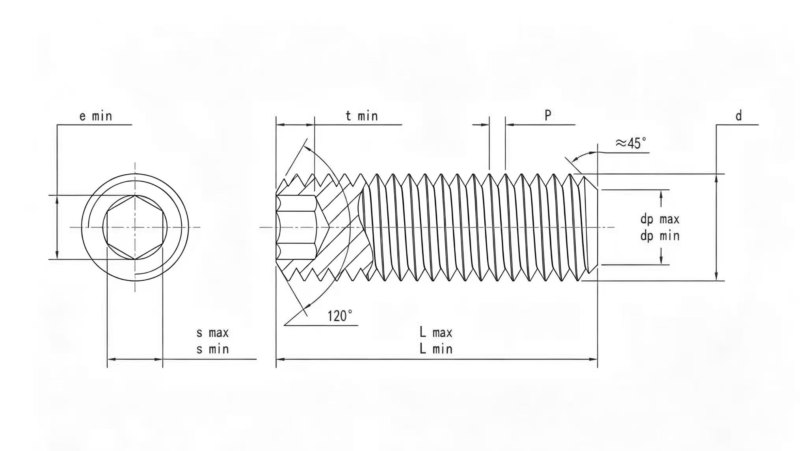
| Mon | M1.4 | M1.6 | M1.8 | M2 | M2.5 | M3 | M4 | M5 | M6 | M8 | M10 | M12 | M14 | M16 | M18 | M20 | M22 | M24 |
| P | 0.3 | 0.35 | 0.35 | 0.4 | 0.45 | 0.5 | 0.7 | 0.8 | 1 | 1.25 | 1.5 | 1.75 | 2 | 2 | 2.5 | 2.5 | 2.5 | 3 |
| dp max | 0.7 | 0.8 | 0.9 | 1 | 1.5 | 2 | 2.5 | 3.5 | 4 | 5.5 | 7 | 8.5 | 10 | 12 | 13 | 15 | 17 | 18 |
| dp min | 0.45 | 0.55 | 0.65 | 0.75 | 1.25 | 1.75 | 2.25 | 3.2 | 3.7 | 5.2 | 6.64 | 8.14 | 9.64 | 11.57 | 12.57 | 14.57 | 16.57 | 17.57 |
| e min | 0.803 | 0.803 | 0.803 | 1.003 | 1.427 | 1.73 | 2.3 | 2.87 | 3.44 | 4.58 | 5.72 | 6.86 | 6.86 | 9.15 | 11.43 | 11.43 | 13.72 | 13.72 |
| s min | 0.711 | 0.711 | 0.711 | 0.889 | 1.27 | 1.52 | 2.02 | 2.52 | 3.02 | 4.02 | 5.02 | 6.02 | 6.02 | 8.025 | 10.025 | 10.025 | 12.032 | 12.032 |
| s max | 0.724 | 0.724 | 0.724 | 0.902 | 1.295 | 1.545 | 2.045 | 2.56 | 3.08 | 4.095 | 5.095 | 6.095 | 6.095 | 8.115 | 10.115 | 10.115 | 12.142 | 12.142 |
| t min | 0.6 | 0.7 | 0.8 | 0.8 | 1.2 | 1.2 | 1.5 | 2 | 2 | 3 | 4 | 4.8 | 5.6 | 6.4 | 7.2 | 8 | 9 | 10 |
Mechanical Property:
ISO 898-5 — Alloy Steel Flat Point Set Screws
Alloy steel flat point set screws manufactured to DIN 913 can be supplied according to ISO 898-5, which specifies the mechanical and physical properties of carbon steel and alloy steel set screws classified by hardness. The standard covers metric coarse threads from M1.6 to M30 and fine threads from M8 × 1 to M30 × 2. Hardness requirements depend on the applicable hardness class and are intended for set screws subjected to compressive stress.
ISO 3506-3 — Stainless Steel Flat Point Set Screws
Stainless steel flat point set screws manufactured to DIN 913 can be supplied according to ISO 3506-3, which specifies the mechanical and physical properties of set screws made from corrosion-resistant austenitic and duplex stainless steels. It covers metric thread sizes from M1.6 to M24 and defines requirements for different stainless steel grades and hardness classes. These requirements help determine the suitability of set screws for applications requiring both mechanical performance and corrosion resistance.