
Stud Bolts
Stud bolts are headless threaded fasteners used where a bolt needs to remain installed in a component while the joint is assembled or removed from the opposite side. Instead of a bolt head, a stud provides exposed threads for a nut, making it possible to install and remove the mating component without removing the stud itself. This design is particularly useful for flanges, engine components, machinery, equipment housings, and other assemblies that require repeated maintenance or limited access for tools.
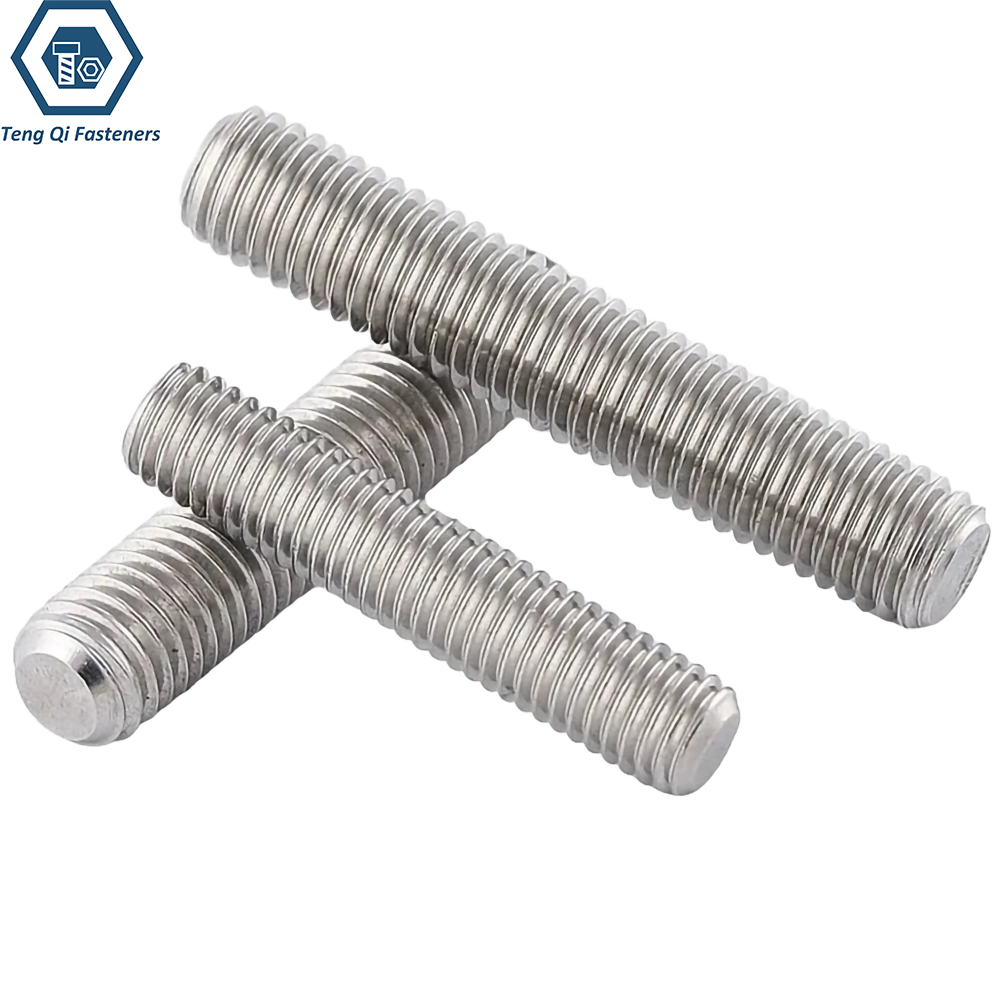
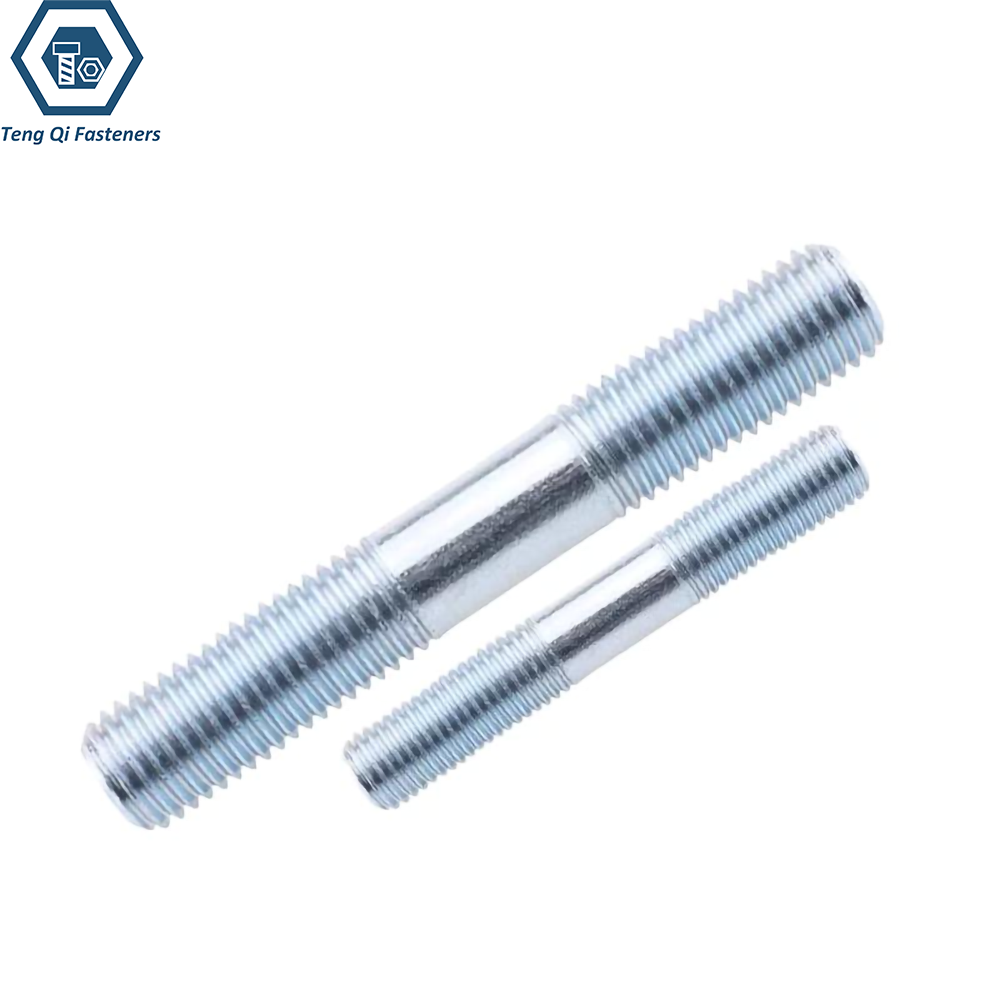
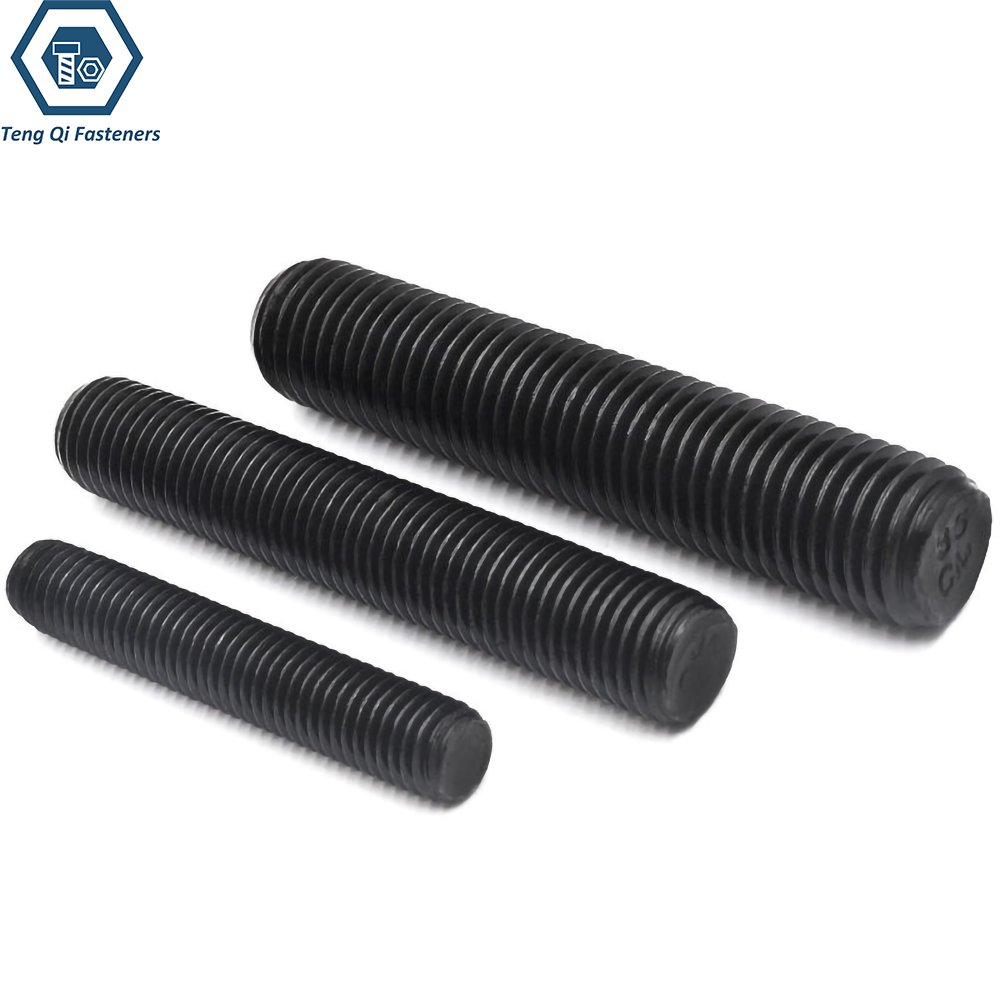
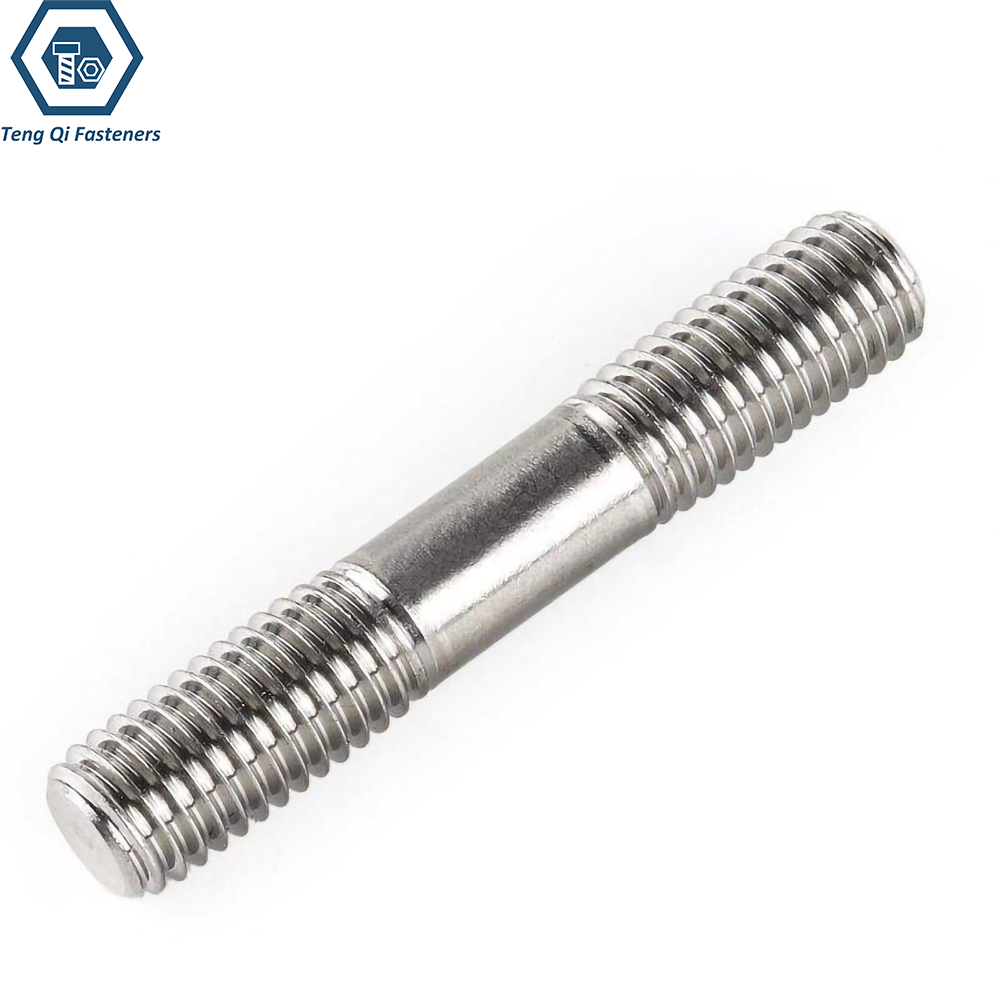
The design of a stud bolt can be selected according to how the joint is assembled. Fully threaded studs provide continuous threads along the shank and offer flexibility when the required engagement length varies. Double-end studs have threaded ends separated by a plain section, while tap-end studs are designed with one end for installation into a tapped hole and the other for nut engagement. These different configurations allow stud bolts to accommodate fixed threaded connections, removable joints, deep or blind tapped holes, and applications where alignment and repeatable assembly are important.
Specification:
| Item | Metric Stud Bolts | Inch Stud Bolts |
|---|---|---|
| Size Range | M6-M100 | 1/4"-4" |
| Dimension Standard | DIN976, DIN939 | ASME B18.31.2, IFI 136 |
| Thread | Metric Coarse,Fine Thread | UNC,UNF |
| Thread Standard | ISO 261, ISO 965 | ASME B1.1 |
| Thread Class | 6g | 2A |
| Material | Cabon Steel,Alloy Steel,Stainless Steel,Aluminum,Brass | Cabon Steel,Alloy Steel,Stainless Steel,Aluminum,Brass |
| Steel Property Class | ISO898-1,Class4.8,6.8,8.8,10.9,12.9 | SAE Grade2,5,8 ASME A307,A193 B7,B16 |
| Stainless Steel Class | A2-70,A2-80,A4-70,A4-80 | F593C, F593D, F593G,F593H |
| Surface Treatment | Black Oxidation, Zinc Plated, HDG, Dacromet, Bright Finish,Passivation | |
| Inspection | Dimension,Thread,Mechanical Proeprty,Coating | |
Dimension Standard:
Stud bolts are manufactured in different dimensional configurations to suit the way they are installed and assembled. The main differences between standards include threaded length, plain shank length, and the way the stud engages with the mating component. For example, a fully threaded stud provides continuous thread along its length, while a double-end or tap-end stud has different thread sections designed for installation into a tapped hole and fastening with a nut.
We supply stud bolts according to commonly specified dimensional standards, including DIN 976, DIN 939, ASME B18.31.2, and IFI 136. These standards cover different stud configurations and dimensional requirements, allowing customers to select a suitable design based on the joint structure, available thread engagement, installation method, and required overall length. Detailed dimensions and standard-specific requirements are provided in the corresponding dimension charts below.
Mechanical Property:
The mechanical properties of stud bolts determine their ability to withstand tensile loads, tightening forces, vibration, and service conditions. The required strength level depends on the material, joint design, operating environment, and applicable fastener standard. We supply carbon steel stud bolts, alloy steel stud bolts, and stainless steel 304 stud bolts&stainless steel 316 stud bolts with mechanical property requirements specified to commonly used international standards.
ISO 898-1 Carbon and Alloy Steel Stud Bolts
For metric carbon and alloy steel stud bolts, ISO 898-1 defines mechanical property classes such as 4.8, 5.8, 8.8, 10.9, and 12.9. Lower property classes can be suitable for general fastening applications, while higher-strength classes such as 8.8, 10.9, and 12.9 are selected when greater tensile and load-carrying capacity is required. The appropriate property class should be selected according to the design load and requirements of the assembled joint.
ISO 3506-1 Stainless Steel Stud Bolts
Stainless steel stud bolts are commonly specified according to ISO 3506-1, which classifies fasteners according to stainless steel grade and mechanical properties. Our stainless steel stud bolts can be supplied in commonly used grades such as A2-50, A2-70, A2-80, A4-70, and A4-80. A2 grades are widely used for general corrosion-resistant applications, while A4 grades provide improved resistance for more demanding environments. Higher property classes such as A2-80 and A4-80 can be considered where increased strength is required.
ASTM A193 Alloy and Stainless Steel Stud Bolts
ASTM A193 covers alloy and stainless steel bolting materials intended for high-temperature or high-pressure service. Stud bolts manufactured to this specification are commonly used for flanges, valves, pressure vessels, and piping connections where both mechanical performance and resistance to elevated temperatures are important. Depending on the application, materials such as B7, B8, and B8M can be selected to meet different service requirements.
SAE J429 Inch-Series Stud Bolts
For inch-series carbon and alloy steel stud bolts, SAE J429 provides mechanical requirements for commonly used grades including Grade 2, Grade 5, and Grade 8. Grade 2 is generally used for lower-strength general fastening, while Grade 5 and Grade 8 provide progressively higher strength for more demanding mechanical applications. These grades are commonly specified for stud bolts used with inch-series threads and components.
ASTM F593 Stainless Steel Stud Bolts
ASTM F593 provides requirements for stainless steel bolts, screws, studs, and other externally threaded fasteners. It covers different stainless steel alloys and condition groups, allowing stud bolts to be selected according to both corrosion resistance and required mechanical performance. Common stainless steel materials include 304 and 316, with different ASTM F593 conditions available depending on the required strength and application.
Related Bolt Products
Stud bolts are a good choice when a threaded connection needs to remain in place or when the joint is assembled with a nut from the accessible side. However, they are not suitable for every application. If the joint requires a bolt head for tightening, easier installation from one side, faster assembly, or a specific clamping arrangement, a conventional bolt may be a better choice. Our hex bolts, heavy hex bolts, carriage bolts, flange bolts, stud bolts, U-bolts, anchor bolts, and T-bolts. are available for these different assembly requirements.
If you are unsure whether a stud bolt or another fastening design is more suitable for your application, we can recommend a suitable combination based on the joint structure, installation method, thread size, material, and required strength.