
316 & 316L Stainless Steel Bolts
316 and 316L stainless steel bolts are high-performance corrosion-resistant fasteners designed for demanding industrial and outdoor environments. Their chromium-nickel-molybdenum composition provides excellent resistance to corrosion, pitting, and crevice corrosion, particularly in chloride-containing environments where 304 stainless steel may be less suitable. This makes 316 and 316L bolts a reliable choice for marine, chemical processing, water treatment, food processing, construction, and other applications requiring long-term durability.
316 and 316L stainless steel bolts are available in a wide range of sizes, thread types, and head styles to meet different fastening requirements. 316L offers a lower carbon content than 316 and is particularly suitable for applications involving welding or where resistance to sensitization is important. We supply 316 and 316L bolts according to international fastener specifications, including ISO 3506-1 and ASTM F593, with different strength classes and mechanical property requirements available for specific applications.
Type of 316 & 316L Bolt:
We supply 316 and 316L stainless steel bolts in a wide range of designs for applications requiring excellent corrosion resistance and long-term fastening performance. Our 316/316L stainless steel bolt range includes hex head bolts, flange bolts, anchor bolts, carriage bolts, T-bolts, and double-end studs, available in both metric and inch sizes. Depending on the application, 316 and 316L bolts can be manufactured to commonly used DIN, ISO, ASME, and other international standards, as well as customer-specific drawings and specifications. Different thread types, dimensions, head configurations, and strength classes are available to meet specific fastening requirements.
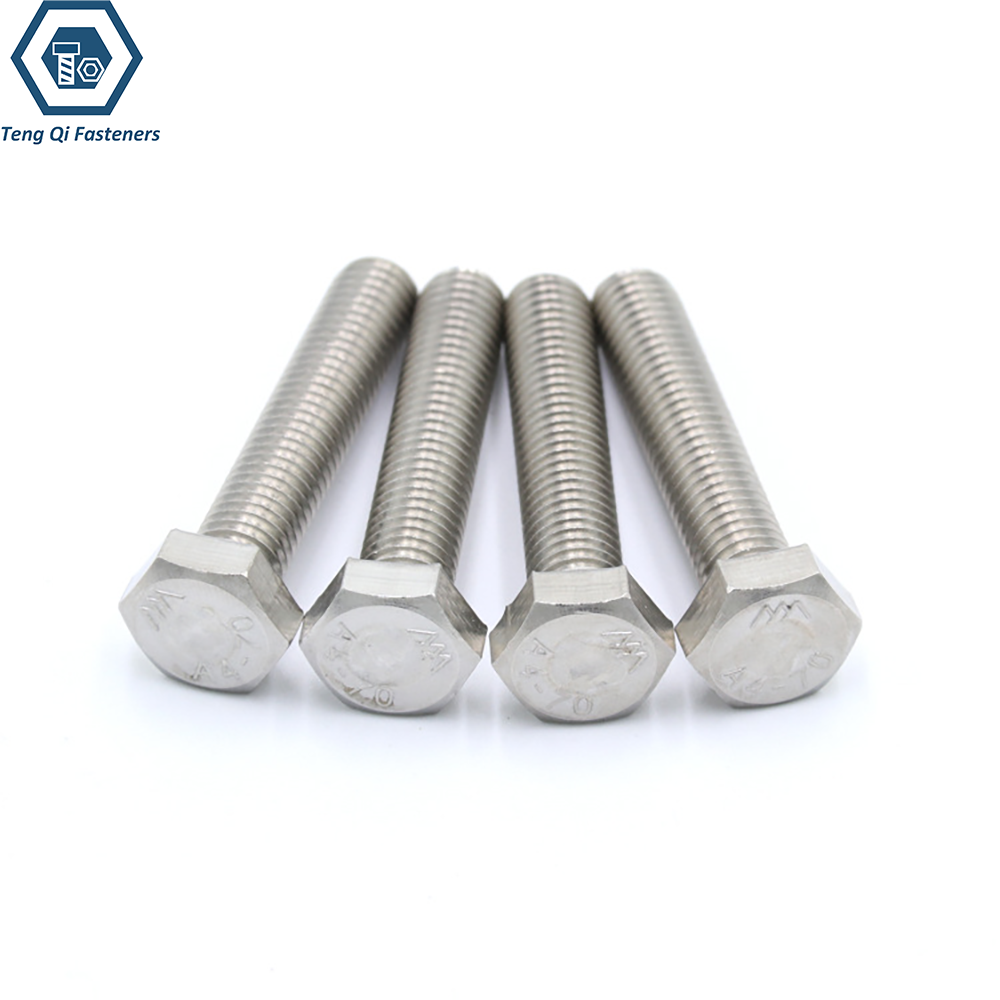
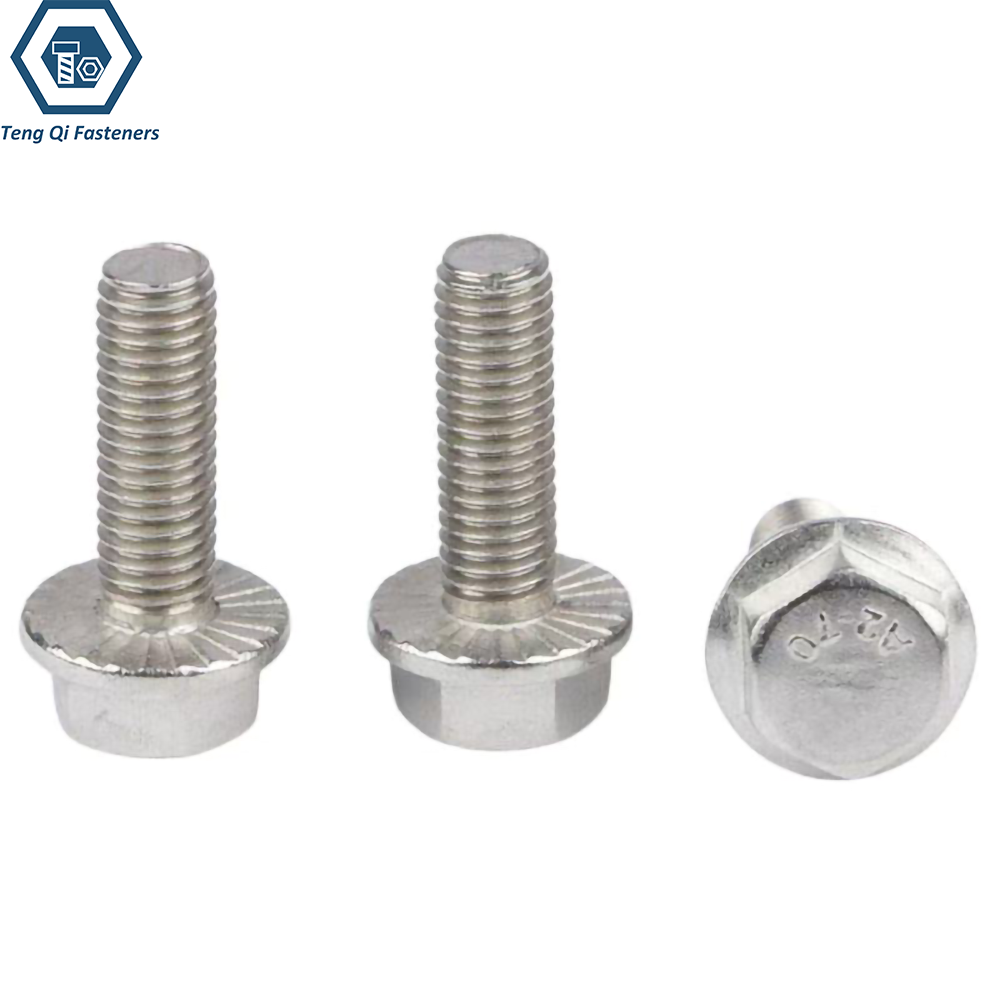
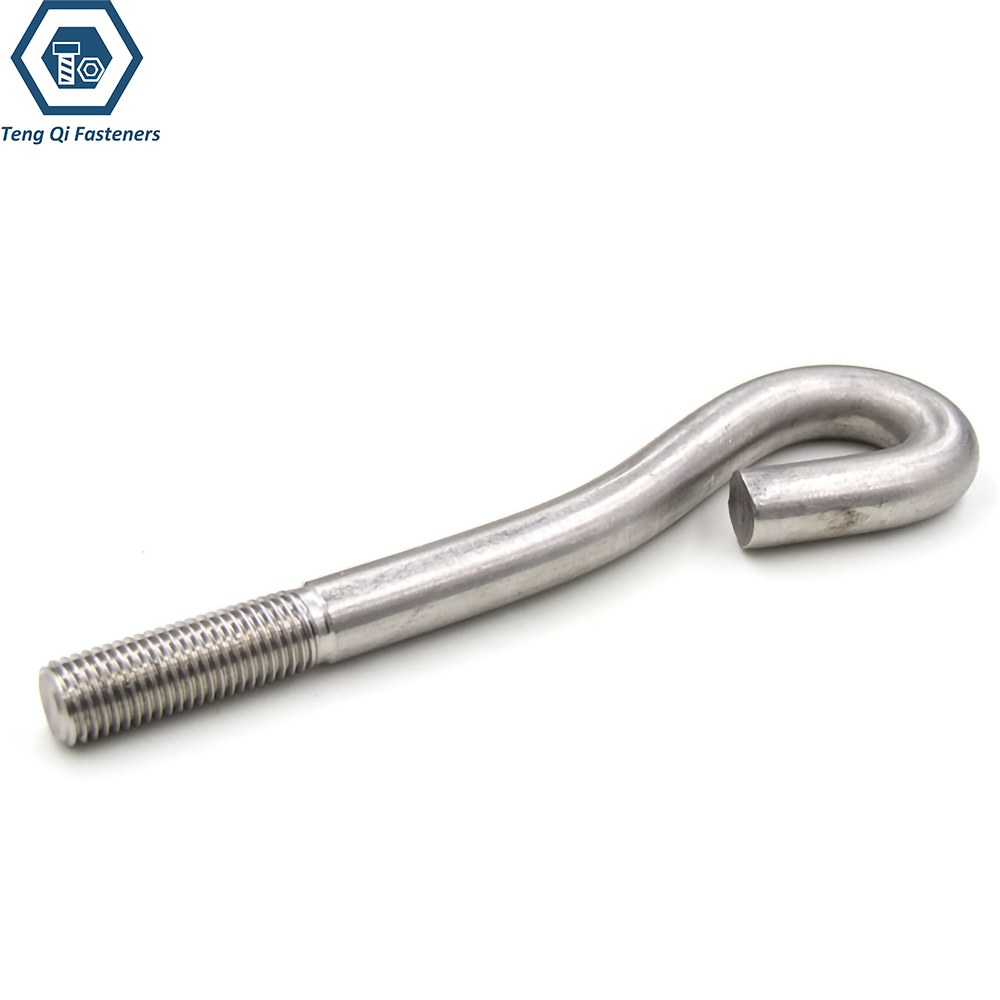
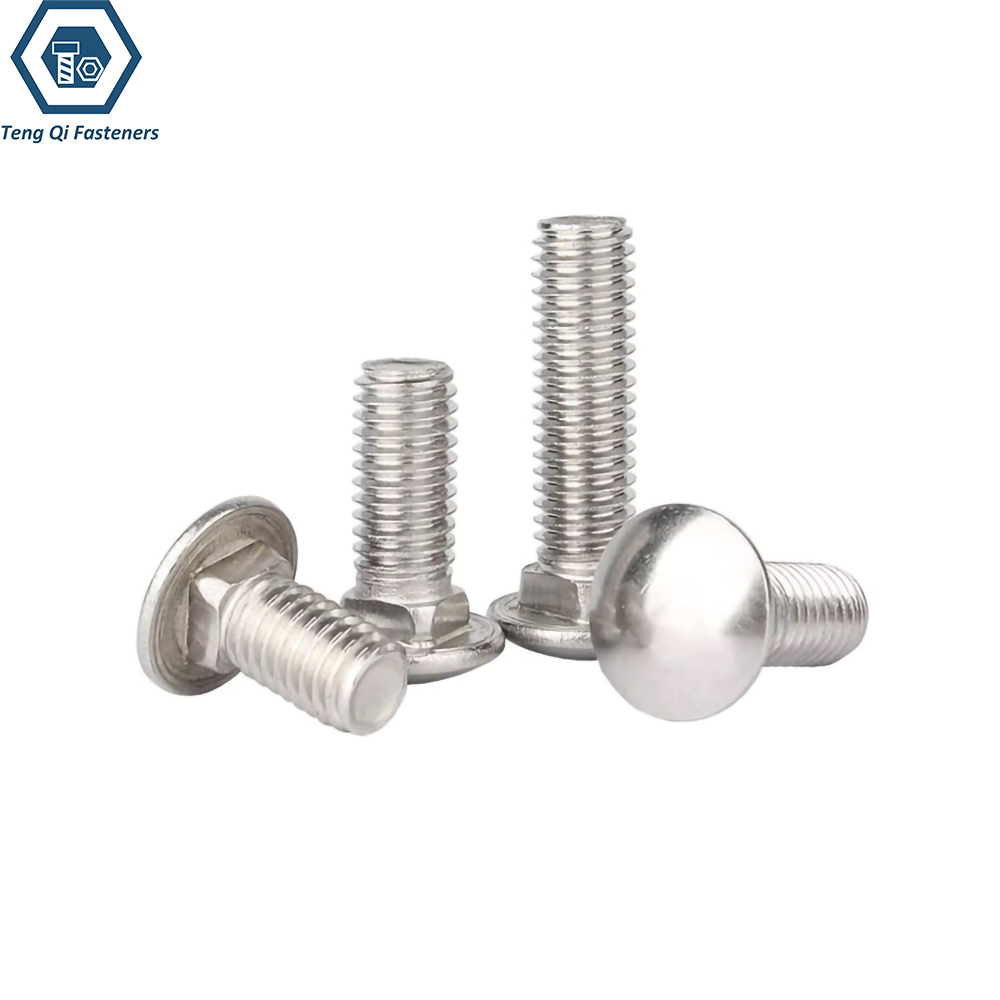
Dimension Chart of 316 & 316L Bolt:
Metric Bolts:
| Metric Bolts | |||
| DIN933 Hex Bolts | DIN931 Hex Bolts | ISO4017 Hex Bolts | ISO 4014 Hex Bolts |
| DIN6921 Flange Bolts | DIN529 Anchor Bolts | DIN603 Carriage Bolts | DIN976 Stud Bolts |
Inch Bolts:
Chemical Composition:
316 and 316L stainless steel bolts have a similar alloy composition, with chromium, nickel, and molybdenum providing excellent corrosion resistance. The main chemical difference between 316 and 316L is the carbon content: 316 permits a maximum carbon content of 0.08%, while 316L limits carbon to 0.03%. The lower carbon content of 316L helps reduce the risk of carbide precipitation during welding and makes it particularly suitable for applications involving welding or elevated corrosion resistance requirements.
The chemical composition of 316 and 316L stainless steel bolts is shown below in accordance with ASTM F593 requirements.
| Material | Carbon(C) | Chromum(Cr) | Manganesse(Mn) | Nickel(Ni) | Silicon(Si) | Phosphorus(P) | Sulfur(S) | Nitrogen(N) |
| 316 Stainless Steel | ≤0.08% | 16-18% | ≤2% | 10-14% | ≤1% | ≤0.045% | ≤0.03% | ≤0.01% |
| 316L Stainless Steel | ≤0.03% | 16-18% | ≤2% | 10-14% | ≤1% | ≤0.045% | ≤0.03% | ≤0.01% |
Mechanical Property:
316 and 316L stainless steel bolts are available in different strength classes and cold-worked conditions to meet a wide range of fastening requirements. According to ISO 3506-1, 316/316L stainless steel fasteners are generally classified as A4-50, A4-70, and A4-80, with minimum tensile strengths of 500 MPa, 700 MPa, and 800 MPa, respectively. Higher property classes are achieved through cold working, while the A4 designation provides excellent corrosion resistance for demanding environments.
For applications specified to ASTM F593, 316 and 316L stainless steel bolts are covered under Alloy Group 2. Grade G and Grade H represent cold-worked conditions with different strength requirements depending on the nominal diameter. These grades provide higher strength than the annealed condition and are commonly used for stainless steel bolts, hex cap screws, and studs requiring increased mechanical performance.
Mechanical Property of 316 & 316L Metric Bolts according to ISO3506-1
| Item | Property Class | Tension Strength(min)MPA | Stress at 0.2% non-proprotional elongation(min)MPA | Elongation after fracture(min)mm |
| 316 & 316L Stainless Steel Metric Bolts | A4-50 | 500 | 210 | 0.6d |
| A4-70 | 700 | 450 | 0.4d | |
| A4-80 | 800 | 600 | 0.3d |
Mechanical Property of 316 & 316L Inch Bolts according to ASTM F593
| Item | Mechanical Property | Diameter,in | Full-Size Tests | Machine Specimen Test | ||||
| Tensile Strength (ksi) | Yield Strength (ksi) | Rockwell Hardness | Tensile Strength (ksi) | Yield Strength (ksi) | Elongation in 4D,% | |||
| 316&316L Stainlesss Steel Bolts | F593E | 1/4"-1-1/2" | 65-85 | 20 | B85 max | 60 | 20 | 40 |
| F593F | 1/4"-1-1/2" | 75-100 | 30 | B65-95 | 70 | 30 | 30 | |
| F593G | 1/4"-5/8" | 100-150 | 65 | B95-C32 | 95 | 60 | 20 | |
| F593H | 3/4"-1"-1/2" | 85-140 | 45 | B80-C32 | 80 | 40 | 25 | |
| F593E | 1/4"-5/8" | 120-160 | 95 | C24-C36 | 115 | 90 | 12 | |
| F593F | 3/4"-1" | 110-150 | 75 | C20-C32 | 105 | 70 | 15 | |
| F593G | 1-1/8"-1-1/4" | 100-140 | 60 | B95-C30 | 95 | 55 | 20 | |
| F593H | 1-1/8"-1-1/2" | 95-130 | 45 | B90-C28 | 90 | 40 | 28 | |
Application of 316 & 316L Stainless Steel Bolt:
316 and 316L stainless steel bolts are widely used in applications where corrosion resistance, durability, and reliable fastening performance are required. Compared with 304 stainless steel, 316 and 316L provide better resistance to pitting and crevice corrosion, especially in chloride-containing and marine environments. The choice between 316 and 316L depends mainly on the application and fabrication conditions, with 316L offering the advantage of lower carbon content for applications involving welding or elevated-temperature exposure.
Marine & Coastal
316 and 316L stainless steel bolts are preferred over 304 stainless steel bolts for marine and coastal applications exposed to seawater, salt spray, and chloride-containing environments. The molybdenum content in 316 and 316L provides better resistance to pitting and crevice corrosion than 304. 316 is suitable for general marine applications, while 316L can be preferred where low carbon content is beneficial, particularly in welded or heat-affected assemblies.
Chemical & Industrial
For chemical processing and industrial equipment exposed to corrosive media, 316 and 316L stainless steel bolts offer higher corrosion resistance than 304 stainless steel bolts. 316 is commonly used for pumps, valves, tanks, piping systems, and industrial machinery, while 316L is often selected for welded equipment or applications where reduced carbon content is desirable. 304 remains a cost-effective choice for less aggressive industrial environments.
Food, Pharmaceutical & Water Treatment
316 and 316L stainless steel bolts are widely used in food processing, pharmaceutical equipment, water treatment, and wastewater systems where corrosion resistance and durability are important. Compared with 304, 316/316L provide better resistance to chloride-containing moisture and process environments. 316L is particularly suitable where low carbon content and resistance to sensitization are important, while 304 can be used for less corrosive applications where the additional corrosion resistance of 316 is not required.