
304 & 304L Stainless Steel Bolt
304 and 304L stainless steel bolts are widely used stainless steel fasteners known for their good corrosion resistance, strength and durability in a wide range of applications. Both 304 and 304L are austenitic stainless steels, with 304L having a lower carbon content that can be advantageous for applications involving welding or where reduced carbide precipitation is required. These bolts are commonly selected for general industrial, mechanical, construction and equipment fastening applications.
We provide 304 and 304L stainless steel bolts in both metric and inch sizes, with products available according to applicable requirements including ISO 3506-1 and ASTM F593. Different diameters, lengths, thread specifications and bolt types can be supplied to meet different fastening requirements. Standard and custom sizes are available depending on the application and customer specifications.
Type of 304 & 304L Bolt:
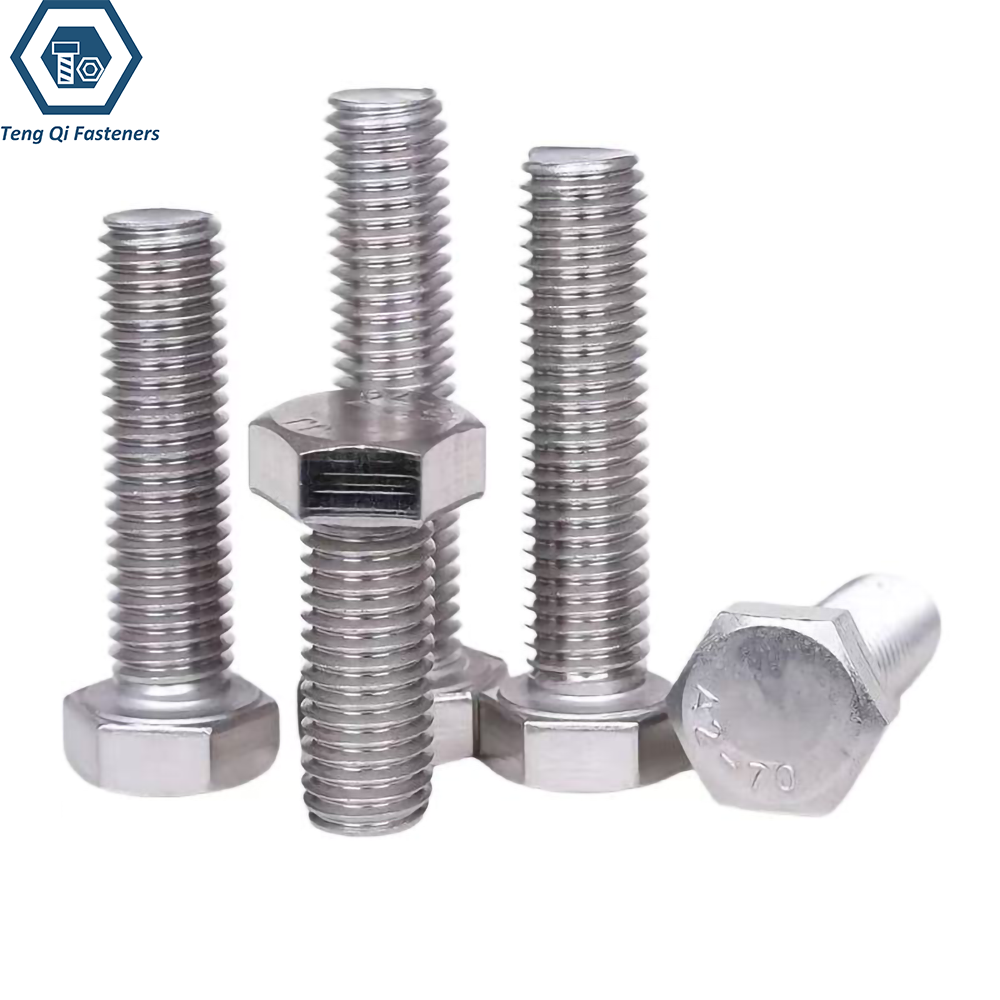
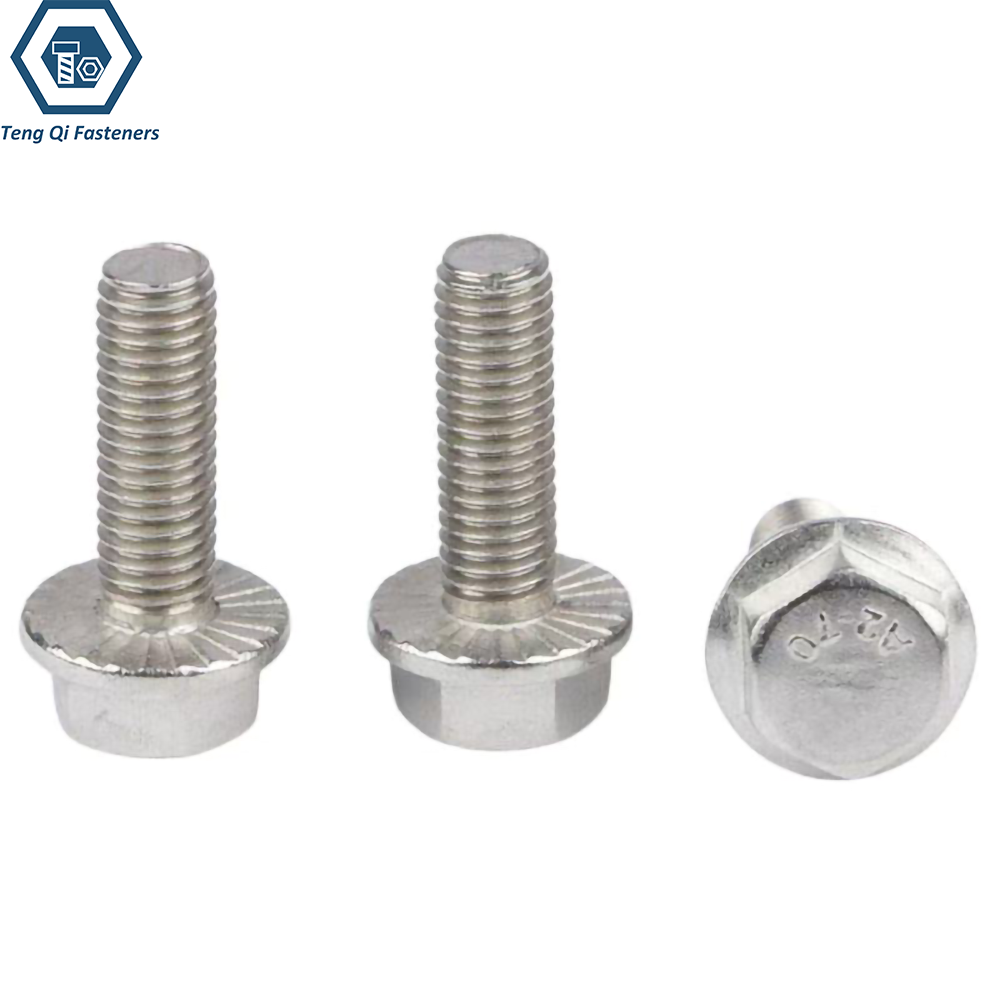
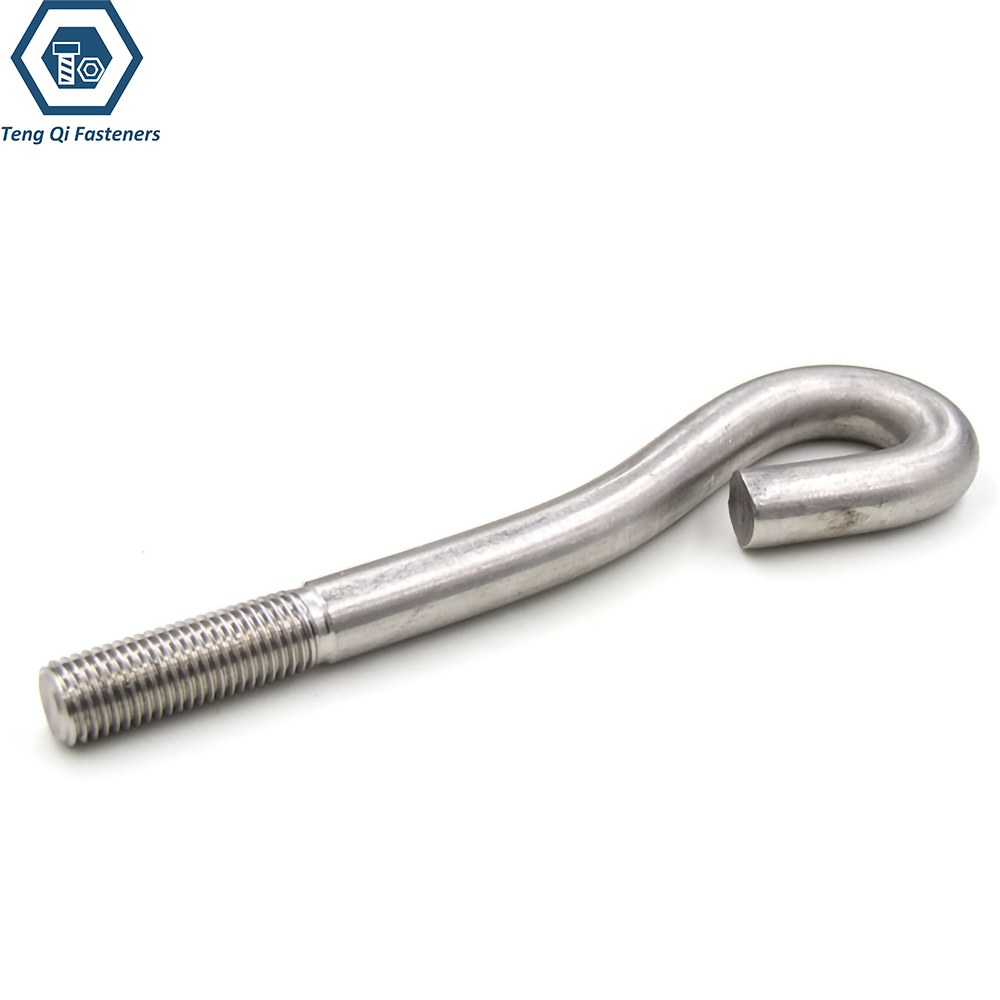
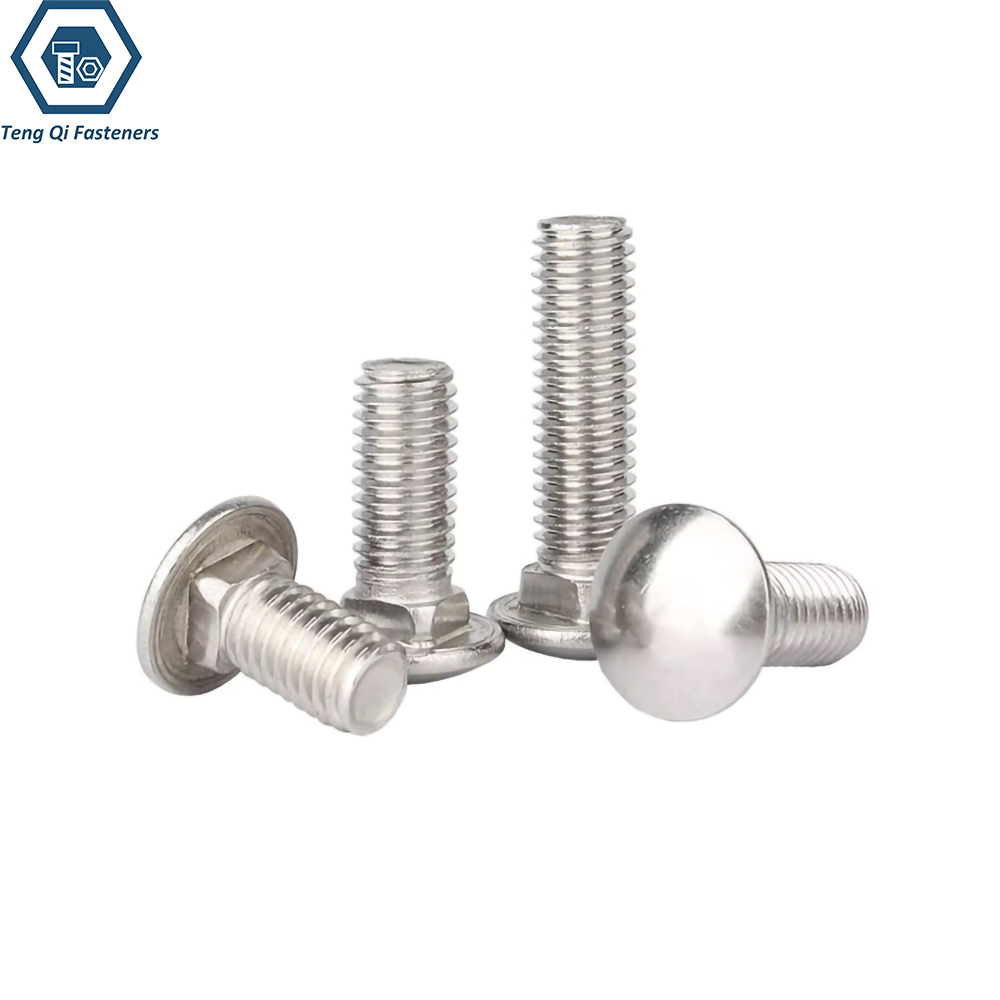
304 and 304L stainless steel are available across a wide range of bolt designs for different fastening requirements. We can supply hex bolts, heavy hex bolts, flange bolts, carriage bolts, anchor bolts, T-bolts and U-bolts in both metric and inch sizes. Products are available in different diameters, lengths and thread specifications, including standard and custom dimensions.
For applications requiring specific material or dimensional requirements, bolts can be manufactured according to customer drawings and applicable specifications. We control raw material selection and key production processes to maintain consistent dimensions, thread quality and overall product performance for both 304 and 304L stainless steel bolts.
Dimension Chart of 304 & 304L Bolt:
Metric Bolts:
| 304 & 304L Metric Bolts | |||
| DIN933 Hex Bolts | DIN931 Hex Bolts | ISO4017 Hex Bolts | ISO 4014 Hex Bolts |
| DIN6921 Flange Bolts | DIN529 Anchor Bolts | DIN603 Carriage Bolts | DIN976 Stud Bolts |
Inch Bolts:
Chemical Composition:
304 and 304L stainless steel have similar chromium and nickel contents and provide good corrosion resistance for general-purpose stainless steel bolts. The main chemical difference is carbon content: 304L has a lower maximum carbon content than 304, which improves its suitability for applications involving welding and helps reduce the risk of carbide precipitation during welding. Apart from the lower carbon level, the two grades have broadly similar alloying characteristics, with chromium and nickel providing corrosion resistance and overall austenitic stainless steel properties. The table below compares the typical chemical composition requirements of 304 and 304L stainless steel.
| Material | Carbon(C) | Chromum(Cr) | Manganesse(Mn) | Nickel(Ni) | Silicon(Si) | Phosphorus(P) | Sulfur(S) | Nitrogen(N) |
| 304 Stainless Steel | ≤0.08% | 18-20% | ≤2% | 8-10.5% | ≤1% | ≤0.045% | ≤0.03% | ≤0.01% |
| 304L Stainless Steel | ≤0.03% | 18-20% | ≤2% | 8-10.5% | ≤1% | ≤0.045% | ≤0.03% | ≤0.01% |
Mechanical Property:
The mechanical properties of 304 and 304L stainless steel bolts depend on the applicable fastener standard, material condition and specified property class. For metric stainless steel bolts, ISO 3506-1 defines A2 property classes including A2-50, A2-70 and A2-80, with different minimum tensile strength and 0.2% non-proportional elongation requirements. For inch-size bolts, ASTM F593 provides mechanical requirements for 304 and 304L stainless steel fasteners in its applicable alloy group and condition. The tables below summarize the key mechanical property requirements under ISO 3506-1 and ASTM F593.
Mechanical Property of 304 & 304L Metric Bolts according to ISO3506-1
| Item | Property Class | Tension Strength(min)MPA | Stress at 0.2% non-proprotional elongation(min)MPA | Elongation after fracture(min)mm |
| 304 & 304L Stainless Steel Metric Bolts | A2-50 | 500 | 210 | 0.6d |
| A2-70 | 700 | 450 | 0.4d | |
| A2-80 | 800 | 600 | 0.3d |
Mechanical Property of 304 & 304L Inch Bolts according to ASTM F593
| Item | Grade | Diameter,in | Full-Size Tests | Machine Specimen Test | ||||
| Tensile Strength (ksi) | Yield Strength (ksi) | Rockwell Hardness | Tensile Strength (ksi) | Yield Strength (ksi) | Elongation in 4D,% | |||
| 304 & 304L Stainless Steel Inch Bolts | F593C | 1/4"-5/8" | 100-150 | 65 | B95-C32 | 95 | 60 | 20 |
| F593D | 3/4"-1"-1/2" | 85-140 | 45 | B80-C32 | 80 | 40 | 25 | |
| F593C | 1-1/8"-1-1/4" | 100-140 | 60 | B95-C30 | 95 | 55 | 20 | |
| F593D | 1-1/8"-1-1/2" | 95-130 | 45 | B90-C28 | 90 | 40 | 28 | |
Application of 304 & 304L Stainless Steel Bolt:
General applications
304 stainless steel bolts are widely used for general industrial, mechanical and construction applications where good corrosion resistance, strength and durability are required. Typical applications include machinery and equipment, valves, pumps, fittings, structural assemblies and general fastening connections. 304 bolts are suitable for many indoor and outdoor environments where moderate corrosion resistance is required.
Welded/fabricated applications
304L stainless steel bolts are often selected for fabricated equipment and assemblies where welding is involved or where the lower-carbon material is preferred. Its lower carbon content helps reduce the risk of intergranular corrosion associated with welding, making 304L suitable for welded equipment, tanks, piping systems and fabricated components. 304L can also be used for the same general fastening applications as 304 when its material characteristics are preferred.
Food / chemical / processing equipment
Both 304 and 304L stainless steel bolts are used in food processing, chemical, petrochemical, pharmaceutical and other processing equipment where good general corrosion resistance is required. Typical fastening applications include valves, pumps, fittings, vessels and equipment assemblies. The choice between 304 and 304L should be based on the material specification, fabrication process and service environment.